
Make this your Copenhagen itinerary
THE SHORT VERSION
- Use Designmuseum Danmark for objects and DAC for architecture and urban life.
- Compare materials, process, and use instead of only famous designer names.
- Test one museum idea against an everyday café or public-space experience.
Start with something made for a body
A chair is a good way into Copenhagen. It is small enough to understand, familiar enough to judge, and complicated enough to raise questions about material, comfort, beauty, and production. Designmuseum Danmark supplies the concentrated version of those questions; the city outside lets you test them at a larger scale. I would begin with the museum, then choose a walk or the Danish Architecture Center according to how much attention remains. Design becomes more interesting when it escapes the category of attractive shopping.
This is not a day for memorizing every famous designer. Choose one question instead: what makes something pleasant to use? It can apply to a seat, a lamp, a shop entrance, or a harbor crossing. You may come away admiring a celebrated object, but you may also discover that a modest detail makes a stronger argument. Copenhagen rewards looking at that human scale, and you do not need professional training to take part in the conversation.
Make Designmuseum Danmark the anchor
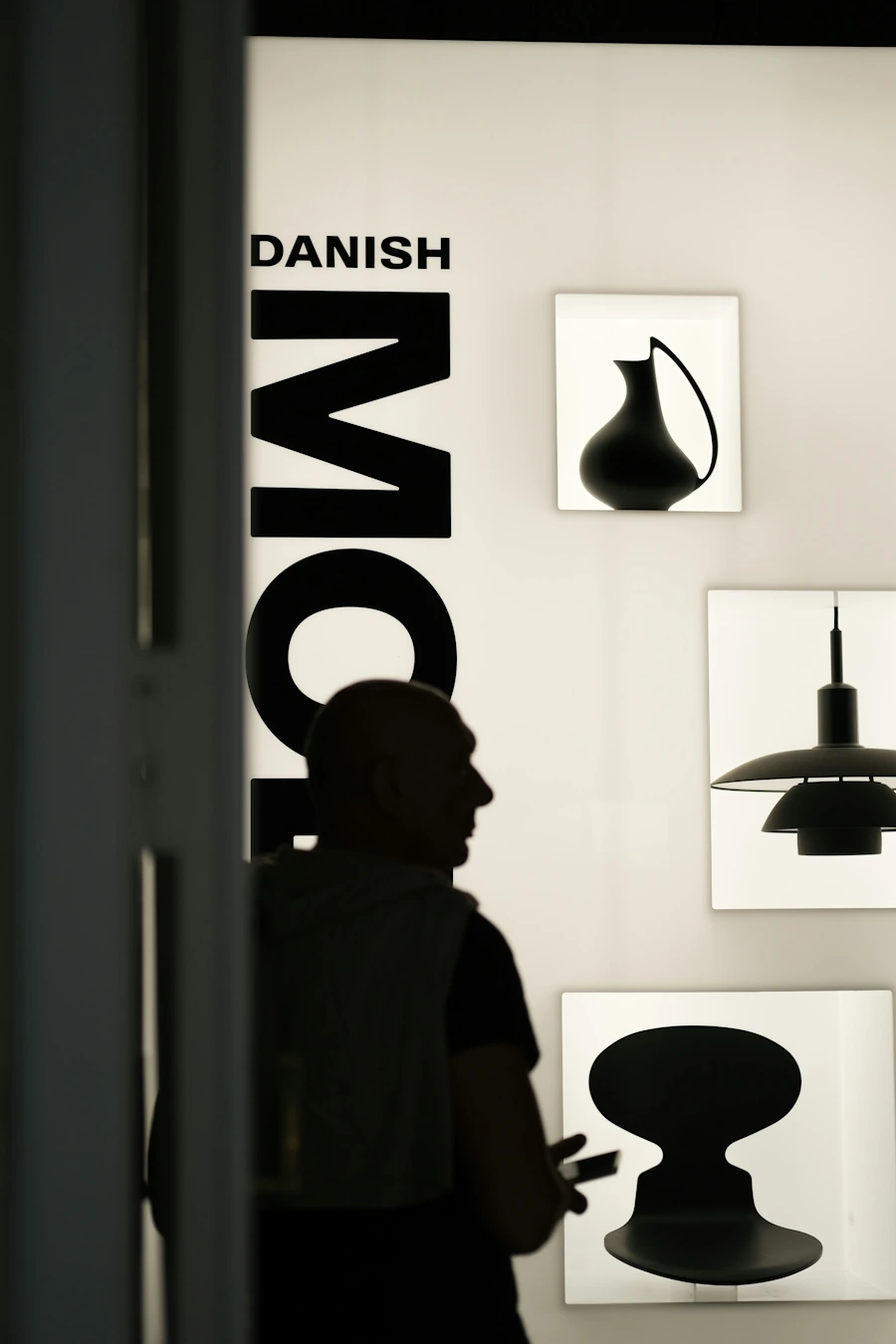
The museum on Bredgade is the natural first stop for a focused design visit. Its current program includes Danish Modern, an exhibition addressing design from the twentieth century, alongside changing presentations. Check the official exhibition information for your actual date and choose what interests you. A recognizable chair can be an easy beginning, but look beyond familiarity: ask what problem the object is solving and which decisions make the solution convincing.
Compare two objects rather than trying to admire everything. Look at a join, the meeting of materials, the thickness of an edge, or the way a surface catches light. Think about use as well as appearance. Would the object suit a crowded home, a public space, or a formal room? A museum display may prevent physical testing, so distinguish what you can observe from what you can only imagine. That distinction keeps your judgments thoughtful without making them timid.
Read the process, not only the name
A designer's reputation can dominate a label, but process often makes the work more engaging. Look for drawings, prototypes, manufacturing information, or comparisons that reveal how an idea changed. Small alterations can affect comfort, cost, repair, and the number of people who can use an object. Those are useful considerations even when the finished piece is beautiful enough to distract you. Design history becomes richer when success includes more than being instantly recognizable in a photograph.
If one exhibition is crowded, spend time with a less obvious object and return later if you want. A museum visit improves when your attention is not entirely dictated by the most photographed display. I would leave the shop until after the galleries. You may still want a book or object, but the visit will have given you more specific reasons to choose it. A purchase then becomes a continuation of an interest rather than proof that you have experienced Danish design.
Take the conversation outside
After the museum, choose a modest public-street route toward the harbor or a café. Look at the things a museum normally leaves out: street furniture, signs, thresholds, cycle parking, and where people stop. Are the intended uses clear? Does a place make waiting comfortable? Do materials show wear gracefully? These questions turn an ordinary walk into a useful extension of the collection without requiring an invented list of hidden design landmarks.
Keep observation separate from blanket praise. A city can contain good ideas and awkward spaces, and your own needs may differ from someone else's. Notice what works for you while leaving room for other users. If a crossing is efficient for cyclists but confusing for a visitor on foot, that is an interesting tension rather than a reason to declare the entire city perfect or failed. The most rewarding design walk makes you more precise about both pleasure and inconvenience.
Let DAC widen the scale
The Danish Architecture Center in BLOX offers a different lens, focusing on buildings, urban life, and the ways cities are made. Its official program includes exhibitions that use models, drawings, film, and other interpretation. Choose this as a second institution only if the subject still appeals after lunch. It can also become the anchor for a separate day, especially if your interest lies more in public space than furniture. The two visits complement each other without needing to be completed together.
At DAC, look for the link between a design idea and its consequences for ordinary use. A model can make a spatial argument easy to see, but imagine arriving with a shopping bag, a child, or limited time. The building housing the institution is itself a useful subject: examine its relationship with the harbor and surrounding movement from public areas. You do not have to like every formal decision to find the visit engaging.
Choose one everyday design experiment
At a café, make your own small comparison. Notice how the table, seat, lighting, menu, and circulation affect the time you spend there. A handsome chair may be uncomfortable for reading; a modest table may be exactly the right size for a solo lunch. This is where museum questions become practical. Write down one detail you would borrow for your own home and one you would avoid. The exercise turns admiration into a personal response.
Shopping can be part of the afternoon if you want it, but browse with a purpose. Measure or research anything substantial before buying, and think about use, transport, and maintenance. A small well-chosen item or a book you will read may be more satisfying than a decorative purchase made mainly because you are in Copenhagen. You can also take home an idea. A better understanding of proportion or lighting does not need space in the suitcase.
Finish with a human-scale view
The harbor offers an easy final contrast with indoor displays. Choose a public place where you can sit or stand comfortably and watch how people use it. Bridges, edges, seating, and building entrances form a larger version of the same problem posed by the chair at the start: how does design meet a body in space? You may notice the successful details most clearly when they stop demanding attention and simply make the visit pleasant.
For a half day, Designmuseum Danmark and a café are enough. For a fuller outing, add an unhurried walk and DAC, with current tickets checked separately. Keep an indoor alternative if conditions make waterfront time uncomfortable. The lasting souvenir is a sharper eye. When you begin noticing why one seat, sign, or public space works better for you than another, Copenhagen's design story has become something you can use well beyond the trip.
Sources & further reading
First published 18 October 2026. Page updated 19 October 2026. Planning references checked on 18 October 2026. The edition date above follows your device’s time zone; it does not indicate a new research check. Confirm current opening details and booking arrangements with the places you plan to visit.