
Make this your Rio de Janeiro itinerary
THE SHORT VERSION
- Plan a daylight route with one or two cultural spaces and a substantial lunch break.
- Verify tram operations and do not rely on old frequency or ticket information.
- Treat Selarón and Lapa as a deliberate extension with route planning, not a casual shortcut.
Let the hillside change the day
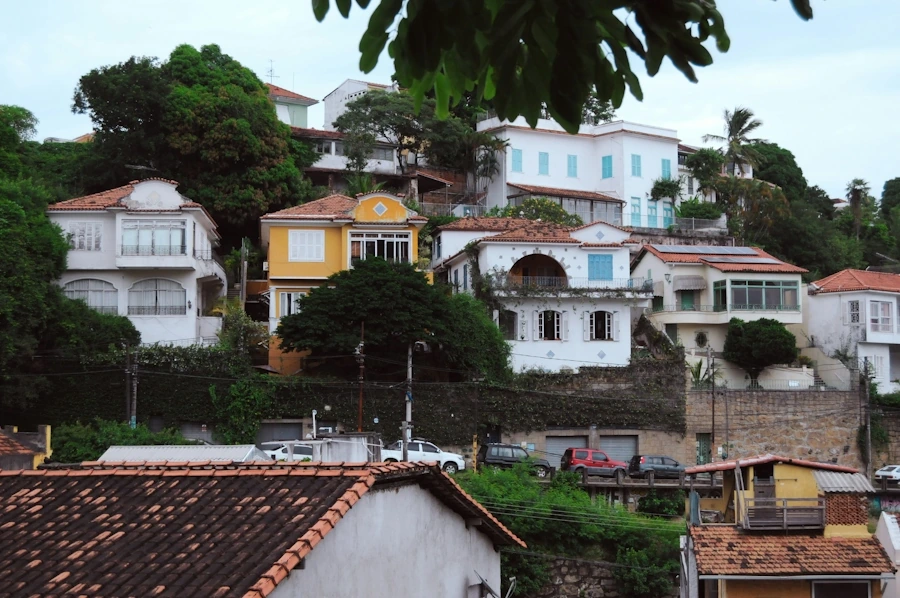
After time beside Rio’s beaches, Santa Teresa makes a refreshing change of scale. The interest shifts from a broad horizon to curving streets, old houses, cultural spaces, and views that appear between buildings. I’d plan a daylight visit with one or two cultural stops and a proper lunch, rather than an ambitious walk that tries to connect every hillside landmark. The neighborhood is rewarding precisely because it invites a slower, more attentive pace.
Start with a clear arrival plan. The historic tram is part of Santa Teresa’s appeal, but services and boarding arrangements need checking through current official information. Taking a car service to a specific public meeting point is another practical option. Do not let the romance of an old tram become the only reason for the visit; if operations change, the neighborhood can still provide a satisfying day. Comfortable shoes matter more than a tightly timed list of photo stops.
Treat the tram as transport with character
When the tram is operating on a suitable route, it can give the approach a distinctive sense of arrival. Check the departure location and current ticket arrangements rather than relying on an old description of frequency. Leave time for waiting and listen to staff about boarding. I’d enjoy the ride for the changing streetscape, without spending the whole journey holding a camera in front of my face or leaning out for a better angle.
Once you get off, pause and orient yourself. Santa Teresa’s slopes and bends make distances feel different from a flat city grid. Choose a modest route between known public places, and do not assume every lane leads somewhere useful for visitors. If you have limited mobility, research the exact surfaces and transfers ahead of time. A short tram experience and a nearby meal may be a better plan than a long walking itinerary that becomes uncomfortable after the first incline.
Make art the reason to step inside
Chácara do Céu is a natural cultural anchor to investigate, with its collection and hillside setting adding context beyond the streets. Check current exhibitions and visiting information directly before arriving. I’d choose a museum stop because the work interests me, not merely because it promises a view. A brief look at the collection beforehand helps you arrive with a question and makes the visit more substantial than moving quickly through rooms toward a window.
Nearby cultural spaces, including the venue commonly known as Parque das Ruínas, can add another layer when open. Names, programs, and access arrangements may change, so verify the current listing. Avoid stacking too many interiors into the same afternoon. One museum and one outdoor cultural stop allow time to notice their differences. If a space is closed, do not fill the gap by wandering into private-looking courtyards; the public streets and a good lunch are enough to keep the day worthwhile.
Walk for details rather than a perfect route
The pleasure of Santa Teresa lies partly in details: a tiled threshold, a shaded wall, an unexpected glimpse of the bay, or the way a bend changes the line of a street. A short walk between selected stops gives those things room to appear. I’d keep to a clear daytime route and ask a local venue for practical guidance if unsure about the next section. A map can show a connection without explaining how sensible or comfortable it is.
Photograph architecture from public space and avoid treating residents as part of the decoration. Do not climb onto walls or block steps for a portrait. On narrow streets, let vehicles and pedestrians pass before stopping. This is also a place where a guide can add value if you want deeper historical context or a more confident route. Choose someone who explains the neighborhood’s life and culture, rather than presenting it simply as an atmospheric backdrop.
Leave lunch long enough to matter
A hilltop neighborhood day is a good occasion for a slower meal. Look at current menus around your chosen route, ask about dishes and portions, and choose a table where you can settle for a while. Brazilian food varies enormously; there is no need to order one famous dish to make the meal legitimate. A simple plate, a shared preparation, or a lighter lunch can all suit the day better than a large celebratory spread.
I’d use the pause to decide how much more walking you want, especially in heat. If you plan to drink, organize the return journey before the afternoon becomes late. Keep the meal connected to the neighborhood rather than treating it as an interval between attractions. A conversation, a patient explanation of the menu, or the view from an ordinary table can become the part you remember most clearly. That is worth leaving a gap in the itinerary.
Keep the Selarón steps optional
The Selarón steps are often attached to Santa Teresa itineraries, but they should be a deliberate addition rather than an automatic downhill shortcut. Check the route and current local advice, and visit at a time when you feel comfortable. The colorful surface attracts crowds, so allow people to pass and avoid occupying the steps for a prolonged photo session. You can appreciate the work without reproducing a particular pose from social media.
If you add the steps and a Lapa-area look, simplify something else. A day that begins with a tram queue, includes two cultural spaces, and ends with a long descent can become fuller than it first appears. I’d choose between a neighborhood-focused Santa Teresa visit and a broader guided connection to Lapa. The first gives you time to linger; the second can explain the transition between areas. Neither needs to claim that every interesting corner has been covered.
Finish while the route still feels easy
Set a sensible departure point before you start the final walk. Phone signal, street layout, and pickup restrictions can make a vague request to collect you somewhere nearby more difficult than expected. A named cultural venue or restaurant with a clear public frontage is easier to communicate. Keep enough battery and water for the return, and do not extend the walk into unfamiliar streets simply because the light is attractive.
The strongest reason to visit Santa Teresa is the way it complicates the familiar image of Rio. Here, cultural interiors, residential streets, slopes, and lunch tables matter as much as the distant view. I’d leave with one or two places to return to, rather than a claim to have discovered an untouched neighborhood. Santa Teresa has a long public identity and a present-day life of its own. A considerate, well-paced visit gives you a better chance of noticing both.
Sources & further reading
First published 18 October 2026. Page updated 19 October 2026. Planning references checked on 18 October 2026. The edition date above follows your device’s time zone; it does not indicate a new research check. Confirm current opening details and booking arrangements with the places you plan to visit.