
THE SHORT VERSION
- Plan around the coastal landscape rather than guaranteed sunset conditions.
- Observe tide-related access and sacred restrictions.
- Use maintained viewpoints and remain behind barriers.
Start with the coast rather than a promise of sunset
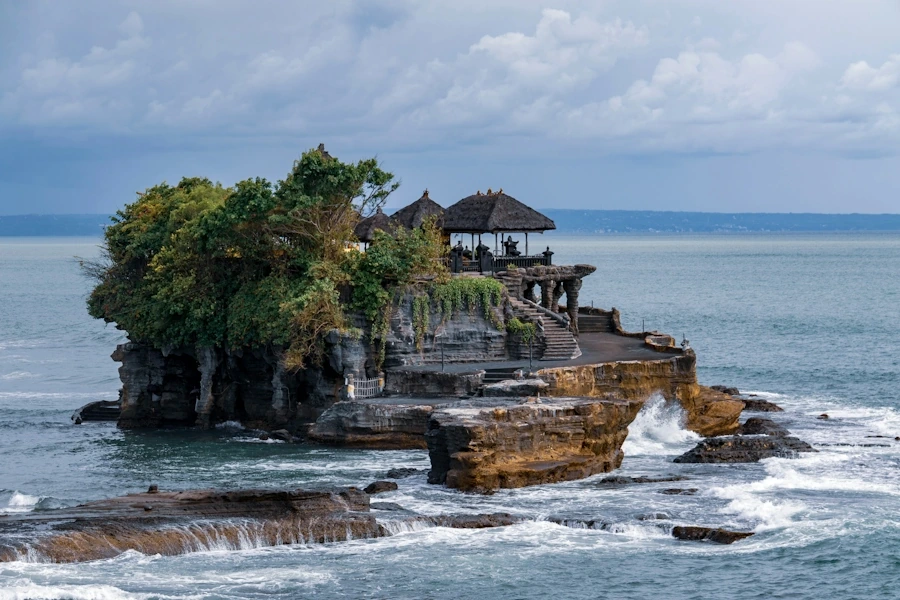
Tanah Lot is strongly associated with a single image: a temple silhouette above the sea at sunset. That image is attractive, but it can make a real visit depend too heavily on weather and timing. I would come for the coastal setting and the relationship between land, rock, water, and religious space. A clear sunset can be a bonus instead of the condition that decides whether the day was worthwhile.
Plan the visit from where you are actually staying. Bali’s road journeys can take much longer than straight-line distances suggest, so avoid adding a long chain of stops before the coast. A driver and a small, realistic route can give you more freedom than an overfilled day tour. Confirm pickup arrangements, the return plan, and what is included before setting out.
Read the site before moving closer
Tanah Lot is an active sacred place within a managed visitor landscape. Follow local instructions about where visitors may go and which areas remain restricted. Changes in tide do not turn every exposed surface into a public route. Indonesia’s official tourism information specifically notes that access is affected by tide and that sacred boundaries remain important.
Begin from designated viewing areas and understand the site’s layout. Look at the main rock formation from more than one permitted angle, then notice the larger shoreline. Water moving around the base changes the scale and mood of the scene. You do not need to reach the closest possible point to appreciate it, and approaching wet rock for a photograph can make a simple visit unnecessarily hazardous.
Let nearby views broaden the picture
The wider complex includes other coastal views and religious structures, including Batu Bolong. Use the maintained public routes and current signs to decide what is available. Stay behind barriers and away from exposed edges. The coast can be visually dramatic from a comfortable position; standing nearer a drop rarely adds anything meaningful to the memory.
Pay attention to how the visitor paths frame the sea. A useful photograph might show the relationship between a temple, the rock beneath it, and the movement of water, rather than isolating the building. If a ceremony is taking place, give participants priority and follow restrictions on images. A religious event is not an unscheduled photo opportunity added to your admission.
Keep the final hour flexible
If you remain for late light, choose your viewing place without blocking a path and accept that clouds may hide the sun. Notice the color of the water and the changing outline of the coast. These details can still make the last part of the visit worthwhile. There is no need to stay until the final possible moment if your group is tired or the weather is worsening.
For food, make a clear choice before everyone is hungry and ready to leave. A meal nearby may be convenient, while a meal on the return route may suit your transport plan better. Either is preferable to letting the day dissolve into a traffic-bound argument over dinner. Tanah Lot works best as a considered coastal visit with enough room around it, rather than the climactic deadline at the end of a rushed island checklist.
Use the tide information without crossing sacred limits
Tanah Lot should be planned from your actual starting point, not from an island map that makes every coastal destination appear a short drive apart. Confirm the travel arrangement and choose at most one modest additional stop that makes geographical sense. A long chain of attractions can leave the temple visit squeezed against sunset and traffic. Agree with your driver where to meet afterward and how long the visit is expected to last. This matters more than a precise photographic minute, because a comfortable return keeps the outing enjoyable after the sky has changed.
Consult the site’s current guidance about tide and access, then follow what staff and signs say when you arrive. Low water may expose ground without making every route appropriate for visitors. The main temple and related structures remain sacred places with boundaries that are independent of your wish to get closer. Do not infer permission from another group crossing a surface. Begin from maintained viewing areas and understand the relationship between the temple rock and surrounding shore. Watching water move around the base from a respectful distance can reveal more than a rushed attempt to approach it.
The view toward Batu Bolong can broaden the visit if the public route is open. Use the maintained path, stay behind barriers, and do not climb onto rocks or a ledge to remove other visitors from an image. The coastline has enough drama without making your own position precarious. If the sea is lively, look at the pattern and scale of the waves from an appropriate viewpoint. Never treat the distance from the latest splash as a dependable safety boundary. Current local instructions and closed areas are more useful than your own visual estimate of the next wave.
Food and shopping can be part of the visit, but they should not determine how closely you approach religious space. Choose a meal or snack where the business intends customers to eat, and ask clear questions about what is included. A small purchase is enough if you simply want a pause. If a ceremony is occurring, keep your attention on permission and circulation rather than on the possibility of an unusual photograph. Participants should not have to negotiate around a visitor’s tripod or wait while a public route is used for a prolonged portrait.
As the light changes, find a place where you can watch comfortably without blocking anyone. A cloudy evening can still offer an expressive coast, while a bright sunset can attract more people than the photograph suggests. Accept either version. If the weather deteriorates or your group is ready to leave, use the planned meeting point and go. You have visited a landscape shaped by sea and religious life, not purchased a guaranteed sky. That is a more accurate expectation and a better basis for remembering Tanah Lot after the familiar silhouette has left your screen.
Keep the photograph geographically honest
Tanah Lot photographs can compress the coast into an isolated temple shape, so take one wider frame from a permitted viewpoint that includes the surrounding land. It helps show how the visitor area, rock formations, and water relate. Avoid captions that imply you entered a sacred interior if your experience was an exterior landscape visit. That distinction does not diminish what you saw. It makes the memory more accurate and respects the boundaries you followed. A truthful description of the coast, conditions, and available viewpoints is more useful to another traveler than an image that suggests unrestricted access to every part of the site.
Sources & further reading
First published 18 October 2026. Page updated 19 October 2026. Planning references checked on 18 October 2026. The edition date above follows your device’s time zone; it does not indicate a new research check. Confirm current opening details and booking arrangements with the places you plan to visit.