
Make this your Cape Town itinerary
THE SHORT VERSION
- Choose a lower-garden or upper-garden route after checking gradients and accessibility.
- Use a few botanical interests or a guided walk to give the visit focus.
- Treat mountain hiking as a separate prepared activity, not a spontaneous garden extension.
Begin with the mountain, then look closer
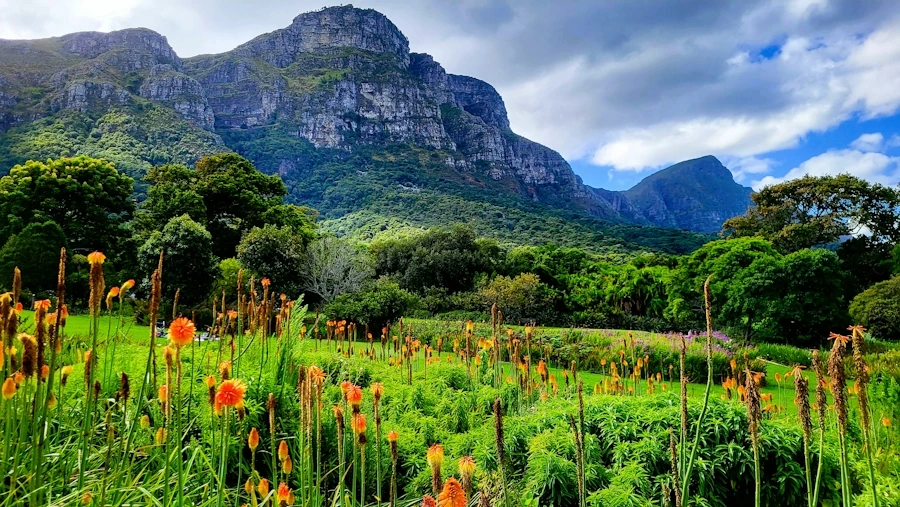
At Kirstenbosch, the mountain does much of the early persuasion. Its steep backdrop makes the garden feel unusually dramatic, even before you have learned the name of a single plant. But I’d come for the smaller discoveries too: leaves with surprising textures, a change in shade, a path that suddenly opens onto a different view. A garden visit becomes more satisfying when you give those details the same attention as the wide photograph everyone wants at the entrance.
Allow a generous half day rather than treating this as a brief stop between two drives. Kirstenbosch sits against the eastern slopes of Table Mountain, and the garden’s gradients influence what a comfortable route looks like. Collect a current map, ask about seasonal highlights, and make one practical decision early: whether you want a mostly lower-garden visit or a longer walk toward the upper areas. Both can provide a full experience without trying to see every named section.
Use the map to choose, not to collect
The temptation with a large garden is to follow every label as though it were a museum room. Instead, choose a few kinds of planting or landscape that interest you. The useful-plants and fragrance areas can be approachable starting points because they connect botanical detail with familiar experiences. Elsewhere, proteas, fynbos planting, cycads, and different textures of foliage invite a closer look. What is flowering changes through the year, so use staff advice rather than a fixed seasonal promise.
I’d move slowly through a small number of areas, reading selected labels and leaving time to compare the plants around them. A sketch, a few notes, or a carefully framed close-up can help you notice more than a quick series of photographs. Avoid touching plants unless a designated feature invites it, and remain on appropriate paths. The garden is also a place of research and conservation, which makes its care and organization part of the interest.
Treat the canopy walkway as one chapter
The Tree Canopy Walkway is an appealing reason to head toward the arboretum area, with a different perspective on the garden and its trees. It is worth visiting if the route suits your mobility and the weather is comfortable, but it should not become the only measure of a successful day. The approach involves gradients, and SANBI’s accessibility information is more useful than assuming that a walkway automatically means an effortless visit.
Once there, allow other visitors to pass and take a little time to look outward as well as along the structure itself. The setting is what gives the experience meaning. I’d avoid making a long queue of poses while people wait behind you. If the upper route is unsuitable, the lower garden still offers substantial interest. Ask about accessible alternatives and choose them confidently; a comfortable route that encourages attention is better than a difficult one selected only for its recognizability.
A guided walk can change what you notice
Kirstenbosch’s volunteer-led walks are worth investigating if you enjoy hearing how plants, climate, and conservation fit together. Check the current schedule and availability directly, since tours have limits and weather affects them. A good garden guide can help you see relationships you might miss alone: why a leaf shape matters, how a plant survives a season, or what makes one landscape distinctive. That can give the rest of your independent wandering much more purpose.
I’d choose a tour as the main structured element of the visit, not squeeze it between several fixed appointments. Arrive in time to find the meeting point, and ask whether the terrain suits everyone in your group. If a walk is not available, give yourself a simple theme, such as water use, leaf forms, or plants used in daily life. Following one question through the garden can be surprisingly rewarding, and it prevents the map from taking over the whole experience.
Leave the hiking decision for a separate plan
The mountain setting can make a trail beyond the garden seem like an obvious extra. It is not a casual substitute for another garden path. Routes connecting toward the mountain require appropriate planning, weather awareness, equipment, and realistic fitness. I’d keep a first Kirstenbosch day within the garden unless a hike is a researched and deliberate part of the trip. A sign pointing uphill does not tell you how demanding the complete outing will become.
This is especially relevant when traveling with companions whose walking abilities differ. Agree on the route before someone heads up a trail assuming everyone will follow. Bring water and a layer even for a garden visit, and check conditions if rain or heat is expected. If the mountain disappears into cloud, the nearer planting can become even more atmospheric. You do not need a clear summit view to find the garden beautiful, and there is no prize for making the day harder.
Make lunch part of the visit
A garden is a good place to give lunch a little space. Investigate the current on-site food options, compare locations with your chosen route, and decide whether you want a sit-down meal or a simpler break. Do not make everyone walk back across the garden just because one restaurant looked attractive online. A comfortable table near the part you are exploring can be the wiser choice, especially with children or limited stamina.
If bringing a picnic, follow current garden rules, use appropriate areas, and carry out what you bring in. I’d keep food compact and easy to manage rather than carrying a large spread all morning. The best lunch setting is the one that lets you relax without damaging planting or disturbing other visitors. Afterward, choose one final area to revisit. Seeing the same landscape under different light can be more enjoyable than using the last hour to reach the farthest point.
Plan the return before the final bench
Check transport arrangements before you arrive, including where you will be collected if using a car service or sightseeing bus. Kirstenbosch is outside the central walking districts, so an improvised departure can be less convenient than it looks. SANBI’s current visitor information covers entrances, facilities, accessibility, and transport details. Use it for operational decisions, and leave enough flexibility that a late lunch or longer walk does not create unnecessary stress.
Before leaving, sit somewhere with a broad view and identify one detail you would otherwise have overlooked. It might be a plant name, a bird, or the way the mountain changes the light across a lawn. I’d remember that alongside the canopy walkway and dramatic backdrop. Kirstenbosch works best as a day of looking closely within a large landscape. Give it enough time, and the smaller discoveries stop feeling small.
Sources & further reading
First published 18 October 2026. Page updated 19 October 2026. Planning references checked on 18 October 2026. The edition date above follows your device’s time zone; it does not indicate a new research check. Confirm current opening details and booking arrangements with the places you plan to visit.