
Make this your Istanbul itinerary
THE SHORT VERSION
- Use the Golden Horn as the route’s orientation rather than chasing one staircase image.
- Check religious-site access with the relevant institution.
- Appreciate the Red School from public streets and plan hillside detours deliberately.
Start with the Golden Horn, not a staircase
Fener and Balat are often introduced through bright houses and steep steps. Those images can be a useful invitation, but they are a thin reason to cross Istanbul for an afternoon. I would begin with the Golden Horn setting and the neighborhoods' layered religious and commercial histories, then let architecture and a café stop give the walk its pace. The photograph can be one moment within the visit rather than the object everyone spends the afternoon trying to reproduce.
Go Türkiye identifies Fener and Balat with historic houses, churches, synagogues, and a waterfront relationship. That offers several themes to choose from, and a small route is enough for a first encounter. The hills matter: use a current pedestrian map and decide how much climbing suits you. A waterfront-led outing can be enjoyable without searching for every elevated view. Travel should let the actual geography refine the plan, not turn it into an obstacle to a saved image.
Understand the streets as inhabited places
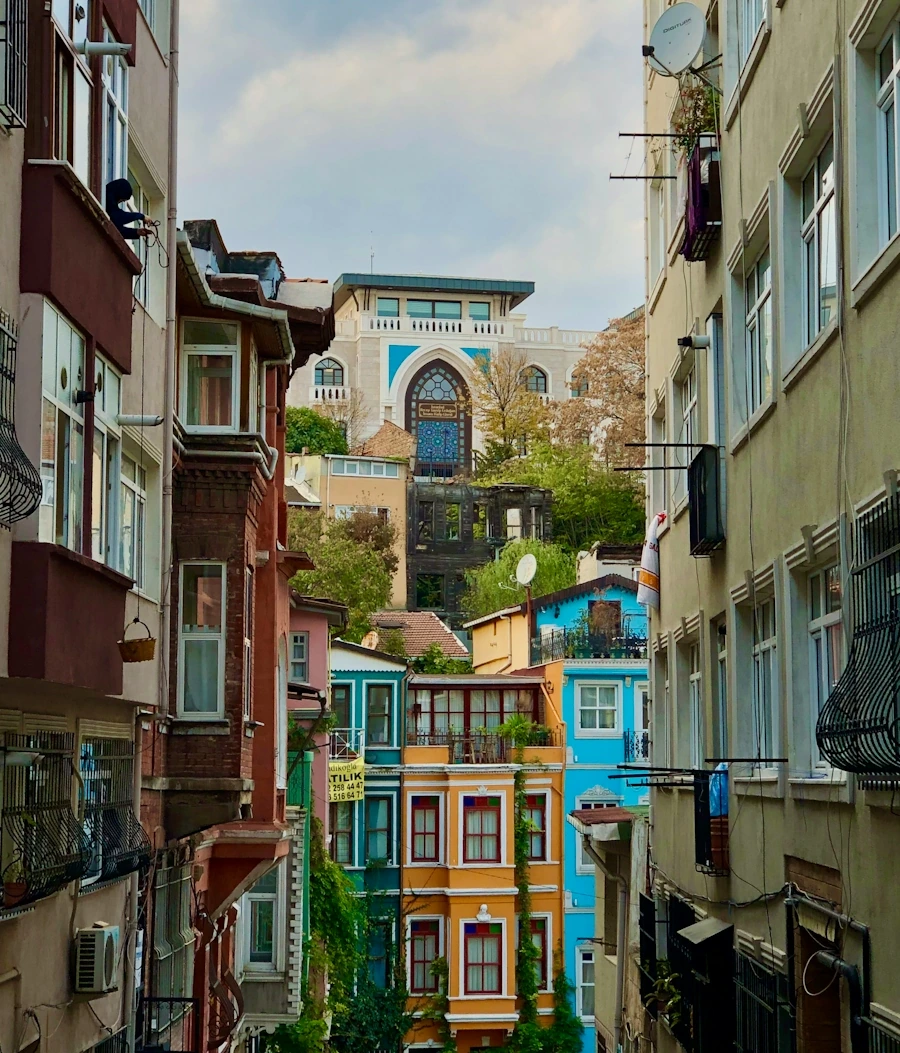
Begin on a public street where you can orient yourself and look at the buildings as a sequence. Notice projecting bays, changes in height, and the way narrow routes climb away from the water. The houses are interesting because of their relationship with the street and with one another, not only because some have bright paint. Looking at an entire block can tell you more than isolating a single doorway against a perfectly empty background.
Keep the distinction between public street and private threshold clear. The areas' popularity does not make entrances, steps, or windows into unrestricted photographic sets. If a particular spot is crowded, move to another part of your route. You do not need to wait for everyone else to disappear before experiencing the neighborhood. The present-day activity is part of what makes the place worth visiting, even when it complicates the image you imagined before arriving.
Choose a heritage stop with proper information
The official tourism guide names places including the Bulgarian Church of St. Stephen and St. George's Church in Fener, while the Ecumenical Patriarchate provides its own institutional information. If a religious interior is a priority, confirm current visitor arrangements through the institution or a reliable official channel. Opening to visitors and opening for worship are not always the same thing. A thoughtful visit begins by understanding the purpose of the place rather than assuming every historic building operates as a museum.
I would choose one substantial stop and give it proper attention. Look at the relationship between the building and its surroundings before entering, then follow the conduct requested inside. If access is unavailable, retain the exterior and continue the walk. The route should have enough interest to remain worthwhile. Religious histories in this part of Istanbul are complex; one afternoon can open questions about them without pretending to summarize several communities through a single building.
Let the Red School remain a school
Fener's large red school building is a prominent part of the neighborhood's skyline and appears in official descriptions of the area. Appreciate it from a public vantage and resist the assumption that an impressive façade implies a visitor attraction. Its continuing educational identity matters. Look at how the building sits on the slope and how it differs from the smaller street architecture around it. That comparison gives the view substance without needing to enter.
Use the wider setting to think about how institutions shape a neighborhood's appearance. A school, church, market, or workshop can establish a visual anchor that remains recognizable even as surrounding uses change. You do not have to know every stage of the history to observe that relationship. A few careful views from appropriate public streets can make the building part of your understanding rather than another item to photograph and immediately forget.
The official tourism guide identifies the area between Yıldırım and Vodina streets near the Golden Horn as one useful focus for a walk. Use that as an orientation clue rather than a promised quiet route. It keeps the plan close to the waterfront while leaving a hillside detour available only if you want it.
Climb only for a reason
A hillside detour is worthwhile if the route itself interests you or leads to a specific place you want to see. Check the gradients and stairs on a current map, and avoid promising a step-free path from a generic route description. I would make one climb rather than repeatedly move up and down searching for a better photograph. That preserves energy and gives the walk a clear shape: waterfront orientation, uphill street detail, and a deliberate return toward a meal or transport.
The famous colorful steps can be a quick look if they happen to fit, but they need not dictate the afternoon. A less photographed street may offer a clearer view of projecting bays, building materials, and the way homes meet the slope. Do not equate a quieter location with a secret discovery. It may simply be an ordinary residential route, best appreciated without turning it into the next crowded destination recommendation.
Choose a café for the pause it offers
A café stop is useful here because the walk asks for attention and often some climbing. Choose according to the menu, seating, and atmosphere you want, rather than the most elaborate decoration. Tea or coffee can provide a comfortable interval while you decide what to do next. If ordering Turkish coffee, ask about the preparation and sweetness you prefer. The point is to enjoy a drink in its setting, not to perform expertise about an unfamiliar ritual.
For a meal, look at actual dishes and portion sizes before ordering. If you are hungry, make it a real lunch; if not, a drink may be enough. I would avoid turning every attractive café frontage into another purchase. The neighborhood walk already has plenty of visual interest. One good pause can help separate the impressions and give you a chance to discuss what you noticed, especially the places that did not appear in your initial saved photographs.
Return to the water with a wider story
Finish near the Golden Horn or a transport connection you have checked in advance. The waterfront can help reorient you after the smaller streets and slopes. Look back at the skyline and place the major buildings you noticed earlier. That final broad view connects the details into a neighborhood rather than leaving a collection of disconnected pictures. It is also a practical point to decide whether the outing is complete or whether a modest additional walk still appeals.
For a first visit, the waterfront, several public streets, one heritage stop, and a café are enough. Keep the pace considerate and the climbing realistic. Fener and Balat are richer when their color becomes one feature among many: architecture, institutions, religious histories, commerce, and everyday movement all deserve some attention. You leave with a place that has depth, which is a much better reason to recommend it than simply promising someone the same photograph.
Sources & further reading
First published 18 October 2026. Page updated 19 October 2026. Planning references checked on 18 October 2026. The edition date above follows your device’s time zone; it does not indicate a new research check. Confirm current opening details and booking arrangements with the places you plan to visit.