
Make this your Istanbul itinerary
THE SHORT VERSION
- Choose Topkapı as one day’s main interior and check the exact admission scope.
- Use Sultanahmet’s public spaces to connect the monuments visually.
- Treat active religious-site visits as separate, deliberate plans.
The cluster is not the itinerary
Around Sultanahmet, Istanbul places several major monuments close enough to make a first plan look effortless. The difficulty is attention, not distance. A palace, a great mosque, and the wider historic setting each deserve more than a brief interval between queues. I would choose Topkapı Palace as the main interior for one day and let the surrounding public spaces supply a slower continuation. Keep other major interiors for a separate outing when their particular stories can hold the center.
That choice does not mean ignoring the buildings around you. Exterior views, the relationship between monuments, and the shape of public space already offer a substantial encounter with the historic city. Look at how domes, minarets, walls, and open ground create different scales. A first visit becomes more useful when you understand a small area clearly rather than leave with five entrance tickets and no sense of how the places fit together.
Give Topkapı the best part of your attention
The National Palaces administration identifies Topkapı with the headland at the southern mouth of the Bosphorus and explains its development through gardens, pavilions, and enclosing walls. That geography gives you an immediate way into the visit. Think about a palace as a complex arranged across a site rather than one grand building. Look at how courtyards, thresholds, and views control movement and create different kinds of space. The sequence is part of the story.
Consult the palace operator's current ticket and visitor information, including what particular areas are included. Do not assume every section advertised in a guide is covered by the same admission. Choose the rooms or collections that interest you and let them determine the time you need. I would avoid fixing lunch too tightly afterward. A palace visit can expand once its layout begins to make sense, and the final part deserves more than a glance at the clock.
Courtyards can tell the story too
It is easy to focus on decorated rooms and overlook the spaces connecting them. At Topkapı, pause where the route allows and notice how openness changes from one area to another. What can you see before passing a threshold, and what becomes visible only afterward? How does an elevated or outward-facing view alter the experience? These are questions you can explore through observation, supported by official interpretation, without needing to memorize a complete court history before arriving.
Choose a few details to remember rather than attempt to document every display. A particular material, a view framed by architecture, or a shift between courtyard and room can become a clear memory of the place. Read labels selectively and follow the route rules. Collections and sacred objects may require different conduct from ordinary outdoor areas. The visit is richer when you allow those differences to shape your pace instead of moving through everything with the same photographic routine.
Return to Sultanahmet with a wider view
After the palace, give yourself time outdoors before choosing another interior. The public spaces around Sultanahmet help connect the monumental buildings at a larger scale. Take a short route that lets you look across rather than only up. Compare the distance between buildings, their different silhouettes, and the way visitors and everyday movement share the area. The surrounding city is not simply empty space left between the attractions; it helps explain how they are experienced together.
I would choose one comfortable pause before deciding what comes next. A drink or a seat can separate palace attention from street attention. If the group has different priorities, this is a useful decision point. Someone may want a longer meal while another would enjoy a short walk. Keep the next stage small enough that it can accommodate both preferences. The day has already delivered a major cultural visit, so there is no need to prove that the remaining hours are equally ambitious.
A mosque visit requires its own intention
If the Blue Mosque is a genuine priority, consult its visitor guidance and account for its continuing role as a place of worship. Sightseeing access and prayer have different purposes and rhythms. Follow the requested dress and conduct rules and leave enough time for a quiet visit. Do not treat it as an interchangeable extra available whenever the palace finishes. A religious interior deserves a more considered approach than whatever gap happens to remain before dinner.
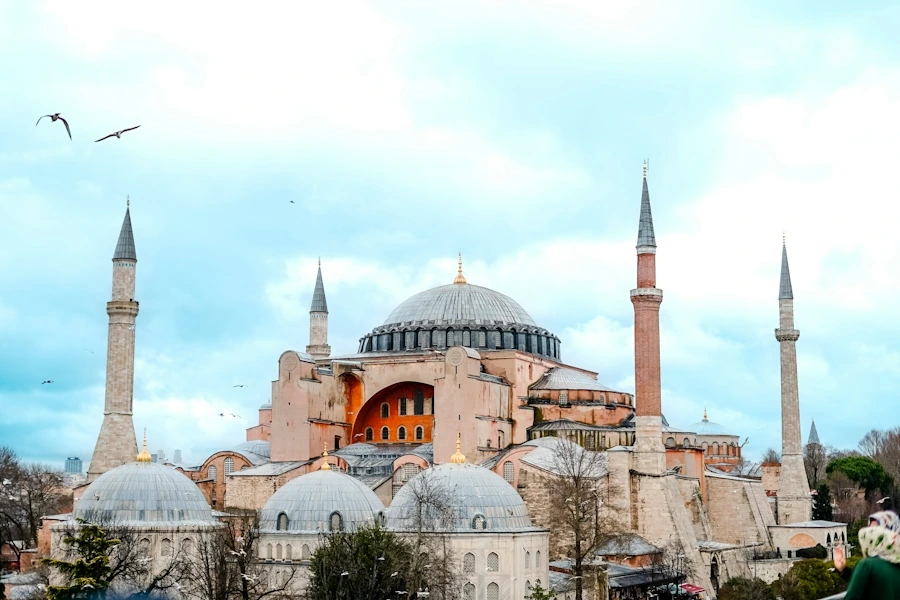
Hagia Sophia also has visitor arrangements that should be checked through current authoritative information rather than assumptions from earlier trips or old articles. For a first day, you can appreciate the exterior setting and reserve an interior-focused visit for later. That is a practical choice, not a lesser experience. The building's presence contributes to your understanding of the historic area even when you do not enter, and a return can then begin with a clearer sense of place.
Lunch should make the afternoon simpler
Choose food according to appetite, menu, and the kind of rest you need. A substantial palace visit often makes a proper seat more useful than another snack eaten while walking. Read the actual offering and ask about dishes you do not know. A lokanta-style meal, a modest restaurant lunch, or a café can each fit depending on the venue. There is no requirement to turn the meal into a survey of Turkish cuisine after a morning already dense with information.
Agree on budget before sitting down with a group and clarify what is included when ordering an unfamiliar set or selection. These ordinary questions make the meal easier to enjoy. I would keep the rest of the afternoon flexible after lunch. You might want a little more public-space wandering, a garden pause where access allows, or a direct journey back. A rewarding day can end while you still have enough energy to look forward to the evening.
Keep the historic city in chapters
Use a current transport map for the journey home and avoid adding a distant neighborhood simply because you have finished earlier than expected. The historic area is large enough to reward a second visit with a different anchor. A future day might focus on religious architecture or another museum, while today's palace-led route remains clear in memory. Dividing the subjects can make their differences more visible and prevent a complicated history from turning into a blur of impressive interiors.
The strongest first version is simple: Topkapı, public-space orientation around Sultanahmet, lunch, and one optional short continuation. Check current site arrangements before traveling and keep the route responsive to your actual attention. Istanbul's old city offers more than one day can absorb. Leaving with a few connected observations and a reason to return is a better outcome than trying to make every landmark fit inside the same afternoon.
Sources & further reading
First published 18 October 2026. Page updated 19 October 2026. Planning references checked on 18 October 2026. The edition date above follows your device’s time zone; it does not indicate a new research check. Confirm current opening details and booking arrangements with the places you plan to visit.