
Make this your London itinerary
THE SHORT VERSION
- Choose one main interior from Greenwich’s different cultural attractions.
- Use lunch as a break before the park and hill.
- Check the Observatory’s announced refurbishment arrangements for visits after October 2026.
Give Greenwich more than the journey
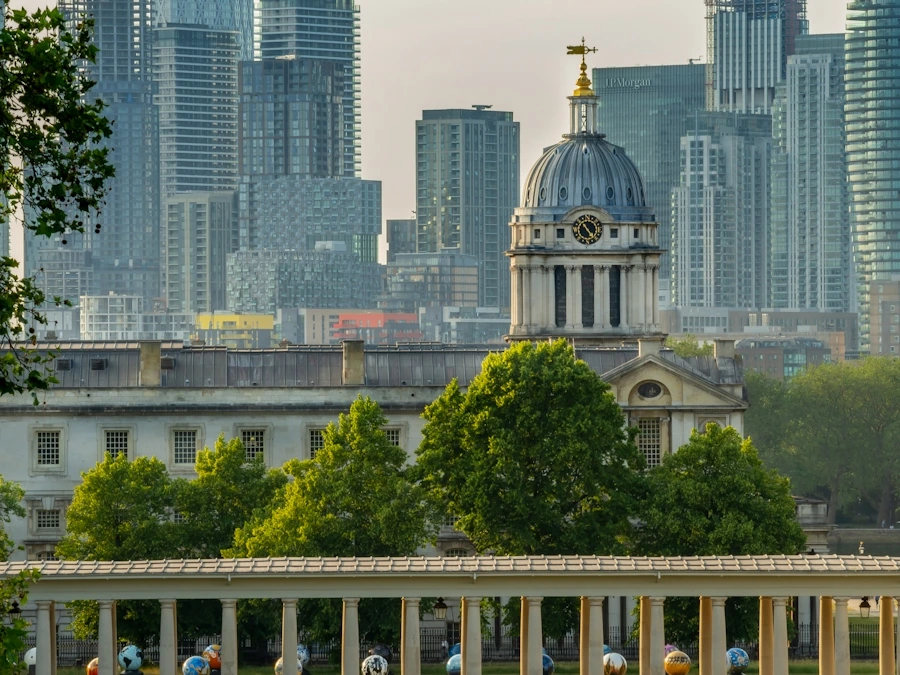
Greenwich can look like an optional excursion on a London map, but it has enough of its own shape to deserve a day. The river brings you in, substantial buildings establish a sense of place, museums offer several different stories, and the park gives the city a wider frame. I would choose one main interior and leave the rest flexible. The mistake is to arrive late, race up the hill, and leave with the impression that Greenwich was mostly a transport exercise.
Decide what draws you here before booking anything. Ships and trade suggest Cutty Sark or the National Maritime Museum; art and architecture point toward the Queen's House or Old Royal Naval College; astronomy gives the Observatory a particular appeal. Royal Museums Greenwich manages several of these sites, but their access arrangements differ. A list of nearby attractions is a menu of choices, not a challenge to complete every building in one continuous visit.
Let the arrival help you understand the place
Arriving by river can make sense if the journey itself appeals, while rail and DLR connections may be more practical from your starting point. Check the current operator information and choose for the day you want rather than the transport photograph you hope to take. Once there, pause near the river and establish the relationship between the waterfront, town center, and park. Those few minutes make the later museum and hill feel connected rather than like separate attractions.
I would avoid reserving a return journey too tightly after the main visit. A fixed departure can make a park pause feel like a delay even when it is the most enjoyable part of the day. Keep a practical alternative in mind and allow for the actual walking route back to transport. Greenwich is manageable when you acknowledge its geography; it becomes tiring when every apparent gap on the map is filled with another compulsory stop.
Choose your maritime story
The National Maritime Museum is a strong choice for broader questions about ships, navigation, trade, and the relationships built through sea travel. Pick a theme or a small group of galleries rather than expecting one visit to settle the whole subject. Look for the human decisions behind the objects: who used a tool, what a map made possible, and whose account is being represented. Maritime history becomes more engaging when it is not reduced to admiring impressive vessels.
Cutty Sark provides a more focused encounter with a historic ship. If the vessel itself is your main interest, give it the time and ticket priority that deserves. Do not add the museum simply because it is nearby unless you want its broader context. Check each site's current visit information and choose the combination that fits your attention. A single detailed visit can leave a stronger impression than several interiors encountered after you are already watching the clock.
The four Royal Museums Greenwich sites are distinct enough to make choosing worthwhile: a historic ship, maritime museum, art-filled Queen's House, and observatory. A traveler excited by navigation might pair a museum theme with a park view; someone interested in painting could spend more of the day inside the Queen's House.
Architecture can be the main attraction
The Old Royal Naval College offers a substantial architectural anchor beside the river, with its own visitor program and access information. Look at the arrangement of buildings and open spaces before deciding which interior experience to book. Architecture is easier to appreciate when you first understand how you move through its setting. The spaces between buildings, the relationship with the water, and the longer views all contribute to the impression.
For a more focused art visit, investigate the Queen's House through Royal Museums Greenwich. I would make it an alternative to another long interior rather than a hurried addition. Ask what kind of visit you want: a collection, an architectural experience, or a guided interpretation. That choice matters more than the number of famous names attached to the building. Greenwich's strength is that different interests can produce different good days within the same compact area.
Eat before you climb
The town center and Greenwich Market provide a useful meal interval. The market's own information covers food, crafts, and other traders, so check what is operating on your date. Make a circuit before ordering and decide whether takeaway or a seated meal fits your needs. A group with different tastes may appreciate choice; someone needing a real rest may prefer a table elsewhere. The goal is to leave lunch with enough energy for the second half of the day.
If you are planning the park and hill afterward, avoid postponing food until everyone is tired. A modest lunch before the climb can be more enjoyable than an ambitious search at the top of the afternoon. Buy only what you can comfortably carry and consume in an appropriate place. Markets are enjoyable when you have room to browse, so keep one eye on appetite and another on the practical question of where you will actually sit.
The hill changes the whole view
Greenwich Park supplies the outdoor chapter, with higher ground allowing a different relationship to the buildings and river below. Choose a route that suits your mobility and use current access information rather than assuming every park path has the same gradient. You do not need to reach every viewpoint for the visit to count. The change from close architectural detail to a broad urban panorama is what makes the park such a satisfying companion to the museums.
If the Royal Observatory is central to your plans, check its operator's notice before booking: the official site currently announces a refurbishment closure beginning in November 2026. That is an especially good reason not to build a future trip around an assumed admission. Greenwich still offers a rewarding day if a particular institution is unavailable, but choosing knowingly is better than discovering the change after walking up the hill with a timed plan in mind.
Leave by the simplest route
A final riverside pause can make a pleasant ending, but it should remain optional. If you are comfortably tired, take the direct journey home. If there is energy left, use it for another look at the setting rather than a last-minute race through an extra attraction. London trips often accumulate more ideas than time; Greenwich is a good place to practice enjoying a completed day without trying to squeeze in a second one on the way out.
My ideal first version would be arrival, one museum or ship visit, lunch, the park, and a flexible departure. An architecture-focused return could prioritize the college and Queen's House instead. Save the choices you did not make. Greenwich is most rewarding when it feels like a place with its own rhythm, and a single generous day gives that rhythm a chance to emerge.
Sources & further reading
First published 18 October 2026. Page updated 19 October 2026. Planning references checked on 18 October 2026. The edition date above follows your device’s time zone; it does not indicate a new research check. Confirm current opening details and booking arrangements with the places you plan to visit.