Make this your London itinerary
THE SHORT VERSION
- Choose the V&A or Natural History Museum according to your interests.
- Check the specific South Kensington site and exhibition arrangements.
- Use lunch or an outdoor pause before deciding whether to add anything else.
Two famous neighbors do not require two tickets
South Kensington makes an ambitious museum day dangerously easy to imagine. The buildings stand close enough that one large collection can look like a natural prelude to the next. I would resist that logic. Choose the V&A for art, design, materials, and making; choose the Natural History Museum for the natural world and the questions it raises. Then build a meal and a little outside time around that choice. You will remember more if the afternoon has a change of texture.
The right choice is personal. Someone fascinated by clothing, ceramics, or furniture may find more to engage with at the V&A; someone drawn to fossils, animals, or scientific investigation may prefer natural history. Look at the institutions' own collection and exhibition information before deciding. A famous building can be enjoyed from the street without requiring you to inspect all its contents. Proximity should make planning easier, not turn every neighboring institution into another obligation.
Start with a subject you already care about
A large museum becomes manageable when you enter through an interest rather than a map. At the V&A, choose a material, a type of object, or a historical area that genuinely attracts you. At the Natural History Museum, choose a scientific question or a small group of galleries. The point is not to exclude everything else; it is to give your attention a useful starting place. Once absorbed, you can follow a new interest without losing the whole day to indecision.
Check current gallery access and any ticketed exhibition separately from general admission. A collection may be free to enter while a special show needs a booking, and entrance queues can affect timing. Use the correct South Kensington visitor pages: the V&A now has multiple sites, so a general name search is not enough to confirm the building you intend to visit. Save the address, entrance instructions, and accessibility information you need before leaving your accommodation.
At the V&A, look for the work of making
The V&A rewards attention to how things are made as much as what they represent. Choose a few objects and look for evidence of decisions: material, join, surface, proportion, or decoration. Ask what would change if the maker had chosen differently. You do not need craft expertise to notice a handle designed for a hand or a pattern made to fit a surface. The collection can turn ordinary acts of looking into more precise questions.
Read the label after examining the object, then look again for the information you missed. A date, origin, or purpose can alter the first impression without replacing it. If traveling with someone, choose an object each and explain why it works or does not work for you. Disagreement can make the visit livelier. A museum of design is a good place to discover that personal taste and thoughtful attention do not always lead to the same conclusion.
At the V&A, a single object type can provide continuity across unfamiliar periods and places. Follow a vessel, a garment, or a seat as a problem of making rather than trying to master every historical context. The approach makes differences in proportion and surface easier to notice and keeps the visit grounded in something tangible.
At natural history, move beyond recognition
The Natural History Museum can begin with the simple pleasure of recognizing an animal or fossil. Let that recognition lead to a question: how was this understood, what evidence supports the interpretation, and how does it relate to living environments? Choose displays that explain processes rather than only collecting dramatic specimens. A smaller selection can help you see the museum as a place of scientific inquiry instead of a hall of impressive objects.
With children, agree on a few priorities and build in rest before attention disappears. With adults, allow the same courtesy. Nobody becomes a better museum visitor by continuing past the point of interest. If a particular gallery is crowded, switch to another available subject and return only if you want to. Consult the current map and visitor information for the actual route. A flexible choice inside the building is more effective than a rigid sequence prepared from old photographs.
The building deserves a little time too
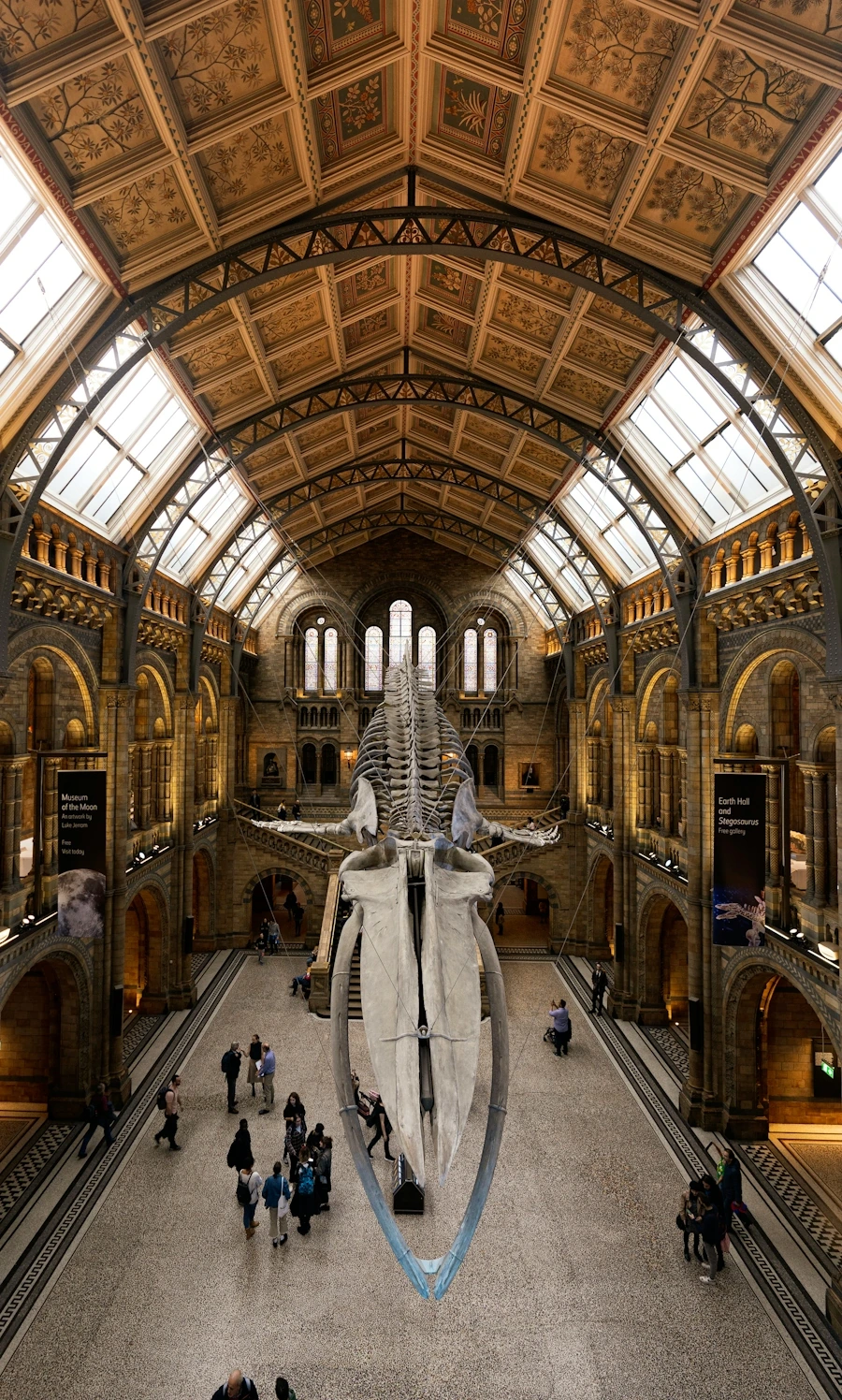
Whichever museum you choose, look at its architecture before and after the collection visit. Notice how the entrance prepares you for what follows and how a large hall or staircase affects your pace. A building can make a subject feel grand, approachable, ordered, or surprising. These effects are part of the visit, even if you never learn the full architectural history. Comparing the exterior with the internal spaces gives you another way to remember the institution.
I would take a short outside pause before deciding on the next activity. This prevents a common mistake: leaving one museum and immediately entering another because you are still in sightseeing mode. A drink, a few minutes of fresh air, and a look at the time can clarify what you actually want. You may be ready for a second small visit, but you may also have had exactly enough. Both are successful outcomes.
Choose lunch for comfort and clarity
Museum cafés can be convenient, while nearby streets offer other possibilities. Check menus and seating rather than assuming one option is always better value or more pleasant. A meal inside can preserve energy on a wet day; a table elsewhere can help separate the cultural visit from the rest of London. The important question is what kind of break you need after standing, reading, and looking. Plan for that need instead of treating lunch as an inconvenient gap.
If the main visit includes a timed exhibition, put the meal on the side that leaves you relaxed. Do not arrange a tight restaurant booking immediately after a gallery you are excited about. You should be able to linger over an unexpected object without calculating the walk to the table. For a group, agree on budget and appetite first. A short practical discussion will save more energy than another twenty minutes comparing an endless list of nearby recommendations.
Let the rest of London wait a little
After lunch, choose between a modest neighborhood walk and a direct trip somewhere that offers a genuinely different experience. More museum rooms are not the only way to make use of the afternoon. You might want a park, a bookshop, or time back at your accommodation before dinner. Save the neighboring museum for another day, when its subject can have your full attention. South Kensington's density makes repeat visits easy to imagine without making any one visit incomplete.
For the simplest plan, choose a museum, select a few galleries, take a proper break, and leave. If you return, use a different subject as the entry point. A city with such rich collections rewards that kind of repeat attention. The purpose is not to prove how much culture you can consume in a day. It is to leave looking at the world a little differently, with enough energy to notice what happens beyond the museum doors.
Sources & further reading
First published 18 October 2026. Page updated 19 October 2026. Planning references checked on 18 October 2026. The edition date above follows your device’s time zone; it does not indicate a new research check. Confirm current opening details and booking arrangements with the places you plan to visit.