
Make this your New Orleans itinerary
THE SHORT VERSION
- Begin in daylight with Jackson Square, surrounding streets, and one museum anchor.
- Use the Historic New Orleans Collection to connect visible architecture with city history.
- Save a separate evening visit for nightlife rather than stretching a morning walk until exhaustion.
Give the Quarter a daylight personality
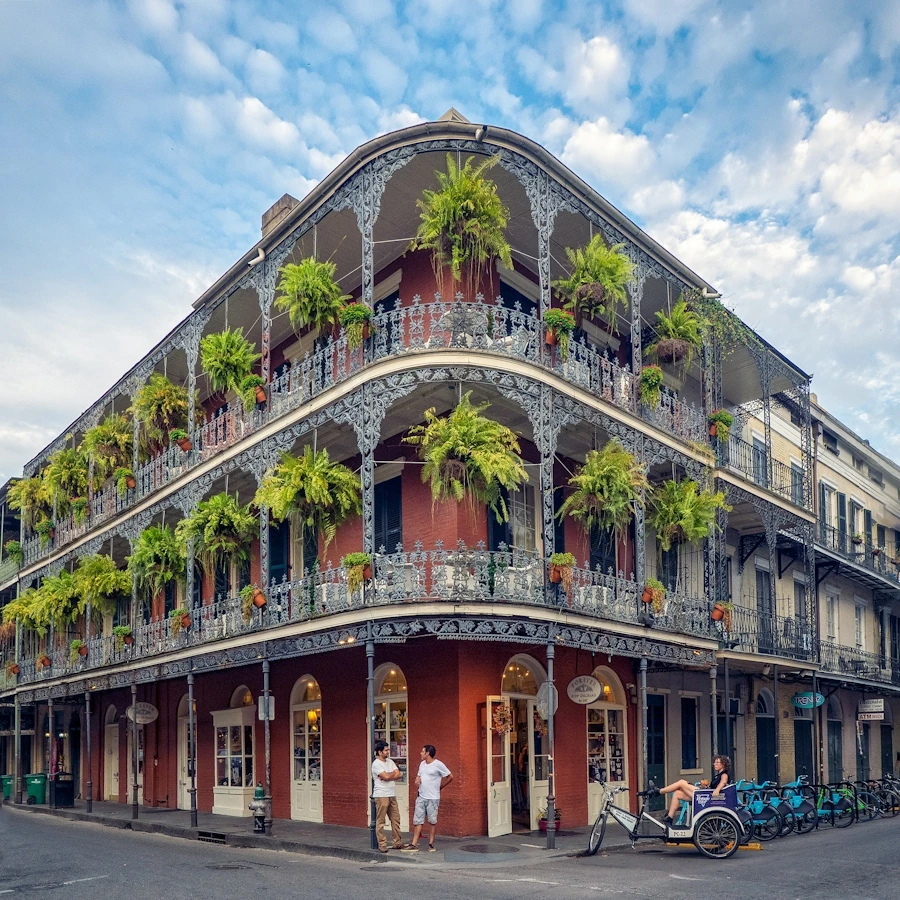
The French Quarter is often introduced through its nightlife, but I’d begin in the morning, when architecture and street activity are easier to notice without competing with a late-night crowd. Balconies, courtyards glimpsed from public space, shopfronts, and the river edge can carry a full outing. This is a neighborhood with residents and working businesses as well as an enormous visitor identity. Seeing it in daylight helps you recognize more than the version advertised by a neon sign.
Start with a simple sequence: a substantial breakfast or coffee, a walk around Jackson Square and nearby streets, one museum visit, and a pause beside the Mississippi. That is enough for a rewarding half day, with room to extend into lunch. Warm weather can make a compact district feel surprisingly demanding, so plan shade and water from the beginning. The most useful restraint is choosing one indoor cultural anchor rather than attempting to enter every appealing historic building.
Look at the square from several edges
Jackson Square gives you a recognizable center, but the surrounding streets are where the Quarter becomes more textured. Walk part of the perimeter and look at how the cathedral and adjacent buildings organize the space. If entering a religious site, respect services and posted visitor arrangements. The square’s performers and artists are working, so ask before close photographs and support a performance you stop to enjoy rather than treating it as a free background soundtrack.
I’d take a few blocks at a time along streets such as Royal or Chartres, noticing details above ground level. Do not enter a courtyard just because an open gate makes it look inviting; check whether it is public or part of a business that welcomes customers. A quiet façade can sit around the corner from a busy commercial stretch. That change in scale is one of the reasons the district rewards walking slowly, rather than searching only for its best-known intersection.
Use a museum to make the buildings speak
The Historic New Orleans Collection offers a strong way to add context to the walk. Check the current exhibition program and visitor information before arrival, then choose a topic that interests you. The city’s history involves overlapping cultures, commerce, racial hierarchies, music, and adaptation; a good exhibition helps connect visible architecture with less visible lives. You do not need a complete overview to gain something useful from one focused visit.
Give the museum enough time that it is more than a stop for air-conditioning. Read the interpretation around a few objects carefully, then consider what the street outside might conceal as well as display. I’d avoid turning every complicated story into a romantic phrase about timeless charm. The beauty of a building does not explain the labor, wealth, and inequality that made it possible. Looking at those relationships can deepen the pleasure of the neighborhood without requiring you to stop enjoying its visual detail.
Make breakfast or lunch a real choice
Beignets, po’boys, gumbo, and other familiar foods can all become part of a visit, but there is no need to force them into one meal. Choose according to your appetite and the place in front of you. A famous queue may be worth joining if that experience matters to you; otherwise, another café with a comfortable seat can provide a better morning. I’d check current menus and opening information rather than assuming every historic name is equally convenient at every hour.
Ask about ingredients, especially around shellfish, meat stocks, and shared fryers if you have dietary restrictions. Portion sizes vary, so a modest order can leave room for another meal later. Eat sitting down whenever possible, and use the pause to decide what remains enjoyable. A full lunch after a substantial breakfast is not always necessary. The Quarter’s food is more memorable when you pay attention to one satisfying dish than when you treat the day as a series of compulsory bites.
Let the river widen the view
The Mississippi offers a valuable change after enclosed streets and indoor interpretation. Find an appropriate public waterfront stretch and watch the river as a working landscape: vessels, currents, opposite-bank buildings, and the scale of the water itself. It helps explain why the city developed here, even if you do not take a cruise. I’d leave enough time to sit rather than use the river only as the background to a quick photograph.
A ferry or boat trip can be a worthwhile separate activity if the current schedule, departure point, and duration fit. Check those details directly before buying, particularly if you have a reservation afterward. Do not assume a scenic vessel and a public transport crossing provide the same experience. In hot weather, exposed waterfront areas can feel very different from a shaded street. Bring water and a hat, and choose an earlier or shorter pause if the conditions are uncomfortable. The river will remain impressive without an endurance test.
A short street sequence for a first visit
For a compact morning, begin around Jackson Square, walk a measured section of Chartres, and return by part of Royal rather than drawing a complicated zigzag across the district. The parallel streets let you compare public buildings, shops, and residential details without constantly consulting a map. Add the museum as a separate pause, then finish toward the river when you want a broader horizon.
If you are interested in shopping, choose an actual subject: books, music, art, or a useful local product. Browsing becomes more rewarding when you know what you are looking at, and you avoid buying the first generic souvenir because every shop seems equally plausible. Ask about the maker or publisher where appropriate. A small purchase with a specific connection to the city can preserve the day’s character better than another novelty item with the neighborhood name printed on it.
Keep the evening separate if you want it
If you also want the Quarter after dark, consider returning after a rest rather than extending a morning outing until you are tired. Dinner, a performance, and a nightlife wander create a different rhythm from architecture and museum visits. Make a deliberate choice about what you want from the evening, and check venue arrangements. Bourbon Street is one part of the district’s public identity, not the only possible way to enjoy it.
For the daytime visit, finish with a detail that belongs to the place: a museum story, a doorway you understood differently afterward, the sound of the river against a busy urban edge. I’d leave some streets unexplored rather than walk them only to shade in a map. The French Quarter can be crowded and heavily marketed, but it still rewards attention. A good morning gives you enough space to see both the spectacle and the ordinary life that continues around it.
Sources & further reading
First published 18 October 2026. Page updated 19 October 2026. Planning references checked on 18 October 2026. The edition date above follows your device’s time zone; it does not indicate a new research check. Confirm current opening details and booking arrangements with the places you plan to visit.