
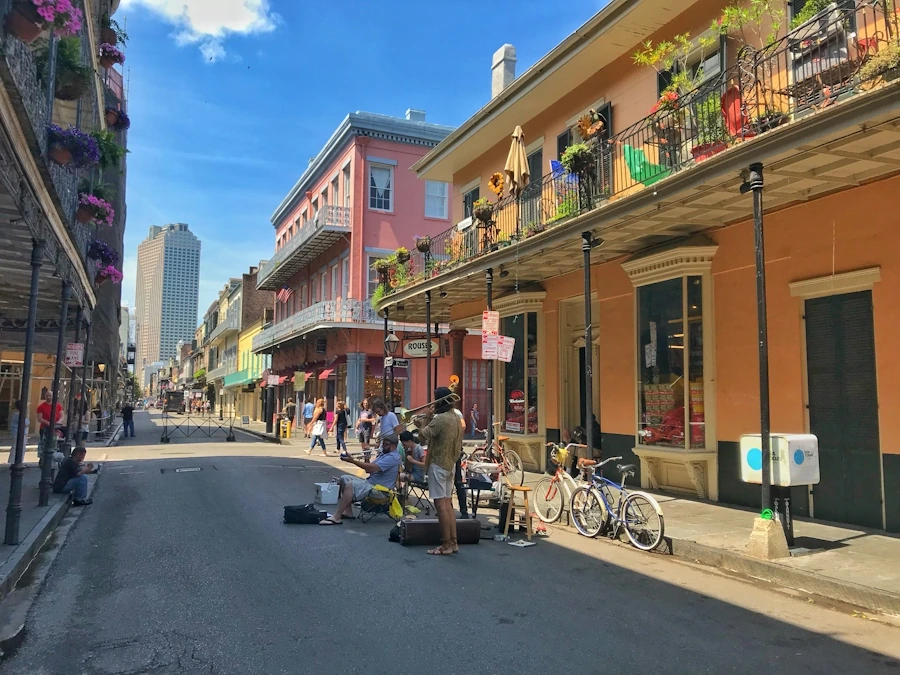
Make this your New Orleans itinerary
THE SHORT VERSION
- Choose a specific performance and confirm age, ticket, seating, and minimum-spend rules.
- Give Tremé and Congo Square historical context rather than treating them as music scenery.
- Stay for a full set when possible and support the musicians without excessive recording.
Begin with listening, not venue collecting
New Orleans can tempt you into planning a musical evening as a string of bars: hear a little here, move on, repeat. I’d choose one performance you actually want to hear and build the rest of the day around its context. Tremé, a cultural institution or interpretive stop, a proper meal, and an evening on Frenchmen Street can make a rewarding sequence. The point is not to claim you have sampled the whole city’s sound in a night.
Check the current performance calendar and venue rules early, including ticketing, minimum purchases, age restrictions, and seating. Some spaces are ideal for a focused concert; others are lively rooms where conversation and music coexist. Pick the setting that matches your expectations. If you are traveling with children, do not assume an early arrival guarantees admission. A little preparation makes the difference between looking forward to the music and negotiating basic arrangements at the door while the set begins.
Give Tremé its historical weight
Tremé deserves a visit that acknowledges its importance in Black cultural life rather than using it only as a prelude to nightlife elsewhere. Around Louis Armstrong Park and Congo Square, public space connects with the history of music, gathering, and community. Read the available interpretation and consider a knowledgeable locally led walk if you want deeper context. The stories are richer than a simplified claim that jazz appeared in one place at one convenient moment.
I’d move through residential streets respectfully and keep the route intentional. A house is not an attraction because its neighborhood is culturally significant. Public art, community institutions, churches, and museum programs provide more appropriate points of engagement when visitor access is clear. Check the current program at a relevant cultural venue rather than expecting a performance to be waiting for you. Living traditions happen according to community rhythms, not a traveler’s desire for an atmospheric afternoon.
Use interpretation before the performance
The National Park Service’s New Orleans Jazz program is useful to investigate for current educational offerings and events. Its focus can help connect musicians, place, and history before you enter a club. Check where any activity actually takes place, since visitor facilities and program locations can change. Do not travel to an old address copied from a blog without confirming the current arrangement. A concise talk or interpreted event can add more to the evening than another unscheduled hour wandering.
If no suitable program fits, listen to a few recordings and read about the musicians you might hear later. That is a simple way to arrive with an ear for something specific: a rhythmic pattern, the role of an instrument, a composer’s work, or a relationship between musical traditions. I’d rather recognize one idea during a live set than record several minutes on a phone without really listening. Preparation should sharpen enjoyment, not turn the concert into a test.
Make Frenchmen a place to stay for a set
Frenchmen Street offers a concentration of music venues near the Quarter and Marigny, which makes it easy to compare possibilities but also easy to keep moving without settling. Look at actual listings and choose a performance that suits your taste. Jazz, blues, and other music can share the broader corridor; the street name alone does not tell you what a particular room will offer that night. Check the artist, start time, and ticket arrangements.
Once you choose, give the musicians a full set when possible. Buy the required admission or minimum, tip appropriately where the setting invites it, and avoid talking loudly over a performance you came to hear. Ask or check policy before recording. I’d keep the phone away for most of the music; a memory of the room’s sound and the interplay between musicians is worth more than a shaky clip watched once. Moving to a second venue afterward can be fun, but it should not interrupt the experience you already have.
Eat before the music becomes urgent
A proper meal before the evening prevents hunger from deciding which venue you enter. Choose somewhere near your route or accommodation and allow enough time that service delays do not make you anxious. Local food can be an important part of the day, but a long restaurant wait is not automatically worthwhile when it competes with a performance you genuinely want. Look at current menus and booking arrangements, and be clear about allergies and other dietary needs.
I’d keep alcohol moderate if listening is the main purpose. Water, a comfortable seat, and enough energy for the set can make the night much more enjoyable. If eating after the performance, confirm a real option rather than assuming every nearby kitchen serves late. The neighborhood around a popular music corridor remains residential in places, so keep voices down as you move between venues. A lively night does not require carrying the noise onto every surrounding street.
Choose the room as carefully as the genre
A seated listening room and a busy standing club can present the same broad genre in very different ways. If you want to hear quiet interplay and follow a full performance, look for a venue whose seating and show structure support that attention. If you want to move, socialize, and sample a lively evening, a less formal room may suit you better. Neither is inherently the more authentic choice; the useful distinction is whether the setting matches your reason for going.
Read the actual artist listing too. An early set, a special guest, or an ensemble format may matter more than the reputation of the street outside. I’d select one performance on that basis, then keep any later stop spontaneous. That leaves room for a musician’s recommendation or a second set you unexpectedly want to hear, instead of abandoning a good room because another pin is waiting.
Respect the traditions you happen to encounter
You may encounter street music, a parade, or another community event during the trip, but do not make such an encounter a guaranteed itinerary item. Learn the context, keep out of the way of participants, and follow local guidance about joining or photographing. A second line, a funeral-related procession, and a performance arranged for visitors are not interchangeable cultural experiences. Treating everything as entertainment removes the meaning that made you interested in the first place.
At the end of the night, use a clear and sensible return plan, especially if tired or unfamiliar with surrounding streets. Save the artist’s name and look for a legitimate way to support or hear more of their work afterward. I’d remember this day through the connections: history in Tremé, an idea learned before the show, and the particular sound of musicians sharing a room. That is a stronger encounter with New Orleans than a list of clubs visited briefly and forgotten by morning.
Sources & further reading
First published 18 October 2026. Page updated 19 October 2026. Planning references checked on 18 October 2026. The edition date above follows your device’s time zone; it does not indicate a new research check. Confirm current opening details and booking arrangements with the places you plan to visit.