
Make this your New York itinerary
THE SHORT VERSION
- Use the bridge as the center of a half-day route, with Lower Manhattan before and Brooklyn Bridge Park afterward.
- Photograph DUMBO from pedestrian space and keep residential stoops private.
- Return by subway or a correctly checked ferry route to avoid retracing tired steps.
Begin with the city at street level
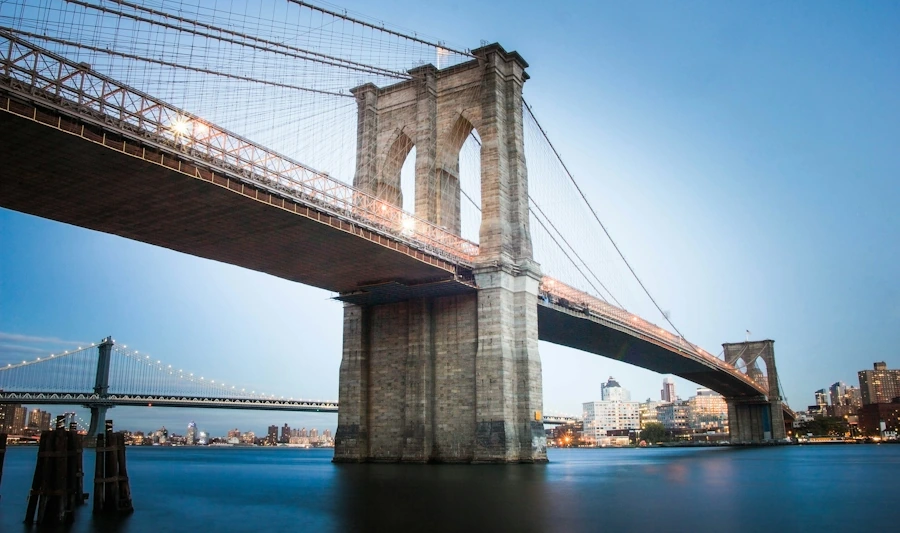
The Brooklyn Bridge deserves its reputation, but a good bridge day begins before you reach the cables and continues after you leave them. I’d build the outing around Lower Manhattan and Brooklyn’s waterfront, using the crossing as the middle chapter. This gives you a better sense of the river as a working boundary between neighborhoods, rather than turning the bridge into an isolated photography stop with a long commute attached.
Allow a relaxed half day, more if you want to enter a museum or linger over lunch. Start in Lower Manhattan with one clear interest: early city history, harbor scenery, or the architecture around City Hall. Trying to include the Financial District, a memorial visit, Chinatown, and several Brooklyn neighborhoods will stretch the route in too many directions. Choose a compact approach and save your attention for the gradual reveal of the skyline as you cross.
Find a manageable Manhattan approach
For a simple start, arrive around City Hall and look at the civic buildings before joining the pedestrian approach. If you prefer harbor views, begin farther south near the Battery, then travel north through the street grid. That version adds distance, so plan a proper break instead of assuming the bridge itself provides somewhere comfortable to rest. Lower Manhattan’s narrow streets can make orientation confusing; take a moment at a wider junction to check your route.
This is also where I’d buy water and any small snack. Food should support the walk, not become a hunt for a particular viral counter across town. Keep any solemn or commemorative visit separate enough that you can give it the attention it deserves. A meaningful memorial stop followed by a rushed dash to catch sunset can feel jarring. There is no obligation to combine every nearby landmark just because the map places them close together.
Cross for the changing view
Once on the pedestrian route, keep moving until you find a wider space where you can pause without blocking others. The towers, diagonal cables, river traffic, and skyline keep rearranging themselves as you walk. Take your first photograph, then put the phone away for a few minutes. Looking back toward Manhattan periodically makes the crossing more rewarding, and it prevents the entire experience from becoming a search for one symmetrical image between the cables.
Wind, direct sun, and crowds can make the bridge feel more demanding than its map distance suggests. Bring a layer even if the streets felt warm, and keep an eye on children around busy flows of pedestrians. Follow current signs rather than an old travel screenshot: access arrangements and permitted uses can change. The city transport department’s bridge page is the right place to check official information. If the walkway is exceptionally crowded, slow down and accept that this is a shared route.
Give DUMBO a little breathing room
On the Brooklyn side, use the signed exit and make your way toward DUMBO. The neighborhood’s converted industrial buildings and sloping streets offer a different texture from the Manhattan approach. Washington Street draws photographers for its framed bridge view, but it remains a street, not a studio. Take pictures from an appropriate pedestrian space and avoid stepping into traffic to imitate an image you have seen online.
I’d explore a couple of surrounding blocks before choosing lunch. Look at menus and queues rather than treating popularity as a guarantee of the best meal for you. The waterfront can be busy and expensive, so a less scenic seat a few streets inland may be the more comfortable option. If you are traveling with others, decide whether you want a sit-down meal or a takeaway picnic before splitting up to browse. It is easy to lose time in a neighborhood full of competing temptations.
Follow the piers instead of the crowds
Brooklyn Bridge Park is where this outing becomes more than a bridge crossing. Its waterfront spaces give you room to see the city from different angles, with gardens, recreation areas, and piers shaping the walk. Start near the bridge and continue south only as far as your energy allows. You do not need to cover the entire park to appreciate the contrast between Manhattan’s dense vertical edge and Brooklyn’s foreground of planting, paths, and open water.
Pier 1 is an appealing place to slow down and look back, while farther piers invite a longer wander. Consult the park’s own map so you can choose a route that suits wheelchairs, strollers, or tired knees. Stay out of playing areas when games are underway, and let seating remain shared. I’d pick one place to sit for ten uninterrupted minutes; that small decision turns a sequence of viewpoints into an afternoon you can actually remember.
Leave one optional detour
If you still want another neighborhood, consider Brooklyn Heights rather than adding a distant attraction. The change from open waterfront to quieter residential streets is rewarding, but it involves elevation and extra walking. The promenade offers another skyline perspective, while the streets behind it ask for a more discreet kind of visit. Look at architecture from public space, keep voices down, and do not pose on private stoops.
Alternatively, stay at water level and let lunch become the main pause. Travelers with young children may find playground time far more successful than another historic street. On a cold or rainy day, use a nearby indoor stop and shorten the park section. On a hot day, build the route around shade and refreshments. The right detour is the one that improves the day you are having, rather than the one that adds another impressive name to a saved itinerary.
Return by a different route
I’d usually return by subway or, when the current schedule works, by ferry. A different way back helps the outing feel like a journey and spares you a second crowded bridge crossing when you are already tired. Check the exact ferry landing and destination before buying a ticket; a boat ride is only convenient if it goes where you need to be. Allow extra time if the river trip is part of a connection to a booked evening activity.
Keep sunset optional. It can be lovely from Brooklyn, but waiting several hours for it is not always the best use of limited time, and cloud or haze may change the result. A bright morning bridge walk followed by an unhurried waterfront lunch is equally worthwhile. Before leaving, check that you have your belongings, identify the station entrance, and resist squeezing in one final faraway stop. This route works because the city has room to unfold between its famous views.
Sources & further reading
First published 18 October 2026. Page updated 19 October 2026. Planning references checked on 18 October 2026. The edition date above follows your device’s time zone; it does not indicate a new research check. Confirm current opening details and booking arrangements with the places you plan to visit.