
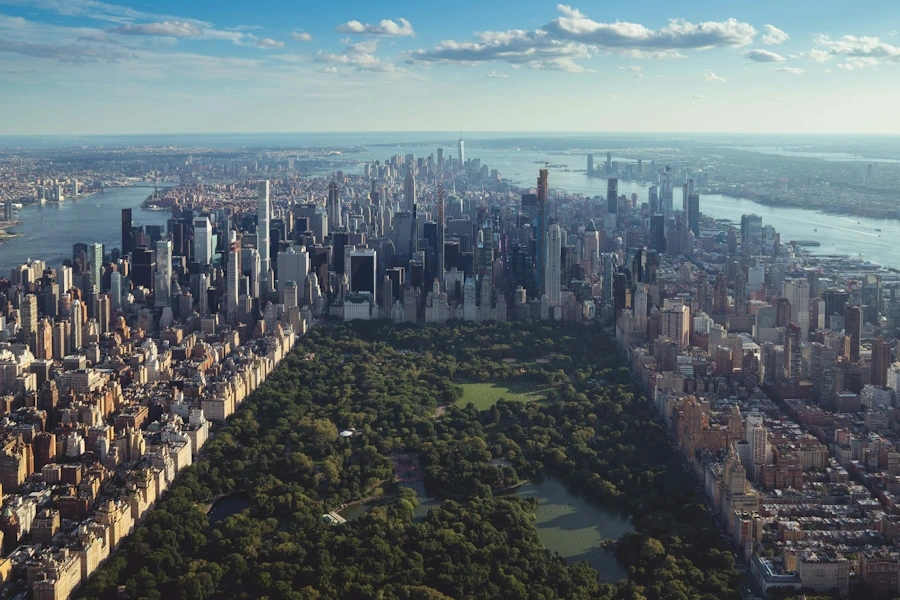
Make this your New York itinerary
THE SHORT VERSION
- Concentrate on the Mall, Bethesda Terrace, the Lake, and the Ramble rather than attempting the whole park.
- Check restoration notices and accessibility maps before choosing woodland paths.
- Leave time for sitting by the Lake and finish near a convenient city exit.
Give the park a proper morning
Central Park can become a strangely hurried experience: take a photograph at the fountain, find the bridge from a film, then rush back to the avenue. I’d give it a whole morning instead. The pleasure here comes from moving between different kinds of space, from a formal promenade to a woodland path where the skyline briefly disappears. A few unplanned turns are part of the visit, rather than evidence that your route has gone wrong.
This walk concentrates on the middle of the park, around the Mall, Bethesda Terrace, the Lake, and the Ramble. It suits a first visit especially well because the distances stay manageable and the scenery changes often. You do not need to walk from the southern entrance to the northern boundary to understand the place. Start with comfortable shoes, drinking water, a downloaded park map, and the realistic expectation that a bench may be your favorite stop.
Approach through the Mall
Enter from the southern part of the park and aim for the Mall, taking a signed pedestrian path rather than drifting into a cycle lane. The long approach gives the visit a sense of arrival: trees frame the route, people move at different speeds, and the avenue noise begins to recede. Stop at the sculptures if they interest you, but resist turning every monument into a homework assignment. Looking at how people use the space tells its own story.
I’d keep breakfast simple and eat before entering, or bring something easy to carry. Buying food in the middle of a popular sightseeing area can interrupt a good walking rhythm, especially when everyone wants lunch at once. Carry your rubbish until you find an appropriate bin. If you are walking with children, make an early agreement about breaks; stopping for five minutes before anyone is tired is more useful than promising a large treat at the very end.
Bethesda rewards a closer look
Bethesda Terrace works on several levels, literally and visually. From above, you can see how the staircases gather people toward the water; below, the arcade invites you to look up at its patterned ceiling. Rather than standing only in the busiest central spot, move around the edges and notice the carved plants and seasonal details. The formal architecture makes an especially good contrast with the more irregular shore and woodland beyond it.
Check the Conservancy’s current alerts before setting your expectations around the fountain. Its official visitor page currently notes a restoration period during which the fountain is turned off while the terrace remains accessible. That is a reason to adjust a photograph, not abandon the visit. This is still a good place to sit and watch the park assemble itself around you. Keep stairways clear when taking pictures, and choose another angle if an area is temporarily fenced.
Take the Lake slowly
Continue toward the Lake and follow the paths that connect viewpoints around its shore. Bow Bridge is an obvious draw, but the approach is often just as attractive as the bridge itself. If a line of people is waiting for the same photograph, take a different view from the bank and come back later. A skyline glimpsed between branches can tell you more about the park’s relationship with Manhattan than a tightly cropped postcard composition.
Do not assume every attractive path completes a neat loop. Some lead to a secluded outlook and require you to retrace your steps, which is perfectly fine. Keep a map available, particularly if someone in your group has limited walking stamina. You can make this the end of a satisfying visit rather than pressing onward. I’d rather spend fifteen minutes enjoying a lakeside view than add a distant attraction simply to make the day look more ambitious.
Let the Ramble change the mood
Across the Lake, the Ramble offers a deliberate change of pace. Its winding routes, uneven rock, small bridges, and vegetation make the park feel more enclosed. This is designed woodland rather than untouched wilderness, and that distinction makes it interesting: a large city has chosen to maintain a place where a walk can feel temporarily uncertain. Follow public paths, leave planted areas alone, and let other visitors pass where the way narrows.
Birdwatchers give the area another rhythm. You may notice people waiting quietly beside a patch of foliage instead of looking at a famous building. Give them room, lower your voice, and avoid using recorded bird calls to attract wildlife. A guided walk can add meaning if you want to learn more, but it is also reasonable simply to enjoy the shade. Families and travelers who need firm, predictable surfaces should review the official access map before committing to this part.
Choose an ending that fits your energy
After the Ramble, decide whether you want more greenery or a return to the city. Belvedere Castle and nearby landscaped areas can extend the outing, while an exit toward the Upper West Side or Fifth Avenue creates an easy transition to lunch. A museum visit afterward works only if you still feel curious. Walking outdoors for several hours is already a proper activity, and a second major attraction can make both experiences less enjoyable.
For a quieter alternative on another day, look at the Conservatory Garden in the northern part of the park rather than attaching it to this route by default. Central Park is long enough that seemingly adjacent pins can add a substantial walk. Use the subway or a bus for a separate visit if that suits your plans. In wet weather, shorten the woodland section; in summer heat, move slowly and keep finding shade instead of chasing a mileage target.
Make the practical choices once
The most useful preparation happens before you arrive: identify an entrance, an exit, and one reliable meeting point. A precise landmark is better than agreeing to meet somewhere near the Lake. Check toilet locations on the official map, and remember that seasonal facilities and maintenance can affect what is available. Photography is easy here, but a portable battery and a map you can open offline matter more than another lens.
If your time is tight, keep the Mall, Bethesda, and one lakeside viewpoint, and leave the Ramble for another visit. If you have more time, do the opposite of adding stops: return to a bench, notice the changing light, or take the same path in another direction. Central Park becomes memorable when it stops functioning as a collection of famous objects. Give yourself permission to enjoy an ordinary New York morning in an extraordinary public landscape.
Sources & further reading
First published 18 October 2026. Page updated 19 October 2026. Planning references checked on 18 October 2026. The edition date above follows your device’s time zone; it does not indicate a new research check. Confirm current opening details and booking arrangements with the places you plan to visit.