
THE SHORT VERSION
- Check Sépaq access and choose a waterfall route suited to your group.
- Visit a selective part of Île d’Orléans and verify seasonal food businesses directly.
- Plan transport, lunch, and a designated driver before adding tastings to a scenic route.
Choose a day outside, not a race around the region
A trip beyond Québec City can quickly become a collection of scenic promises: waterfall, island villages, farm shops, river views, and a long lunch. I’d keep the day centered on Montmorency Falls and a selective part of Île d’Orléans, allowing the season to decide what the island offers. You do not need to circle every road or stop at every food producer to feel the change from the old city to the wider St. Lawrence landscape.
Start by choosing transport. A car or well-described tour can make the combination straightforward, while a car-free day may work better with the falls alone or a carefully planned regional connection. Check current service rather than assuming an attraction near the city is easy to combine with another across the water. The island’s scale and roads matter. A place that looks close from a viewpoint can still require a practical transfer, and that transfer belongs in the day’s time budget.
Let the waterfall be the first substantial stop
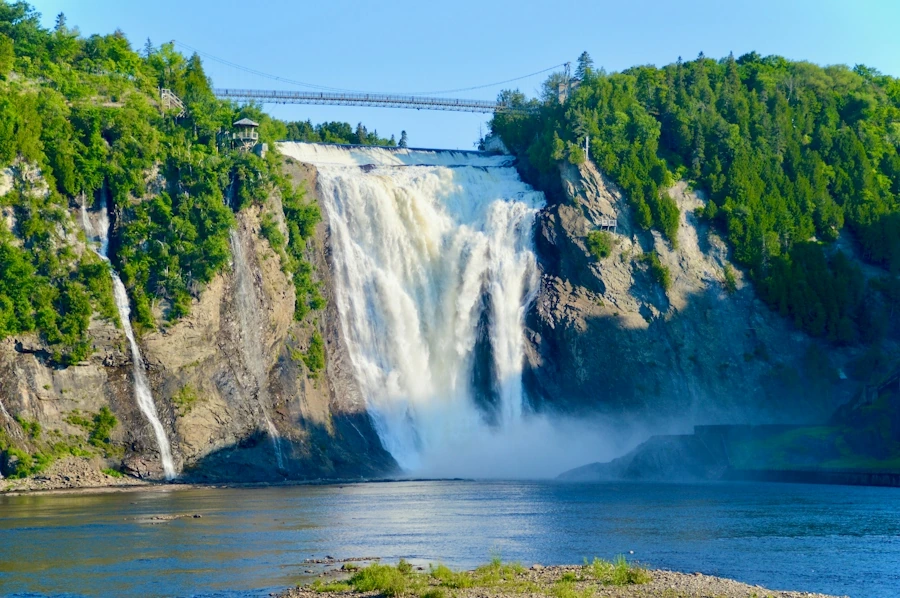
Montmorency Falls is more rewarding when you allow time to see it from different permitted viewpoints rather than arrive for one quick photograph. Check Sépaq’s current visitor information for access, parking, tickets, seasonal operations, and any route restrictions. The experience changes with weather and season, so plan around what is open and comfortable on the day. Water, rock, spray, and the surrounding landscape provide plenty to notice without adding every optional activity.
I’d choose a route suited to everyone’s mobility before setting off. Stairs and elevated viewpoints can make the visit more demanding than the word park suggests, and some travelers may prefer a shorter option. Do not assume a cable car, a bridge, and an adventure activity share one ticket or operate in every season. Read the specific arrangement you want. Once there, give the scale a moment to register; the sound and movement of the water deserve more attention than a screen.
Keep the island plan selective
Île d’Orléans offers a different pace, with settlements, agricultural land, river views, and food businesses creating a landscape you can explore gradually. Pick a small number of stops that fit the season and your interests. A complete circuit is a possible drive, not a requirement for a worthwhile visit. If you are mainly interested in food, choose producers currently open to visitors. If architecture and landscape appeal more, give a village walk and a view a larger share of time.
I’d avoid making promises around berry picking, harvest stalls, or a particular product without checking the date and business directly. Seasonal tourism is enjoyable because it changes, but that means an old summer itinerary may not work in autumn or winter. The same road can support a different outing in another month. Ask what is available now, and let that answer guide purchases rather than trying to recreate a photograph of an orchard from a different part of the year.
Make one village stop feel like a visit
Choose a village area where you can park appropriately and take a modest public walk. Look at the relationship between houses, church, fields, and river, rather than treating the island as a continuous shop crawl. Saint-Pierre, Sainte-Pétronille, or another settlement on your route can each provide a different vantage, but you do not need to stop in all of them. A short walk with attention often reveals more than several hurried car-door photographs.
Respect private property and working farmland. An open field or attractive house is not a public photo location simply because the road is scenic. Use designated viewpoints and visitor areas, and ask before photographing people or entering a producer’s work space. I’d buy something where a business has taken the time to explain its product, if it suits my needs. A useful purchase and a specific conversation connect you with the place more meaningfully than accumulating samples without listening.
Let lunch reflect what is actually available
A regional day is a good occasion to choose food with a clear connection to the area, but avoid imagining every roadside business as a full restaurant. Check current menus, opening days, reservations, and whether a stop offers a meal, a tasting, or only retail purchases. Bring a simple backup snack so a closure does not turn the afternoon into an urgent search. A flexible appetite makes seasonal discovery easier.
I’d choose one comfortable lunch and leave smaller purchases for later. If sampling alcohol, organize a designated driver or another safe arrangement before starting; a scenic drive and a tasting itinerary require compatible decisions. Consider storage too. Perishable purchases need appropriate handling, and a long afternoon in a warm car is not ideal. A small amount you can enjoy safely is better than a large basket bought for the image of a country outing. Leave room in the schedule to eat without watching the clock.
Give the river its own pause
The St. Lawrence connects the waterfall, island, and city, but it is easy to spend the day looking only at individual attractions. Choose a public place where you can stop and look across the water. Notice the shoreline, the scale of the opposite bank, and the way settlements and agriculture meet the river. That pause helps the different stops belong to one landscape instead of remaining unrelated pins.
Wind can make a river view feel cold even after a pleasant village walk, so keep a layer accessible. If conditions are poor, shorten the outdoor pause rather than force a picnic or a long photo stop. I’d preserve time for the return instead of chasing one last sunset location. A good regional outing needs a comfortable ending, particularly when the driver is unfamiliar with the roads or everyone has spent several hours walking and browsing. The landscape will still be there on another visit.
Return with a clearer sense of the region
For a compact version, visit the falls, choose one island area, have lunch, and stop once beside the river. For a longer outing, add a second producer or village only when the distances and opening times genuinely work. If traveling without a car, a focused waterfall day can be more satisfying than spending the afternoon on complicated transfers to satisfy the idea of doing both. Choose the version that leaves you interested rather than anxious.
Before leaving the island, check the route back and any current travel conditions. Keep the address of dinner or accommodation available, but do not make the evening so fixed that a delay creates a problem. I’d remember this day through a few distinct sensations: falling water, a seasonal taste, a village street, and the wide river. Together they show why Québec City belongs to a larger landscape, without requiring you to exhaust that landscape in one day.
Sources & further reading
First published 18 October 2026. Page updated 19 October 2026. Planning references checked on 18 October 2026. The edition date above follows your device’s time zone; it does not indicate a new research check. Confirm current opening details and booking arrangements with the places you plan to visit.