
THE SHORT VERSION
- Plan Upper and Lower Town around a deliberate descent and return rather than repeated climbs.
- Use the fortifications and river views to understand the city’s geography.
- Choose one afternoon extension and keep meals on the route you actually want to walk.
Begin by taking the hill seriously
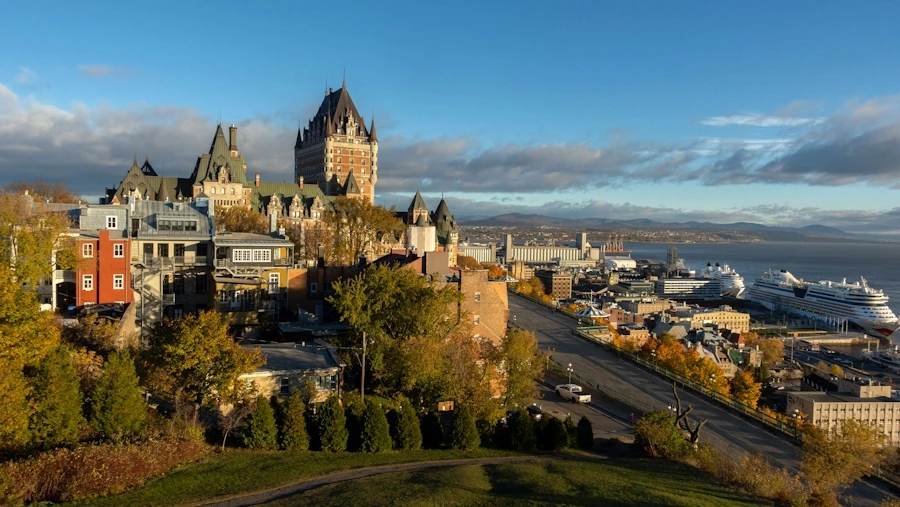
Old Québec looks compact in photographs, which can make a first itinerary much more ambitious than it should be. Upper and Lower Town sit close together horizontally, but slopes, steps, weather, and repeated climbs change the experience. I’d plan the day around one main descent and a deliberate return option, rather than move up and down whenever another saved pin appears. That small choice leaves more energy for architecture, history, and a long meal.
Start with comfortable shoes and a layer suited to the season. In winter, surfaces and daylight require particular attention; in warmer months, a sunny terrace and a shaded street can feel quite different. A first visit can easily fill most of a day without leaving the old-city area. Choose one guided or museum experience if history is a priority, then keep the rest of the route flexible enough that a beautiful view or an appealing café can hold you for a while.
Use the walls as a way to understand the city
The fortifications are more interesting when you think about how they organize movement and views, rather than simply treating a gate as an entrance for a photograph. Parks Canada’s current visitor information can help you choose a walk or interpreted experience. Look at the relationship between walls, streets, elevated land, and the river. The physical setting begins to explain why this was a strategic place, even before you learn every military detail.
I’d follow a manageable public route and stop at a few points where the city’s shape becomes clear. A guided visit can be valuable if you want the history connected into a story rather than read as isolated labels. Check what access is included and how much walking is involved. The old town’s appeal is not that time stopped here. It is that structures from different periods remain part of streets where visitors, residents, shops, and traffic continue to negotiate space.
Give Terrasse Dufferin more than one photograph
Terrasse Dufferin provides a strong river-facing moment, with Château Frontenac shaping the skyline behind it. Walk far enough along the public terrace to see how the view changes, then stop somewhere comfortable. The hotel is a striking landmark, but the landscape beyond matters just as much: the river’s width, the opposite bank, and the contrast between a high viewpoint and the streets below. A grand building is only one piece of the setting.
I’d enjoy the hotel’s exterior without assuming every interior space is freely accessible. If you want a tour, meal, or drink there, check the appropriate arrangement and price. A terrace visit need not become a luxury purchase. In cold wind, shorten the outdoor pause and move to a warm interior elsewhere. In pleasant weather, let the view take time. There is no need to immediately trade the city’s best-known outlook for another landmark when the scene in front of you is still changing.
Descend once and enjoy the smaller scale
Lower Town and the Petit-Champlain area offer a different rhythm, with narrower streets, shops, and a closer relationship to the river-facing edge. Use a clear walking route or check current funicular arrangements if that suits your mobility. The descent should feel like a transition, not a race. Once below, give the area a few blocks of unstructured walking before deciding where to sit or shop.
Place Royale can provide another historical reference point, but look beyond the most composed view. Notice materials, signs, and how a small square connects with its streets. Some corners will be crowded because they are beautiful and easy to recognize. I’d move around rather than wait indefinitely for an empty scene. The neighborhood’s visitor businesses vary, so buy something because you value the object or maker, not because a picturesque street creates an obligation to carry away a bag.
Keep lunch local in geography as well as theme
Choose lunch near the part of town where you actually want to spend time. Québec’s food traditions offer plenty to investigate, but a meal should fit your appetite rather than satisfy a list of every famous dish. A warm, substantial lunch may be welcome in cold weather; a lighter option can make more sense before further walking. Look at current menus, ask about ingredients, and decide whether you want a long sit-down meal or a simpler stop.
I’d avoid crossing the hill again only to reach a restaurant you bookmarked without considering the route. If a specific place is central to the day, build the walk around it from the start. Otherwise, compare nearby options and choose a comfortable table. Coffee or a pastry can provide a second pause later, without turning every break into another full meal. The old city becomes more enjoyable when food supports the walk instead of constantly pulling it in a new direction.
Choose one extension, not every edge
If you still have time, decide between the Old Port area, a museum, or a longer upper-town walk. Each changes the character of the afternoon. The Old Port offers another relationship with the waterfront and commercial streets; an interior can deepen a historical interest; the upper areas reconnect you with broader views. Do not attach all three automatically. The route is already full if you have visited the fortifications, terrace, Lower Town, and a meal.
A ferry crossing may provide a distinctive view back toward the city, but check current service and return arrangements before making it part of the plan. It is a real transport decision, especially in changing weather. I’d choose it because seeing the city from the water appeals, not because the itinerary has an empty hour. If the crossing is inconvenient, a public river view from land is still a satisfying way to understand the setting.
Let the final climb be a choice
Before returning to Upper Town or your accommodation, check your energy and the available route. A steep final walk can feel quite different after several hours outside. Using a suitable transport option is sensible if it preserves the evening, and travelers with mobility needs should investigate specific access in advance. Old streets can be beautiful and awkward at the same time; both descriptions can be true.
I’d leave a little daylight for a street you liked, revisiting it without the pressure to move onward. The day’s strongest memory may be how the river opened beyond the terrace or how different Lower Town felt after the descent. Old Québec offers abundant visual charm, but the experience improves when you notice its structure and present-day life as well. Plan the hills, choose a few subjects carefully, and the familiar postcard begins to feel like a place you have actually spent time.
Sources & further reading
First published 18 October 2026. Page updated 19 October 2026. Planning references checked on 18 October 2026. The edition date above follows your device’s time zone; it does not indicate a new research check. Confirm current opening details and booking arrangements with the places you plan to visit.