
Make this your Bangkok itinerary
THE SHORT VERSION
- Arrive before dinner for a short daylight walk.
- Choose a meal format before choosing a queue.
- Save Talat Noi for a deliberate daytime outing if needed.
Come for the neighborhood before the meal
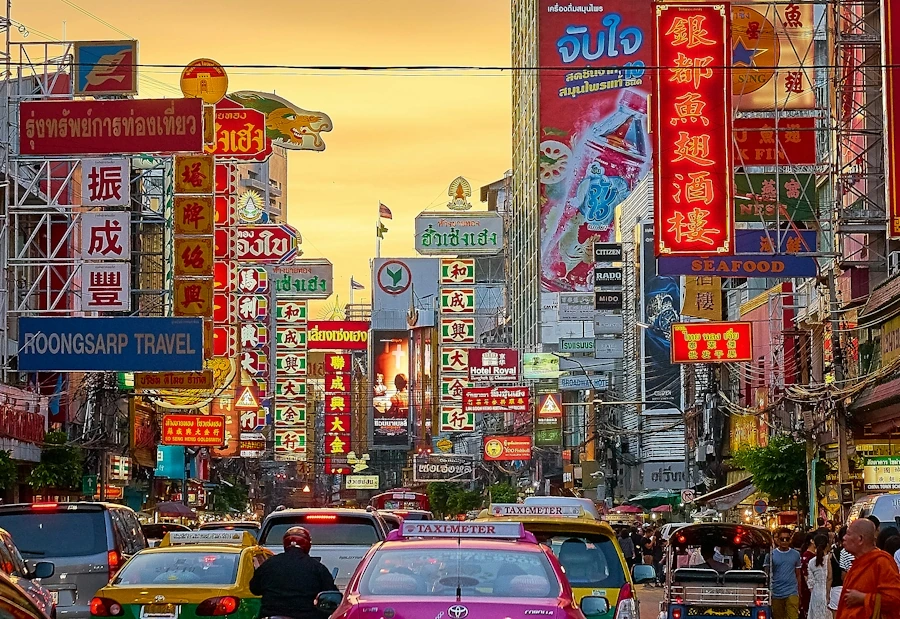
Yaowarat is famous enough that a first visit can feel pre-scripted: arrive after dark, follow the brightest signs, order from a popular stall, and move on. I would arrive with some daylight left and give Chinatown a non-food chapter first. Shopfronts, shrines, delivery activity, and side streets help the evening meal belong to a place. You get a better sense of the neighborhood when it is not only the background to a plate.
Use a clear starting point near a suitable MRT station and orient yourself before entering a narrow lane. Wat Mangkon and the surrounding area offer one approach; the Chinatown Gate gives another reference for a different walk. Pick a compact section rather than drawing a sprawling loop that requires repeated crossings of busy roads. Let one side street lead you back to a recognizable main street before trying another.
Look at commerce as carefully as the signs
The food businesses are only part of Chinatown’s working life. Dry goods, household products, religious supplies, and other specialized shops create a different visual rhythm from the evening stalls. Notice the scale of a shop and the way goods are arranged. You do not need to pretend you understand every object to be interested, but ask before touching unfamiliar products or photographing a sensitive religious display.
Shrines and temples can add context if they are open to visitors. Enter quietly and observe the rules of the particular site. A guidebook mention is not a promise of access at every moment, and a person making an offering is not an invitation to take a close portrait. Stand back, follow any marked visitor route, and let religious practice continue without arranging the scene around your camera.
Choose dinner with your appetite, not the internet
When you are ready to eat, take a short survey before joining a queue. Look at the menu, the preparation, the portion, and the place where you will sit or stand. A stall can be excellent and still be the wrong choice if you have been walking for hours and need a chair. Decide what kind of meal you want first: noodles, a rice dish, something shared, or a sequence of smaller plates.
Keep dietary questions specific. Broths, sauces, shellfish, and shared cooking surfaces deserve attention if an ingredient is a problem. Have a translated explanation ready where needed, and choose somewhere that can answer clearly rather than accepting a vague nod in a hectic queue. The most famous item is not worth feeling unwell or anxious through dinner.
Let the evening have a second texture
After eating, walk a manageable stretch of Yaowarat to appreciate the lit signs and street activity. You do not have to buy another dish every time you stop. A drink or a small dessert can be enough if you still want to linger. Stay on suitable pedestrian space, avoid the road edge for photographs, and let people carrying trays or moving goods pass first.
Talat Noi is sometimes bundled into the same outing, but it deserves a separate decision. If its streets and heritage buildings interest you, explore them during suitable daytime hours instead of treating the district as a compulsory dark extension. For this evening, a clear route back to transit is a better finish than another ambitious detour. Chinatown rewards a return visit; leaving one neighborhood unexplored is an invitation rather than a failure.
From shop signs to a dinner you actually want
Start with a small Chinatown map, not a list of restaurants spread across the district. Mark your arrival station, one cultural landmark, the main stretch where you want dinner, and the route home. This gives daylight a purpose before the food activity becomes the center of attention. If Wat Mangkon is the chosen anchor, check its visitor arrangements and enter with the same care you would bring to any place of worship. If you begin near the Chinatown Gate instead, let that define a different short walk rather than trying to cover both ends immediately.
The daylight interval is particularly useful for looking at commerce. Joss-paper sellers, dry goods, specialized groceries, and other businesses can make the streets more legible, but do not assume every product is a souvenir or every seller has time to explain it. Browse respectfully and ask about an item only when you can do so without interrupting another transaction. Photograph a broad street scene from a suitable place rather than pointing directly into a shop’s private working space. You can recognize that a place is interesting without collecting a close image of everything inside.
When dinner becomes the focus, make the first choice about format. Do you want one seated meal, several small dishes, or a snack followed by a restaurant? Decide that before a queue makes the decision for you. Read portions and prices, ask what accompaniments are included, and order a manageable amount. A vendor’s specialty may be a shared dish rather than an individual serving. If you have an allergy, explain it clearly and ask about the actual preparation; a busy street counter may not be able to offer the separation you need.
After eating, enjoy the illuminated signs from the pavement rather than stepping into traffic for a centered image. Yaowarat is not closed to ordinary movement simply because many people have come to eat. Keep an eye on people carrying food, wheeling goods, or trying to pass between waiting customers. If you want dessert, choose something that offers a different flavor or texture instead of buying the nearest item just to extend the visit. If you are full, walk slowly and let looking be enough. There is no admission requirement to keep eating.
Talat Noi can be a separate, worthwhile daytime route when you want to investigate another riverside neighborhood. Do not append it automatically after a long evening just because a map places it nearby. For tonight, note the transit entrance you will use and leave while you still have the attention to navigate comfortably. If one of your planned stalls was closed, record it as a possible return rather than treating the meal as a compromise. A good Chinatown visit is the one you enjoyed on the day, with its actual shop activity, weather, and food choices.
A daylight question for the shopfronts
One way to make the pre-dinner walk more interesting is to notice which businesses depend on regular neighborhood customers rather than evening visitors. Look at product quantities, practical packaging, and the kinds of signs used to explain goods. Do not assume you know who a customer is or why they are buying. Simply compare the commercial rhythm with the later food scene. If a product interests you, ask what it is used for before buying it. That question can connect an unfamiliar storefront with an everyday purpose, giving the evening a little more context than a sequence of illuminated signs and dishes.
Sources & further reading
First published 18 October 2026. Page updated 19 October 2026. Planning references checked on 18 October 2026. The edition date above follows your device’s time zone; it does not indicate a new research check. Confirm current opening details and booking arrangements with the places you plan to visit.