
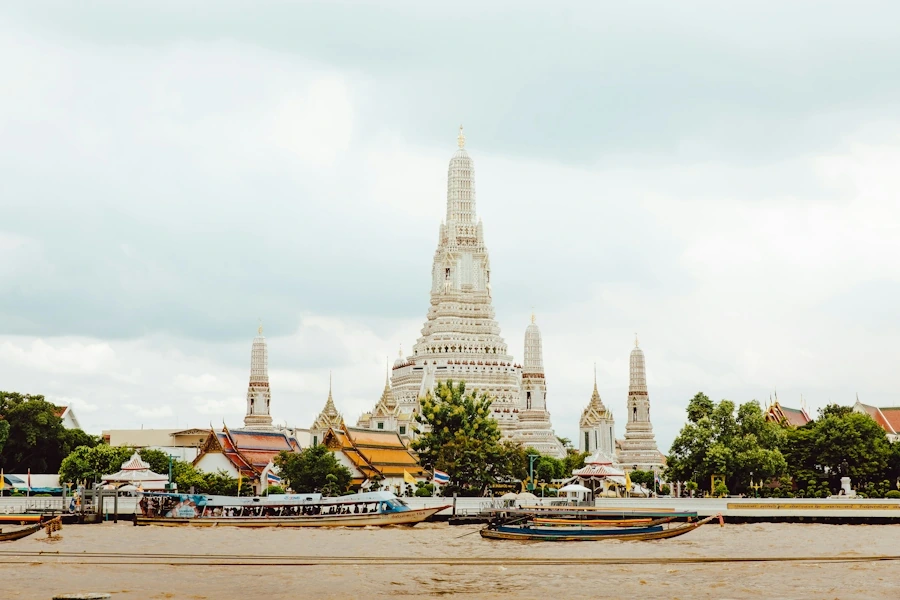
Make this your Bangkok itinerary
THE SHORT VERSION
- Confirm whether your boat crosses the river or follows a longer route.
- Explore Wat Arun at the level that suits your mobility.
- Keep Kudi Chin walks on public lanes and respect private thresholds.
Use the river to simplify the day
Bangkok can feel complicated when every stop becomes another road journey. A riverside day offers a more legible shape: arrive near the water, make one planned crossing, and explore a compact stretch on each bank. I would build it around Wat Arun and Kudi Chin rather than trying to see every major riverside attraction. The river becomes a connection you understand, not simply a view behind a rooftop drink.
Before boarding, confirm the boat type, destination, and pier. Cross-river services and longer routes solve different problems, and a boat at the nearest pontoon is not automatically going where you expect. Keep your bag close and your hands free when stepping on or off. Once you have settled into the correct journey, look at the changing relationship between waterfront buildings, working piers, and larger traffic on the river.
Give Wat Arun a contained visit
Wat Arun is visually striking from across the water, but a visit close up reveals a different scale of surface and detail. Choose a pace that allows you to notice the decoration rather than hurrying immediately toward the highest accessible point. Follow the route and restrictions in force, wear clothing suitable for a temple, and move aside when other visitors or worshippers need space.
You do not need to climb anything to justify coming. If stairs are uncomfortable, focus on the views from permitted ground-level areas and the relationship with the river. Photographs of a monumental structure often obscure how steep or crowded a section may feel in person. A visit that suits your mobility and attention is better than attempting an awkward position only because it is familiar online.
Continue toward a lived-in riverside community
Kudi Chin offers a different kind of riverside interest. Tourism Authority of Thailand material highlights the neighborhood’s religious diversity, with churches, Buddhist temples, shrines, and a mosque in the wider community. Approach those places as individual institutions rather than symbols in a simplistic story about harmony. Notice the small streets and practical routines connecting them, and visit only where public access is clearly welcomed.
The area around Santa Cruz Church can help orient your walk. From there, keep to public lanes and respect homes, school activity, and private thresholds. Some of the most interesting urban scenes are quiet ones: a change in building material, a shaded doorway, a local sign. You can appreciate them without pointing a camera directly into someone’s living space.
Let one food stop be enough
A neighborhood snack can add context, particularly when it has a clear link to local food traditions. Ask what the shop is serving and what is ready today rather than expecting a product mentioned in an old guide. Buy something you want to eat, sit where permitted, and avoid treating a family business as a free attraction. If you want to photograph preparation, ask first and accept a refusal without negotiation.
Return to the river before the day becomes a race for the final connection. A modest plan gives you room for a slow lunch, an unexpected pause, or a boat you decide not to board because it is too crowded. The appeal of this day is how the banks relate to each other. One temple, one community, and a considered crossing provide more to remember than a dozen brief arrivals at unrelated piers.
Keep the crossings few and the neighborhoods connected
A sensible river day begins with two names written clearly: the pier where you board and the pier where you intend to leave the boat. Save their Thai names too if you can. Bangkok’s different boat services do not all solve the same journey, and a color or route description from an old article is not a substitute for current information at the pier. Ask before joining a queue if the destination is unclear. Once aboard, keep loose belongings secure and leave room for other passengers at the boarding point.
Wat Arun can be the main ticketed visit, so give it the best part of your attention rather than approaching it after several other major temples. Check its current visitor requirements and choose suitable clothing before leaving your accommodation. On arrival, distinguish between an available public visitor route and a closed or restricted part of the complex. The high decorative detail can be appreciated from many permitted positions. If a staircase is steep or crowded, there is no need to climb simply because a previous visitor’s photograph was taken from above.
The continuation toward Kudi Chin should be treated as a neighborhood walk with its own approach, not an unnamed extension of the temple grounds. Use a current street map and choose public lanes. The Tourism Authority of Thailand’s description of the community is helpful for understanding the variety of religious institutions in the area, but each building has its own visitor arrangements. A church exterior, shrine, or temple can be meaningful from the street when interior access is unavailable. School and residential activity also deserve space in this part of the day.
If you want a food stop associated with Kudi Chin, ask what the business is making that day and whether there is an appropriate place to eat. Small neighborhood businesses are not obliged to reproduce an item from an old travel feature on demand. Buy a modest amount, pay attention to storage or freshness, and let the person serving you decide whether photographs are welcome. Do not turn a brief purchase into a long uninvited recording of someone’s working day. The best exchange may be a simple explanation of a name or ingredient that gives your snack context.
For the return, look at your actual ending point rather than assuming you must walk back to the first pier. A suitable road connection may be more comfortable if the weather has changed or everyone is tired. If you do use the river, confirm service availability before committing to the final walk. Leave enough time that a busy boat or a missed departure does not threaten another booking. The day should end with the two banks fitting together in your mind: a monumental temple, a smaller community, and water that connects them to the wider city.
Notice the river’s working rhythm
At a permitted riverside pause, watch what moves past for a few minutes. Passenger boats, service activity, and the flow at a pier make the Chao Phraya more than a scenic surface. You do not have to identify every vessel to recognize that different journeys share the same space. Compare that wide movement with the smaller lanes around Kudi Chin later in the day. The contrast explains why a river itinerary can feel varied even when it covers a modest area. Keep your observation point clear of boarding passengers and working access; the activity is interesting because it continues without being arranged for you.
Sources & further reading
First published 18 October 2026. Page updated 19 October 2026. Planning references checked on 18 October 2026. The edition date above follows your device’s time zone; it does not indicate a new research check. Confirm current opening details and booking arrangements with the places you plan to visit.