
Make this your Bangkok itinerary
THE SHORT VERSION
- Choose Wat Pho or the Grand Palace as a primary visit.
- Use lunch to reassess energy before adding a second stop.
- Let a market, museum, or river pause provide a different ending.
One major sight is a proper plan
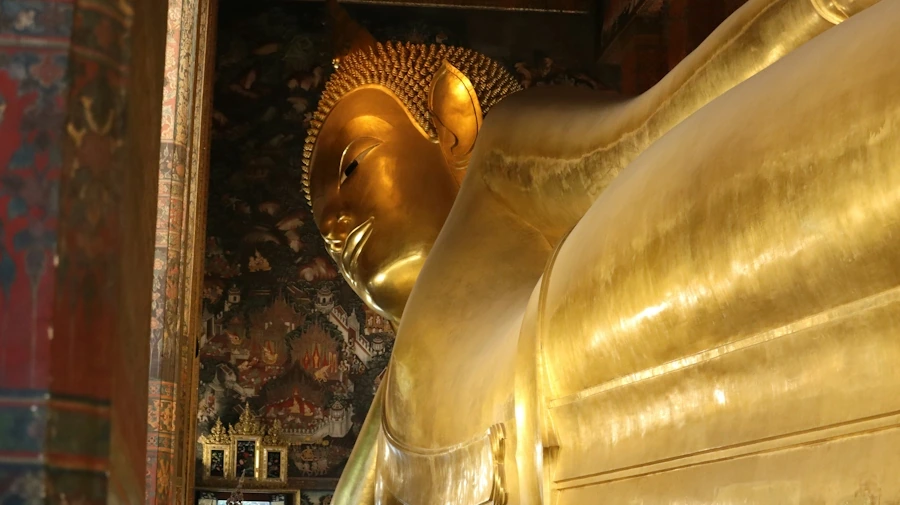
Bangkok’s old city contains enough major religious and royal sites to fill several days. Trying to collect them all before lunch can turn remarkable buildings into a blur of shoes, tickets, and sunlit paving. I would start with one main visit, such as Wat Pho, then use the surrounding streets for the rest of the outing. This gives the day a focus and leaves enough attention to understand what you are seeing.
If the Grand Palace is your priority, let it replace the main stop rather than automatically adding it. Entry arrangements, clothing requirements, security, and walking demands need their own space in the plan. Consult the institution directly and arrive with the documents and dress it asks for. A more demanding visit can be excellent, but it should not be squeezed into the same casual timetable as a quick neighborhood stroll.
Look for something smaller than the headline
Inside your chosen complex, begin by understanding the route. Find the main feature you came for, then allow a few moments for an architectural or decorative detail that was not on your list. Repeated rooflines, surfaces, thresholds, and the movement between courtyards can tell you as much about the place as one famous view. Let a sign or official interpretation guide what you look at next.
Avoid making every religious space an extended photography stop. Follow footwear instructions, keep your voice low, and give worshippers priority. If you do not understand whether an area is public, ask rather than following someone who appears confident. A crowded visitor route does not make the rest of a working complex freely accessible.
Make lunch the hinge of the afternoon
After the principal visit, sit down for lunch before deciding on another attraction. This is a practical way to prevent temple fatigue: you can assess energy and heat from a chair instead of halfway across another large courtyard. Choose a place serving a meal you want, not simply the restaurant with the most dramatic view. A river view is a pleasant extra; water and a comfortable seat are more useful if you are tired.
Then walk a smaller section of the old city. The area around Tha Tien can connect the scale of major landmarks with everyday shops and river activity. Use crossings carefully and expect the pavement to change. A short distance can take longer than it looks when delivery activity, heat, and busy corners interrupt the line on your map.
Add context rather than another identical stop
For the final part of the day, choose something that changes the type of attention you are using. A museum with interpretation, a market area during appropriate trading hours, or a shaded riverside pause can be more rewarding than another monumental temple. If you choose a flower-market visit around Pak Khlong Talat, remember that trading and delivery have their own rhythms. Stay out of working aisles and ask before making vendors the subject of a photograph.
Keep your evening plan separate enough that you can rest first. Bangkok offers plenty after dark, but a good day in the old city does not require you to remain outside until dinner. Leaving with a clear memory of one place and its surrounding streets is more satisfying than ending with sore feet and no recollection of which courtyard belonged to which complex.
Choose the second stop only after lunch
Wat Pho and the Grand Palace should not be treated as interchangeable ways to fill the same hour. Read the official information for the one you choose, especially entry arrangements, clothing, and any restricted sections. If the Grand Palace is your priority, give it the visit it requires and reduce the rest of the day. If you choose Wat Pho, allow time to notice more than the main image. Both plans can work; the mistake is insisting that one must be squeezed around the other because they appear near each other on a map.
The approach into the old city also merits a real decision. A suitable MRT arrival may create a clear walk, while a river service can be appealing if the current route fits. Save the final connection and the name of the entrance you need. Once you are near a major sight, use official staff and published information for access questions. An unsolicited claim that your destination is unavailable is not a reason to abandon the plan and follow someone elsewhere. Pause at a safe place, verify the information, and make your own decision.
Inside the complex, use a small question to organize your attention. You might look at how a courtyard prepares you for an interior or how decorative surfaces change in scale near a doorway. These observations do not require specialist knowledge, and they prevent a visit from becoming a sequence of posed photographs. Follow instructions about shoes and the direction of movement. If prayer or ceremony affects the route, stand where visitors are permitted and let the activity take precedence. Your timetable is not the governing purpose of the place.
Lunch near the old-city area should be a genuine rest rather than a quick snack consumed in search of another entrance. Read the menu, find a seat that suits your group, and drink enough water before deciding on the next chapter. The streets around Tha Tien can provide a useful change from large ceremonial spaces, but surfaces and crossings need attention. Walk a short, legible loop instead of drifting across several busy roads while staring at a map. The everyday commercial setting is worth seeing at its own scale.
If you add Pak Khlong Talat, choose a current public route and expect a working market, with goods moving and traders focused on customers. A photograph should not hold up a delivery or require a vendor to rearrange a stall. Alternatively, choose a museum with interpretation or finish with the river. These options change the kind of attention you use after the temple. By the time you leave, the day can contain one monumental place, one ordinary meal, and a few streets that connect them. That is a coherent experience without another major ticket.
Choose a detail worth remembering
Before leaving your main temple, select one feature you can describe without showing a photograph. It might be the way a roof edge meets a courtyard, the repetition of a decorative motif, or a change in light near an entrance. Read the relevant label if one is available, then look again. This small exercise can stop major sights from dissolving into a general impression of gold and ornament. You do not need a specialist explanation for every surface. A precise observation, connected to the place where you made it, is a useful memory to carry into the ordinary streets and meal that follow.
Sources & further reading
First published 18 October 2026. Page updated 19 October 2026. Planning references checked on 18 October 2026. The edition date above follows your device’s time zone; it does not indicate a new research check. Confirm current opening details and booking arrangements with the places you plan to visit.