
Make this your Bangkok itinerary
THE SHORT VERSION
- Select one park as the main outing.
- Use current maps before attempting a linking walk.
- Keep a generous distance from wildlife and remain on open paths.
Choose the kind of park afternoon you want
Bangkok’s parks are a useful answer to a day that has become too full of traffic and indoor stops. Lumphini offers an established urban park atmosphere, while Benjakitti gives you another landscape of water, planting, and paths. I would choose one as the main visit and keep the other optional. Their connection can be interesting for walkers, but it should not become a requirement that turns an easy afternoon into an endurance exercise.
Begin by finding the entrance that suits your arrival rather than the first gate a search engine suggests. Mark the way back to transit and any current closing notices. A park is more relaxing when you already know how to leave it. Check the local forecast and air-quality information before committing to a long outdoor session, particularly if you are sensitive to heat or pollution.
Walk one deliberate loop in Lumphini
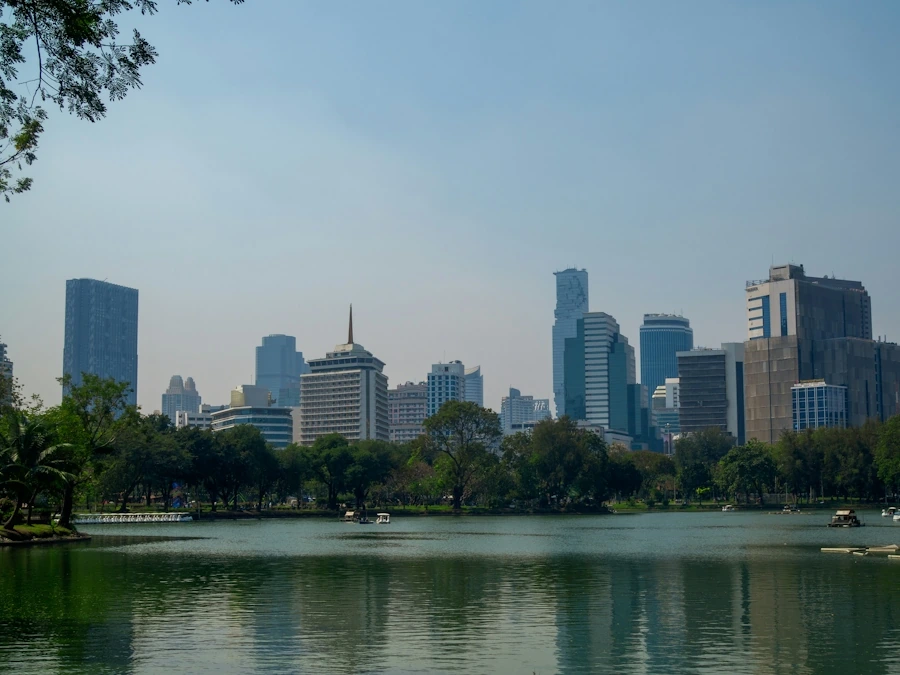
At Lumphini, let a first loop introduce the setting. Watch how walkers, runners, people resting, and other users share the paths. The park is not an empty visitor attraction; it has the rhythm of a public space used by residents. Choose a pace that allows you to remain aware of faster movement and avoid standing abruptly in the middle of a path to take a picture.
A lake view makes a good pause, but keep away from wildlife and do not offer food to animals. Monitor lizards may be part of the experience; observing them from a generous distance is enough. A photograph is not a reason to approach, touch, or corner an animal. Keep children close where needed and give all wildlife an unobstructed way to move away.
Or give Benjakitti your full attention
Benjakitti suits travelers interested in how a city makes room for a designed wetland-like landscape and varied walking routes. Rather than rushing toward a single elevated photograph, look at how water, planting, boardwalks, and views of buildings relate. The pleasure is often in the changing level and angle. Stay on routes that are open and respect barriers around planted or wet areas.
You can make a satisfying visit from a short section with several pauses. If you decide to connect farther afield, consult the current map first and pay attention to your return route. A pedestrian connection does not necessarily mean a shaded or effortless connection. In Bangkok’s humidity, the difference between an attractive line on a map and a comfortable walk can be substantial.
Plan an ordinary evening after the greenery
A park outing pairs well with a straightforward dinner rather than another elaborate sightseeing plan. Pick a meal near an accessible exit or a transit stop, then allow yourself to leave while the day still feels easy. You do not have to stay until sunset to justify the visit, and you should not count on a dramatic sky. A quieter hour with trees and water is already worthwhile.
If you are traveling with friends who prefer shops or galleries, use the park as a shared middle chapter rather than insisting on identical interests all day. Agree where to meet, walk together for a manageable stretch, and let dinner reunite the group. This is a flexible way to make Bangkok feel more livable: less time negotiating competing lists, more time in a public space where nobody needs to order another ticket.
A park plan with a real way out
Before leaving for Lumphini, identify the entrance that makes sense from your chosen station. Public parks can have several gates, but not every gate gives the same onward connection. Choose a loop from that entrance and locate a shorter exit in case conditions change. This is particularly useful if the outing follows a busy morning. You are looking for a more comfortable pace, not another obligation. If Benjakitti is your main interest instead, apply the same method there rather than planning a broad connection first and hoping the details will resolve themselves.
At Lumphini, use the first part of the walk to read how the park is being used. A path that looks convenient for a long conversation may be busy with runners, and a broad edge beside water may offer a better place to pause. Stop where you can see approaching movement. If monitor lizards or other wildlife appear, leave a generous gap and let them choose their route. Do not offer food or try to make an animal move into a more convenient position. The interesting encounter is the one that happens without your intervention.
Benjakitti asks for a different kind of looking. Compare the water edges, planted areas, and paths with the surrounding built city. A photograph from an elevated section may be appealing, yet it is only one perspective on a designed landscape. Follow the open route through different levels and notice how the foreground changes. Do not enter planted or wet areas for a clearer shot. Maintenance barriers and temporary closures belong to the current park, even when an older image suggests a route should continue. Use the available paths rather than negotiating your own alternative.
If you want to link the parks, examine the complete connection and your energy before committing. The name Green Bridge or a convenient-looking line can imply a more effortless journey than the actual heat, steps, or exposure provides. Walk it because the connection interests you and suits your group, not because visiting two parks seems more complete than visiting one. Check current local guidance and allow enough daylight for the chosen finish. A direct transit transfer is also a legitimate way to compare the two landscapes without making the in-between section the largest part of the afternoon.
For dinner, choose a neighborhood near the exit you actually use. It is easier to enjoy a park when you are not continually working backward from a restaurant far away. If rain or air conditions deteriorate, end the outdoor visit and make the meal the longer part of the evening. You can still carry a useful impression of Bangkok with you: a city whose public green spaces have particular layouts, users, and moods, rather than generic patches of relief between malls. One observed loop is enough to start noticing those differences.
Make the park comparison specific
If you eventually visit both Lumphini and Benjakitti, compare one feature instead of deciding which park is universally better. You could look at how each places a path beside water, how sitting areas relate to movement, or how nearby buildings appear through planting. Different visitors will prefer different arrangements. This is a more useful comparison than judging by the size of a lawn or the popularity of a photograph. Keep the second visit for a time when you can make it comfortably. The parks will make more sense as distinct public spaces if you allow each its own afternoon rather than compressing both into a hurried loop.
Sources & further reading
First published 18 October 2026. Page updated 19 October 2026. Planning references checked on 18 October 2026. The edition date above follows your device’s time zone; it does not indicate a new research check. Confirm current opening details and booking arrangements with the places you plan to visit.