
Make this your Marrakech itinerary
THE SHORT VERSION
- Choose Bahia Palace for palace sequences or Ben Youssef for an educational setting.
- Look at whole rooms before selecting details of wood, plaster, or tilework.
- If visiting both, allow a real meal and walking interval between the buildings.
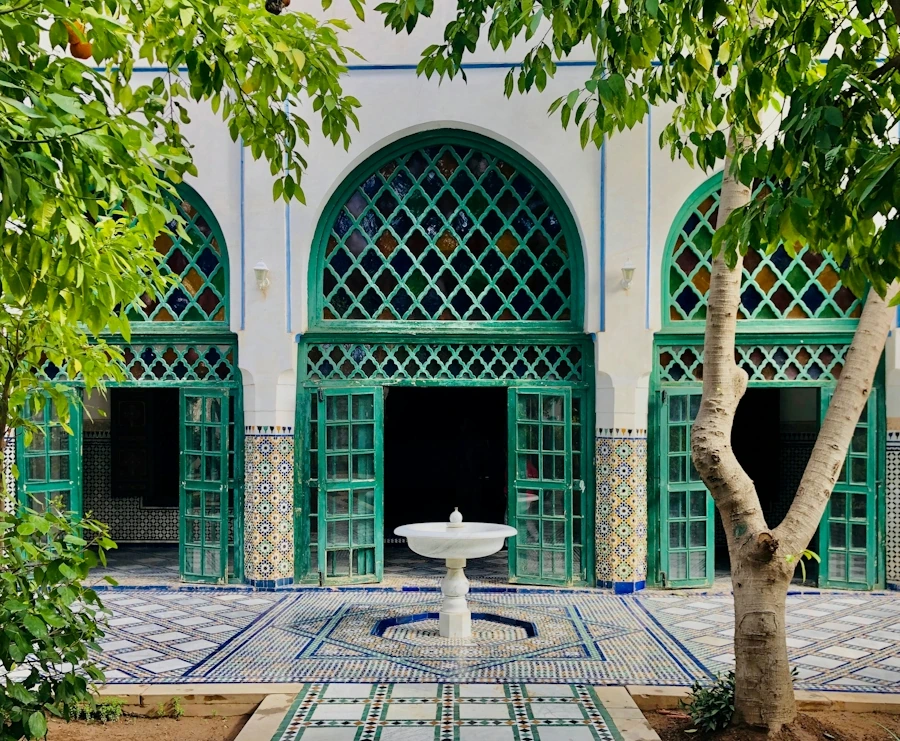
Start with a courtyard, then look closer
Marrakech offers interiors where the first impression can be so rich that it becomes difficult to notice anything specific. Pattern, carving, color, and light arrive together. I would slow the visit by choosing one architectural anchor: Bahia Palace for a palace setting, or Ben Youssef Medersa for a former educational institution. Both can reward a careful eye, but they tell different stories. Choose the one whose purpose interests you, then let a meal and a modest street walk complete the day.
The useful question is how the parts work together. A carved surface is more than a decorative close-up when you see its place beside a doorway, ceiling, or courtyard. Begin with the whole, move to a detail, and return to the whole. That simple rhythm can make an unfamiliar architectural language feel approachable. You do not need to identify every technique correctly before entering; curiosity and a little reliable interpretation are enough for a rewarding first visit.
Bahia offers a palace made of sequences
Marrakech's official tourism information describes Bahia through its courtyards, rooms, and detailed craftsmanship, including painted cedar ceilings and materials brought from different regions. Look at the building as a sequence rather than a single grand room. How does one space prepare you for the next? Where does a doorway narrow the view, and when does a courtyard open it again? These observations give the visit structure without requiring a complete account of palace life before you have begun.
Check current visitor access and allow enough time for the route that is actually open. Historic buildings can have changing arrangements, so avoid making one photographed room the condition of enjoying the palace. I would concentrate on several spaces where the relation among light, ornament, and proportion becomes clear. The most elaborate detail is not necessarily the most memorable. Sometimes an uncluttered view of a doorway or an edge between materials explains more than another crowded ornamental surface.
The official tourism description connects Bahia's ceilings with cedar from the Middle Atlas and identifies materials from other Moroccan centers. That gives craftsmanship a geographical dimension as well as a decorative one. Looking at the finished room can become the beginning of a question about the skills and resources brought together to make it.
Let ceilings become part of the room
At Bahia, painted wooden ceilings invite looking upward, but give them context. Compare the ceiling with the proportions of the space below and the framing of its openings. A surface can change the apparent weight or scale of a room. Notice repeated patterns, differences between sections, and how light affects what is visible. Follow the visitor route and stop where you can look without blocking others. Patient attention is easier when you choose one or two spaces rather than attempt every ceiling equally.
If you want to take photographs, begin with one wider composition and one detail that explains why the room interested you. Then look without the camera for a moment. A phone image can preserve pattern while missing the physical experience of standing under it. A written note about scale, light, or the way a room opens can fill that gap later. The aim is not to document the palace comprehensively but to leave with a few observations that remain clear.
Ben Youssef begins with a different purpose
Ben Youssef Medersa's official site presents its educational history and restoration, with former student accommodation forming part of the building's story. That purpose changes the way you look at its beauty. Consider the relationship between the principal courtyard and the smaller spaces around it. A former college is not simply a palace with a different label. Ask how daily movement, study, and residence might have related to the larger architectural arrangement, using the site's interpretation to ground the questions.
Begin in the courtyard and take time to understand its order before moving closer to ornament. Water, paving, openings, and upper levels work together to establish a central space. Look across it, then notice a smaller section of geometry or carved detail. The shift in scale is rewarding because it shows how the building can be legible from a distance and intricate at close range. You do not need to choose between appreciating craft and understanding function; each can deepen the other.
Compare materials without turning them into a checklist
Tilework, carved plaster, and wood can invite very different responses. Notice where one material meets another and how the transition is handled. Does the pattern continue, change direction, or stop cleanly at a border? A small junction can reveal the discipline behind a surface that first appeared simply abundant. Ask what each material contributes: color, texture, depth, or a particular kind of reflected light. The questions are accessible even if the technical vocabulary remains unfamiliar.
Reliable labels or a knowledgeable guide can supply that vocabulary where it helps. Avoid guessing at every technique or treating a generic description as an explanation of a specific surface. Craft deserves precision, but a first visitor can be precise about observations as well as names. You might remember that a border changed the scale of a pattern or that a carved area appeared different in shade. Those are useful responses because they arise from the building you actually encountered.
Give the street a different kind of attention
After the interior, choose a manageable public route rather than immediately enter another monument. The medina supplies a contrasting scale: doors, shops, movement, and small architectural details embedded in ordinary use. Use current directions for the connection and leave time for a café or lunch. An interior visit can sharpen the eye for the street, making a modest doorway or a change in building material more interesting than it would have seemed at the start of the day.
If browsing craft, look for the connection between what you saw in the monument and what is being made or sold now, without assuming they are identical in technique or purpose. Ask about materials and use, and buy only if the object appeals on its own terms. A small well-made item can be a satisfying souvenir, but an architectural visit does not require a purchase afterward. The clearer eye you take back into the streets is already a valuable result.
One building well, or two with a long interval
If seeing both Bahia and Ben Youssef is important, allow a generous interval and a practical route between them. They are distinct destinations within the medina, and the journey deserves more than a hurried transfer. I would usually give each a separate day so their purposes and spaces remain clear. If combined, make one the main visit and the other a more selective encounter rather than expect equal concentration late in the afternoon.
Before leaving, identify one courtyard and one craft detail you can describe in ordinary language. That is a good measure of the visit's value. You have moved beyond a general impression of beautiful decoration toward an understanding of how a particular place works. Marrakech's architecture rewards that kind of looking: enough context to ask better questions, enough time to notice the answer, and enough freedom to leave some rooms for a future return.
Sources & further reading
First published 18 October 2026. Page updated 19 October 2026. Planning references checked on 18 October 2026. The edition date above follows your device’s time zone; it does not indicate a new research check. Confirm current opening details and booking arrangements with the places you plan to visit.