
Make this your Marrakech itinerary
THE SHORT VERSION
- Use Jardin Majorelle’s own ticketing channel and check exactly what the product includes.
- Choose Le Jardin Secret for a garden visit integrated with a medina afternoon.
- Spread the two gardens across different days to preserve their distinct settings.
A garden is worth more than a photo slot
Marrakech's gardens are often introduced through a vivid color or a promise of escape. Both can attract the eye, but a good visit needs more than the time required for one photograph. I would choose Jardin Majorelle or Le Jardin Secret as the main garden of a day, then leave room for a meal and a modest walk. They offer different settings and different ways of looking, so the better choice depends on what interests you and where the rest of your day is unfolding.
Think about what you want from the pause. Majorelle may appeal through planting, color, and its associated cultural sites; Le Jardin Secret offers a medina setting with interpretation of architecture, water, and garden design. Neither needs to become a hurried stop between a palace and a long shopping circuit. Give the garden enough time to affect the pace of the day rather than treating it as a decorative background for another tightly scheduled outing.
Plan Majorelle through its official ticketing
Jardin Majorelle's own site directs visitors to its official online ticket channel and distinguishes garden and museum experiences. Read the actual admission product before buying and check which spaces are included. A ticket for one attraction should not be assumed to open every related site. Choose according to your interest and the time you want to spend. This is especially useful if someone in the group cares more about art or cultural interpretation than an extended garden walk.
Save the entry instructions and plan the arrival with enough margin to find the correct place. I would avoid attaching another timed visit immediately after the garden. Once inside, the pleasure lies partly in being able to pause where color, planting, or a view catches your attention. A tightly stacked schedule can reduce the experience to reaching a series of expected photo points, which is a thin return for a place designed to be looked at in motion.
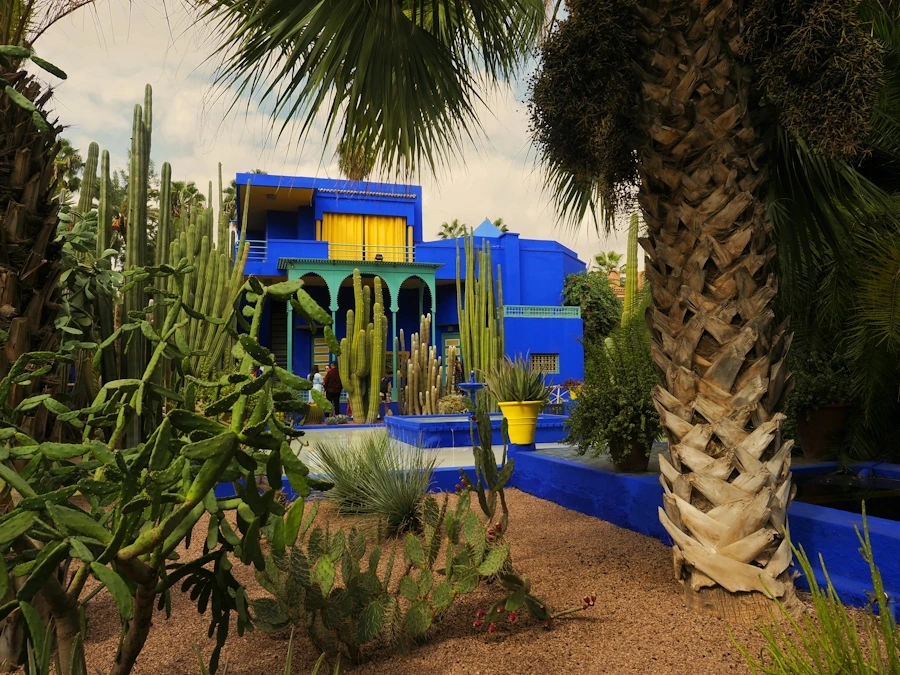
Look at color as part of the composition
At Majorelle, notice how strong architectural color interacts with foliage, pots, paths, and the scale of the surrounding space. Stand back before isolating a detail. A color can feel very different beside a plant, in shadow, or across a longer view. The garden offers a useful way to think about composition without needing specialist language. Ask where your eye goes first and what allows the rest of the scene to balance it.
Then choose one smaller subject: the shape of a leaf against a wall, a transition between planting and path, or the repeated rhythm of containers. Look long enough to form a specific memory. Follow the visitor route and allow other people room to move and photograph. You do not need an empty scene to appreciate the design. The garden remains a place to experience even when it is shared with others who were drawn by the same vivid images.
Museums can deepen the outing
The official Majorelle information lists the Pierre Bergé Museum of Berber Arts and links the Yves Saint Laurent museum as related cultural choices. Research the particular collection or exhibition before adding one. These visits offer different subjects, and interest in a garden does not automatically imply equal interest in every associated museum. I would choose one cultural companion if it provides a reason to slow down further, rather than buy a broad combination merely because it sounds like better value.
A museum can also change how you remember the garden by supplying context beyond its best-known photograph. Give that context proper attention and avoid treating the cultural stop as a quick extra on the way out. If you do not want another interior, keep the day outdoors and save the museum for a later interest. A well-chosen single visit is preferable to completing several related sites with too little curiosity left for the final one.
Le Jardin Secret starts a different conversation
Le Jardin Secret sits within the medina and presents architecture, planting, and water as connected parts of its history. Its own visitor interpretation highlights those themes, giving you a useful structure for looking. Begin with the arrangement of the spaces before examining individual plants. Notice where paths meet, how a water feature establishes a center, and how the built edges frame the garden. The pleasure is partly in the contrast between the surrounding urban fabric and this composed interior world.
This is the garden I would consider when a medina outing needs a substantial pause that still belongs to the city's cultural story. It can replace another monument rather than simply add to the itinerary. Consult current ticket and access information, especially for any additional viewpoint or special area you hope to use. The garden itself should remain the center, not an interval endured while waiting for a higher photo position.
Follow the water with your eyes
At Le Jardin Secret, water interpretation can help make an apparently simple garden feature more meaningful. Look at the relationship among channels, basins, planting, and the experience of moving through the space. Water is not only an attractive surface; it helps explain how a garden works and how its atmosphere is composed. You do not need a technical survey to appreciate that connection. One well-understood feature can add depth to the whole visit.
The site's cafés offer an option for extending the pause, subject to current operation and admission arrangements. Choose a drink or light meal according to the time you want to spend, and read the actual menu. Sitting can be a legitimate continuation of looking. The scene changes when you stop moving, and details that seemed minor on the first circuit may become the things you remember. An additional purchase is optional; the important part is giving the place time.
Le Jardin Secret's own interpretation separates history, architecture, garden, and water into related themes. Choose the one that most interests you before a second circuit. Looking first for structure and then for water, for example, can make the same path feel different without adding distance or another attraction to the day.
Keep the two gardens distinct
If you want to see both, spread them across separate days when possible. Majorelle can anchor an outing beyond the medina, while Le Jardin Secret can shape an old-city afternoon. That separation gives each a context and prevents travel time from dominating what should be a slower experience. Check current weather and opening information before either visit. A garden is a living place, so let the actual conditions influence how long you stay and what you notice.
For a first visit, choose one garden, one optional cultural companion, and a meal. Leave the other as a clear reason to return. You will remember more if the day has a small number of distinct experiences rather than several gardens encountered in a hurry. Marrakech's green spaces can offer more than relief from sightseeing: they can teach you to look at color, water, and architecture with enough patience to see how those elements work together.
Sources & further reading
First published 18 October 2026. Page updated 19 October 2026. Planning references checked on 18 October 2026. The edition date above follows your device’s time zone; it does not indicate a new research check. Confirm current opening details and booking arrangements with the places you plan to visit.