
THE SHORT VERSION
- Choose the Capitoline Museums or Doria Pamphilj according to collection and setting.
- Spend sustained time with one work instead of treating every room equally.
- Keep the post-museum afternoon flexible enough for a different kind of experience.
Choose a setting as well as a collection
Rome's art is not confined to one famous museum circuit. A collection can belong to a civic history, a palace, a church, or a villa, and the setting changes the way you encounter it. For this day, I would choose between the Capitoline Museums and the Doria Pamphilj Gallery. One places art and ancient material within a public cultural institution; the other offers a palace setting with a distinct collecting history. They are alternatives for a focused day, not a challenge to complete before lunch.
Start by asking what you enjoy most in a gallery. Do you want sculpture and a stronger connection to the city's ancient history, or paintings encountered within decorated rooms? Look at the official collection and visitor information for the relevant institution, then choose the one that gives you a clear reason to go. The question is more useful than which museum has the most famous objects. A visit works best when the building and collection support the kind of attention you want to give.
The Capitoline choice: objects and the city
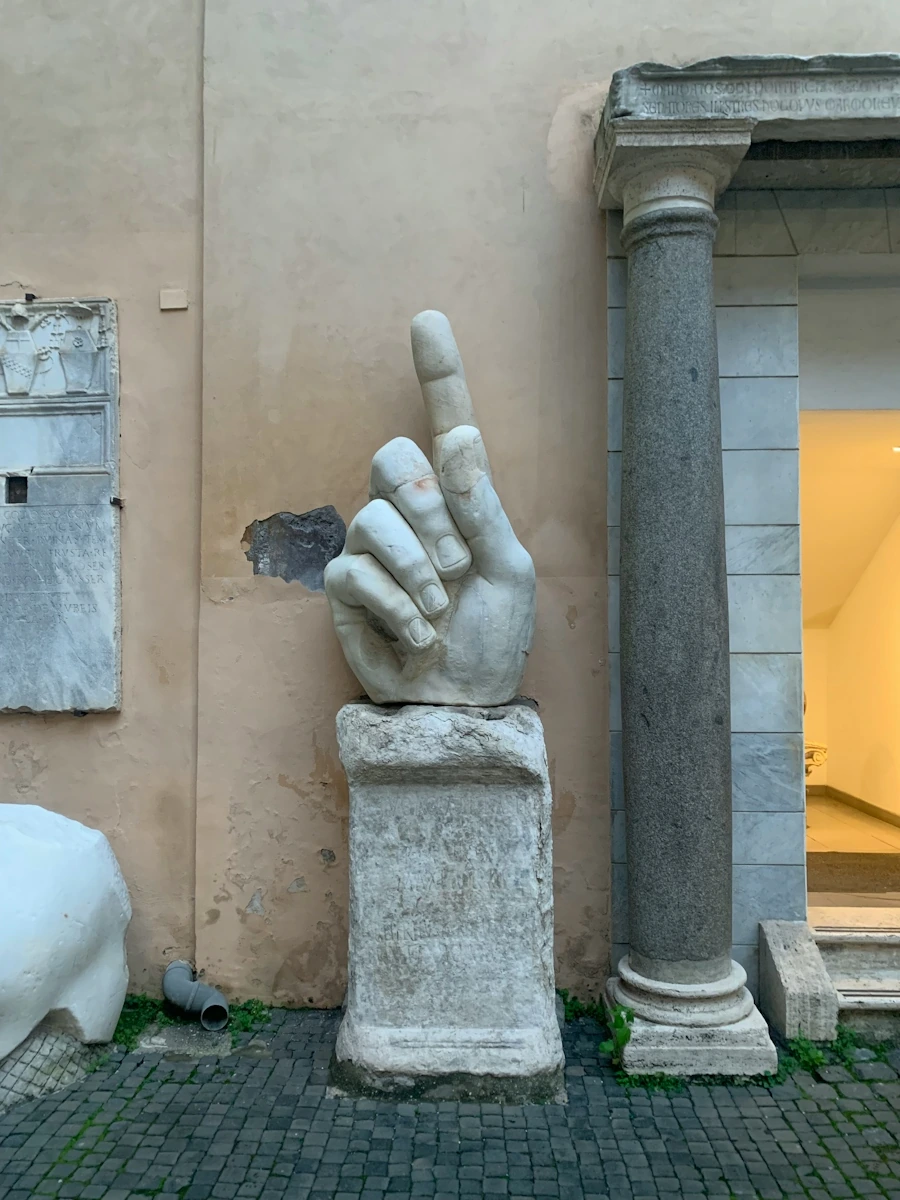
The Capitoline Museums are a natural option after an archaeological day, or as an introduction before one. Their official collections information lets you select works that connect with your interest rather than wander until a recognizable name appears. Choose a handful of objects across the available route and look carefully at scale, material, and condition. Sculpture is especially rewarding when you move appropriately around it instead of treating the first frontal view as the entire work.
Ask how an object has changed through time. What is original, what is missing, and how does the display explain what you see? Labels can help distinguish evidence from expectation. A statue may seem instantly readable but become more interesting when you notice repair, reuse, or a complicated history of identification. You do not need to retain every date. One object understood with a little precision can change the way you look at ancient material elsewhere in Rome.
Give the architectural setting attention too. The relationship between museum rooms and the wider Capitoline area helps connect the institution with the city outside. Pause where the visitor route allows and let a broader view interrupt the object-by-object rhythm. That change of scale is valuable. It reminds you that collections are part of places, and that the places themselves have continued to acquire meanings long after the works were made.
The palace choice: Doria Pamphilj
Doria Pamphilj offers a different encounter, with art presented within a palace context and a family history that remains part of the institution's identity. Consult its official visitor pages to understand the gallery route and current admission. I would choose it when paintings and interiors appeal equally. Look at the rooms as arrangements: the density of works, the framing, the surfaces, and the relationship between decoration and individual paintings all influence what receives attention.
Begin by taking in a room as a whole, then select one painting for a closer look. Compare the work's effect in its setting with the experience of looking at a reproduction on a plain page. The surrounding objects and surfaces can alter scale, contrast, and mood. You may admire the room while finding it difficult to concentrate on a single work; that is an interesting response rather than a failure of museum manners. It reveals something about how display shapes experience.
Use available interpretation to understand the collection without feeling obliged to form a grand opinion about every artist. A palace gallery can prompt questions about taste, status, inheritance, and the way objects are assembled over generations. Choose one of those threads and follow it. The visit becomes more coherent when it has a small personal theme, and you will be less tempted to rush through rooms simply because another one is waiting beyond the doorway.
Give one artwork ten good minutes
Whichever institution you choose, select a work and stay with it longer than feels automatic. First describe what is visible: material, color, light, gesture, direction, and the relationship between parts. Then read the interpretation and look again. The second view may contradict your first impression, or make a detail suddenly important. That process is more useful than treating labels as captions to collect. You are allowing the object to become a conversation rather than a fact.
With a companion, choose independently and explain your reasons afterward. Avoid turning the discussion into a competition over knowledge. A precise observation in ordinary language can be more illuminating than a confident generalization. If alone, write a brief note about the work and the question it raised. You can look up more later if the interest persists. The museum visit itself is the chance to encounter the physical work, so let that opportunity take priority over reading everything on a phone.
Leave room around lunch
Choose a meal after the main visit without attaching an unnecessarily tight reservation to your exit. A gallery can hold you longer than expected, and the final room should not be reduced to a glance because a table is waiting elsewhere. Once outside, find a comfortable place, read the menu, and order according to appetite. A modest lunch can be exactly right after several hours of concentrated attention. The meal does not need a famous address to give the day a satisfying center.
Use the pause to decide what would add variety. A short walk through nearby public spaces may be more rewarding than another museum. A church could offer a smaller art encounter if its current access and purpose suit a respectful visit. Or you may simply want a café and a direct journey back. I would not decide that second chapter before knowing how the first has felt. Leaving space is a practical way to protect the pleasure of the day.
A return visit can follow a new thread
For a shorter outing, choose only the institution and a meal. For a full day, add a walk that changes the scale from interiors to streets. Check the current ticket, route, and access information for the particular place you choose, and save the other museum for another mood. The comparison will be clearer when both visits receive fresh attention rather than when the second is encountered through fatigue.
Before leaving Rome, ask which thread you want to continue: ancient sculpture, collecting, painted interiors, or the relationship between a museum and its city. That answer gives future visits a purpose. An art day does not need to produce an expert. It can simply leave you with one work you remember vividly, one room you would like to revisit, and a better idea of why some cultural experiences make you want to keep looking.
Sources & further reading
First published 18 October 2026. Page updated 19 October 2026. Planning references checked on 18 October 2026. The edition date above follows your device’s time zone; it does not indicate a new research check. Confirm current opening details and booking arrangements with the places you plan to visit.