THE SHORT VERSION
- Read the exact official ticket conditions before planning the order of visits.
- Use a few buildings to understand the Forum rather than chase every name.
- Treat the Capitoline Museums as a deliberate separate chapter if energy allows.
Begin with a question about the city
Ancient Rome is easier to enjoy when the day has a question rather than a long list. How did crowds move? Where did public life happen? How did buildings express power? The Colosseum, Forum, and Palatine can all contribute, but you do not need to understand every column to have a rewarding visit. I would choose a clear route through the archaeological area and make it the day's main undertaking. Trying to add the Vatican or a distant gallery afterward usually asks too much of the same attention.
The ruins reward imagination supported by interpretation. A fragment becomes interesting when you know enough about its purpose to ask what once surrounded it. Use the archaeological park's official information to choose a ticket and visitor route, then decide whether an audio guide, a good guidebook, or a properly selected tour would help. The right explanation can turn a confusing field of stone into a place whose streets and institutions begin to make sense.
Understand the ticket before choosing the order
The archaeological park offers different admission products and access conditions, so read the current description carefully. A ticket name may refer to particular areas, time limits, or special spaces, and a Colosseum booking can shape the rest of the visit. Do not assume that advice for an older ticket applies to the product you buy. Save the official entry instructions and work out which entrance corresponds to the part you will visit first.
Once the fixed appointment is clear, leave room around it. Security, walking, and finding the correct access point all belong in the plan. I would avoid a tight restaurant reservation immediately after the archaeological area. The most enjoyable discoveries often happen when you have finally understood the layout and want to look again. A flexible lunch protects that moment. It also prevents the end of the visit from becoming a race against a table booked across town.
At the Colosseum, look at movement
The Colosseum's scale is obvious; the more interesting question is how that scale was organized. Look at entrances, changes of level, circulation, and the relationship between the central space and the surrounding seating. Even from the areas included in a standard visit, you can begin to think about architecture as a system for moving and arranging people. That makes the structure more than a large object to photograph from several angles.
Pause at one viewpoint long enough to compare the overall form with a closer detail. Stone, openings, repairs, and missing sections can all complicate the first impression. Follow the site's interpretation rather than inventing a complete scene from cinematic memory. Ancient entertainment involved power and violence as well as engineering, and the official material can help keep those subjects in view. You do not need to leave with admiration untouched by questions.
The Forum asks for a slower eye
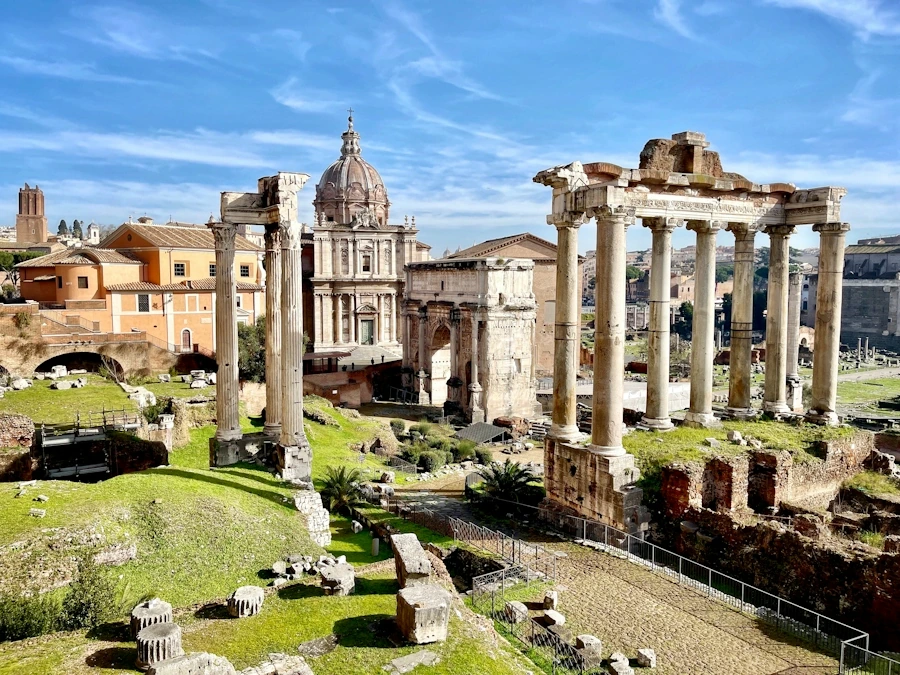
The Roman Forum can initially feel harder to read because its buildings survive in very different forms. Start by identifying the main route and a few major structures from the official map. Then choose several stops where you can understand function as well as appearance. The park's own description explains the Forum's role in the city's public life. Use that context to imagine relationships among spaces rather than treat every remnant as a separate monument requiring another photograph.
A guided interpretation can be especially useful here, but it should leave room to look. Ask for the distinction between what survives, what has been reconstructed, and what is understood through archaeological evidence. Those differences make the place more interesting, not less. I would rather grasp the role of a handful of buildings clearly than retain a dozen names without any spatial understanding. The Forum is a place to build a mental map, slowly and selectively.
The Forum's administrative and public role gives a useful contrast with the Colosseum's organization around spectacle. Holding those two purposes in mind can clarify the day: first ask how a building gathered an audience, then how streets and institutions structured civic activity. The ruins become easier to read when function supplies a thread.
Let the Palatine provide perspective
The Palatine can change your relationship to the surrounding archaeological landscape by raising the viewpoint and introducing another part of ancient Rome's story. Follow the route available under your current ticket and check access information for particular buildings. Elevation and exposed sections affect the visit, so choose according to your mobility and energy rather than assume everything must be completed. A worthwhile viewpoint is not an obligation to continue until every path has been covered.
Use the broader view to connect what you have already seen. Where does a major route lead, how do the levels differ, and which structures now become easier to place? This is the moment when a complicated site may begin to resolve into a city. Stop before adding more information. A short interval of looking can help the previous hour's explanation settle and give the ruins a relationship that individual labels could not provide alone.
Eat and rest before judging the day
After the archaeological area, choose a straightforward meal and a genuine seat. Heat, uneven ground, and sustained attention can make even a rewarding visit tiring. Read menus and pick food according to appetite rather than assume the closest restaurant or the most dramatic recommendation is the only option. A simple lunch with room to sit can improve the memory of the whole morning. You can decide on another activity after eating, when the decision is more reliable.
If you want a cultural continuation, the Capitoline Museums offer a different way of encountering ancient material, with objects and interpretation inside. Check the current collections and visitor arrangements and consider saving them for another day. They should be a chosen second chapter, not an automatic addition because the theme matches. Ancient Rome is large enough to sustain several separate outings, and dividing it can make the connections clearer rather than weaken them.
Finish with a city that still continues
A short public walk near the archaeological center can be a satisfying ending, provided it fits your remaining energy. Look at the way contemporary Rome lives around and above the ancient sites. Roads, buildings, visitors, and ordinary movement all coexist with the ruins. That overlap is part of the city's interest. You do not need to find an untouched ancient atmosphere for the day to feel meaningful; the continuity and interruptions are what make Rome distinctive.
For the first visit, choose one ticket carefully, understand several spaces, take a proper break, and leave something for later. Check current weather, carry water as appropriate, and use the site's official access guidance. A good ancient-Rome day is measured by the connections you can explain afterward. If you can describe how a public route, a gathering space, and a major building relate, you have gained more than a gallery of famous stones.
Sources & further reading
First published 18 October 2026. Page updated 19 October 2026. Planning references checked on 18 October 2026. The edition date above follows your device’s time zone; it does not indicate a new research check. Confirm current opening details and booking arrangements with the places you plan to visit.