
Make this your Singapore itinerary
THE SHORT VERSION
- Choose outdoor gardens or a specific conservatory focus before booking.
- Check garden access notices for waterfront diversions.
- Walk a selected bay section rather than committing to a full circuit.
Make a garden choice before buying tickets
Marina Bay can tempt you into buying a very full day before you have taken your first walk. There are gardens, conservatories, viewpoints, waterfront paths, and shopping complexes, each with its own appeal. I would start by deciding whether you are most interested in plants, architecture, or the bay itself. That choice makes it easier to enjoy a substantial visit instead of moving between entrances with the feeling that you are always late for the next thing.
Gardens by the Bay is a sensible anchor. The outdoor gardens and the ticketed attractions are different experiences, so check the official map and choose deliberately. If plant collections interest you, give a conservatory enough time to read labels and notice how the displays are arranged. If you primarily want an outdoor walk, do not assume you must buy every available admission to appreciate the site.
Find the smaller scenes beneath the spectacle
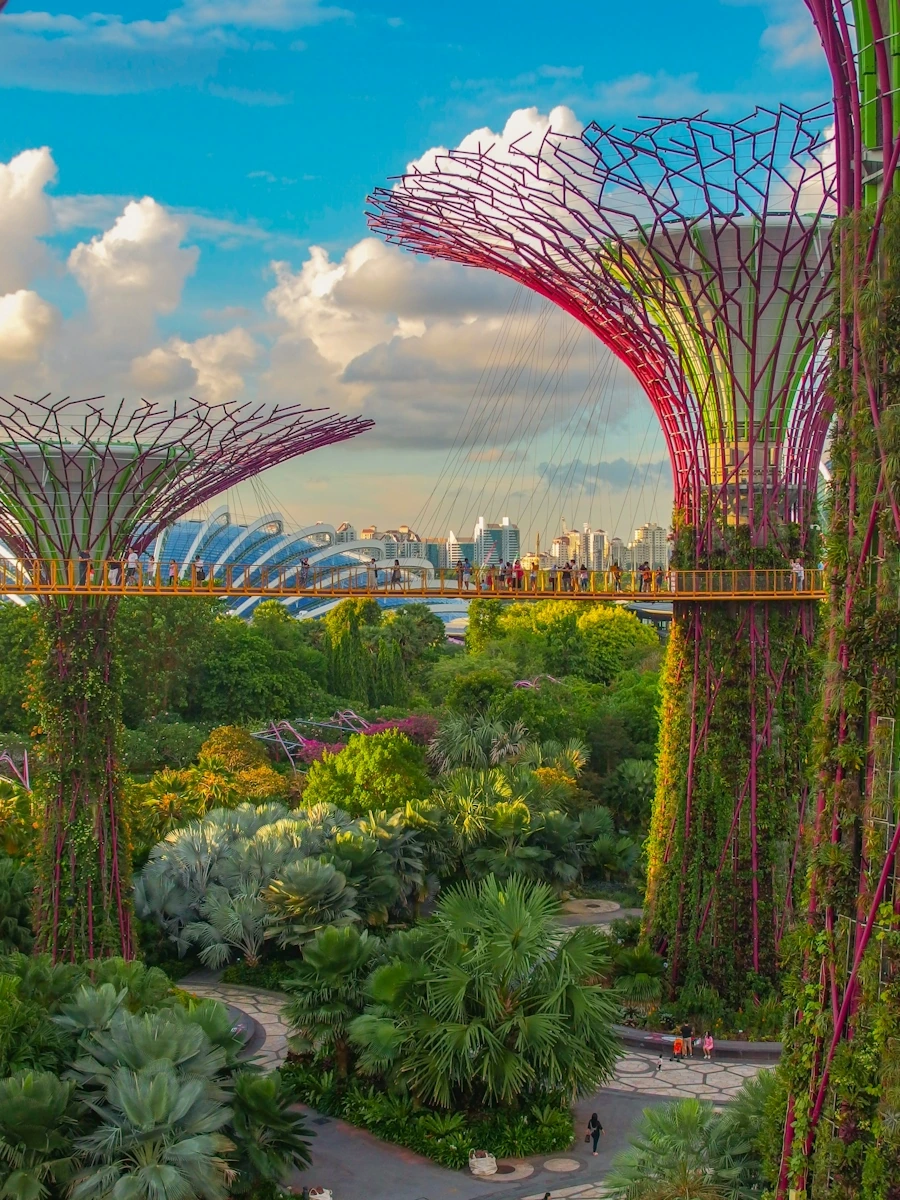
The Supertrees are the obvious visual signature, but the garden paths also offer chances to concentrate on smaller planting decisions. Look at leaf shapes, water edges, and how the paths alternate enclosed and open views. This can make a large designed landscape feel more approachable. You do not need botanical vocabulary to compare the texture of two plants or notice how shade changes the temperature beneath a canopy.
A good garden visit includes sitting down. Take a proper pause before deciding whether you want another attraction. In a city associated with efficiency, it can feel strangely necessary to give yourself permission to stop without buying something. Choose designated seating, stay off planting beds, and keep snacks away from wildlife. The larger architecture will still be there after you have looked at a single patch of greenery for a while.
Let the bay provide the second half
After the garden, choose a manageable waterfront section instead of assuming you need to complete the entire bay. An outward walk with a planned transit exit can be more enjoyable than an obligatory loop. The skyline changes as you move: buildings that seemed separate begin to overlap, while the water creates room around them. Stop where the path is broad enough and look back as well as ahead.
Check the current pedestrian diversions before heading toward Marina Barrage or linking garden sections. Gardens by the Bay publishes construction and access notices, and a neat line on an older map may not describe the route available today. A short detour is no great problem if you know about it; it is more frustrating when you have saved your final water and battery for what you thought was the quickest way out.
End in a place you actually want to stay
If you are drawn to an evening garden display, verify the current program and build dinner around it rather than relying on an old social-media schedule. There is no requirement to remain until dark. A late-afternoon walk followed by a comfortable meal can be a complete version of this outing, especially after a long travel day. Choose your finish according to energy and weather, not just the image on the promotional page.
For photographs, use the contrast between planting and buildings rather than only the widest possible skyline. A foreground leaf, a path curve, or a small group seen at an appropriate distance can explain the place better than an empty panorama. Keep tripods out of narrow circulation routes and follow any specific venue rules. The best result is a record of a day you enjoyed, rather than a day spent waiting for a result.
A garden ticket is a choice, not a bundle of obligations
A useful Gardens by the Bay visit starts with the official map rather than the ticket checkout. Locate the attraction you actually want, the outdoor route around it, and the point where you will leave for the bay. A conservatory, elevated viewpoint, and outdoor garden each ask for a different kind of visit. Combining several can work, but it should be a decision about your interests rather than a response to every option offered during booking. Read the conditions of the selected ticket and leave unchosen attractions out of your mental itinerary.
Inside a conservatory, give one plant grouping a little more time. Notice where the labels place its origin, what growing conditions are suggested, and how the display makes that environment legible. You do not have to study the whole collection. Comparing a few leaf shapes or the arrangement of a planted slope can make the experience more personal than simply walking toward the largest feature. If you enjoy taking pictures, alternate the wide architectural view with a closer detail that made you stop. Follow any restrictions around displays and equipment rather than copying another visitor’s setup.
The waterfront connection needs a current access check. The gardens publish notices about construction and diversions, including work affecting routes around Bay South and Bay East. Do not promise yourself a direct crossing based on an older map. A pedestrian detour can be perfectly manageable if you account for it before walking out with a tired group. If Marina Barrage is part of the plan, check the entire connection and your exit from that end. The last leg should be chosen as carefully as the first attraction.
For a meal, decide whether you want to remain within the gardens area or move toward another part of the bay. A designated food stop can be a useful divider between botanical attention and a broader skyline walk. Keep the distinction clear between an attraction booking and whatever food or drink you buy nearby; a view does not require another admission unless a specific venue says so. If you have limited time, a comfortable meal and one selected bay section are a better complement to a conservatory than a hurried circuit around the water.
If evening programming is important, consult the gardens’ current schedule on the day. Special displays and regular events can have different locations and conditions, and a short clip online may not describe what is running during your visit. Arrive at an appropriate viewing space without obstructing circulation, then enjoy the experience you find rather than comparing every minute with a promotional image. If your energy runs out earlier, leave in daylight with the garden still in mind. Marina Bay can be a memorable afternoon without demanding the entirety of your evening.
Look back across the water
On the bay walk, stop once to look toward the gardens you have just left. The contrast between planted landscape and dense development is easier to understand from a little distance. Then turn the other way and choose a foreground that gives the skyline scale: a public path, a railing, or a curve of water. This is a simple photographic exercise that does not require equipment beyond a phone. Take a few frames and continue. It helps you observe the design of the waterfront instead of spending the whole walk searching for an iconic angle whose location may not fit your route.
Sources & further reading
First published 18 October 2026. Page updated 19 October 2026. Planning references checked on 18 October 2026. The edition date above follows your device’s time zone; it does not indicate a new research check. Confirm current opening details and booking arrangements with the places you plan to visit.