
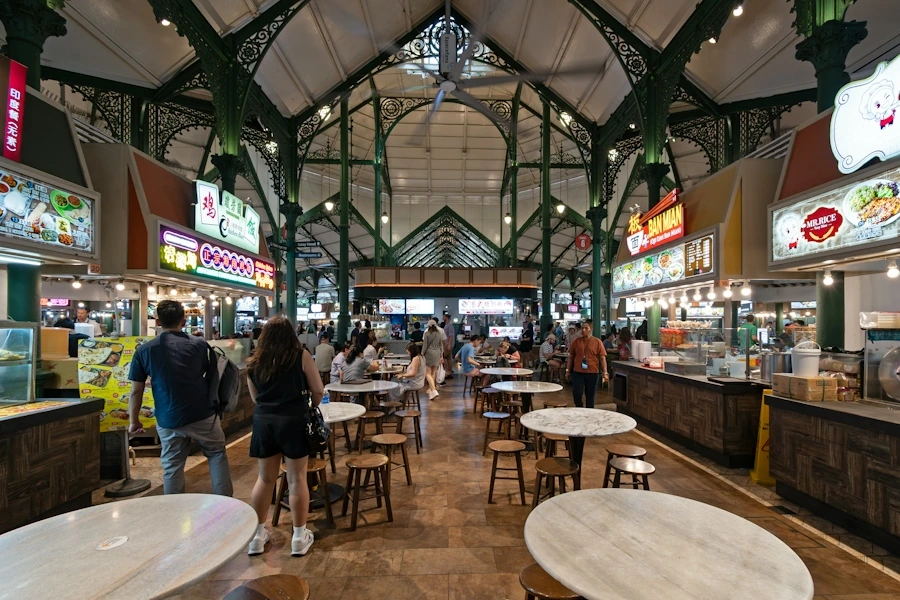
Make this your Singapore itinerary
THE SHORT VERSION
- Choose two neighborhoods, not a long list of famous stalls.
- Learn seating, payment, and tray-return arrangements before ordering.
- Check center closures and keep individual stall plans flexible.
Let meals shape the map
A hawker-focused day in Singapore works best when food gives the day structure rather than replacing everything else. Choose two centers in neighborhoods you want to explore, then put a proper walk or museum visit between them. Otherwise, the afternoon can become a succession of full stomachs, transit rides, and queues for dishes you no longer want. I would rather enjoy one satisfying plate and return hungry than keep ordering because a list says I should.
Maxwell and Chinatown Complex are useful starting points for a Chinatown day, but you do not need to eat at both. Compare their setting, look at what is being prepared, and choose a center that fits your mood. Read a menu before joining a queue. A famous stall may be wonderful, but a lesser-discussed neighbor serving something you actually want can give you a better lunch.
Learn the small mechanics first
Walk a short circuit to understand the seating and tray-return areas before ordering. Decide where you are going to eat, especially if you are with children or several companions. Some tables may already be occupied even when nobody is seated at that moment; if you are unsure, ask politely rather than moving another person’s belongings. Pay attention to signs and to the way the particular center is organized.
Order clearly, state the portion or option you want, and have an accepted payment method ready. Digital payment availability varies, so do not assume the arrangement at your previous stall applies everywhere. Once you have finished, follow the center’s tray-return and table-clearing instructions. The practical details are part of being a considerate customer, not a secret code that visitors are expected to guess.
Choose contrast, not quantity
A first meal might be rice-based, while a later snack could be a soup, a dessert, or a drink. That contrast is more useful than ordering several substantial dishes simply to collect names. If friends want to share, check portion sizes and practicalities before creating a crowded table. Ask for separate utensils when appropriate, and do not take someone’s dietary flexibility for granted.
Hawker culture includes different communities and cooking traditions. Describe a dish as specifically as you can rather than collapsing everything into generic Asian street food. If you like something, learn its name and main preparation. You might notice the balance between rice and accompaniments, or the difference between a clear broth and a richer sauce. That small effort makes the next menu easier to understand and gives you something more useful than another food photograph.
Leave the second center until you are hungry
For the next stop, pick a neighborhood that gives you another reason to be there. A center near Little India or a different residential district can broaden the day beyond the same short tourist circuit. Check the National Environment Agency’s center information and closure notices before traveling. Individual stalls also operate their own schedules, so consider the center a place to explore rather than a guarantee that one particular vendor will be open.
Finish when you are comfortably fed. There is no prize for reaching every famous name, and no reason to order a final dish just because you have crossed the city. If you still want something, a drink and a view of the activity can be enough. The nicest hawker day leaves you remembering the flavor of a meal and the rhythm of a neighborhood, with room to return and try a different dish another time.
How to choose the second plate
I would begin a hawker day by choosing an area, then choosing a center within it. Maxwell and Chinatown Complex are convenient examples for a Chinatown morning, but one lunch can be enough to understand the appeal. Look at the actual range of dishes before choosing a queue. A familiar recommendation may be a useful starting point, yet the menu next door might fit your taste, budget, or dietary needs better. Your lunch does not need to validate someone else’s ranking. It needs to be something you will enjoy eating at the time you arrive.
Pay attention to the difference between a stall and a center. The center may be available while your preferred vendor is not serving, and cleaning or maintenance closures can affect an entire site. The National Environment Agency publishes center information that is worth checking before a cross-island journey. Stall hours need a separate confirmation where possible. Keep a second dish idea within the same center instead of a backup stall across town. This protects the neighborhood day from becoming an expensive transport exercise organized around one plate.
At the table, organize the order so it suits the people eating. If several friends want to share, ask what the portion actually includes and whether serving utensils are available. A mound of separate dishes arriving at different times can create more logistics than pleasure. Some preparations are better eaten promptly, while others are easier to divide. Let that inform the order. A clear bowl of soup, a rice-based dish, or a crisp snack offers different kinds of satisfaction; there is no need to assemble all of them into one oversized meal simply to cover categories.
After lunch, do something unrelated to eating. Read a neighborhood display, visit a suitable institution, or walk streets you wanted to see before looking for another center. This interval matters because appetite and curiosity do not recover at the same speed. If you are only ready for a drink, order one without apologizing to your itinerary. Ask about sweetness or other options before preparation where the stall offers them. Learn the name of the drink you liked so that a future order can be a choice you understand rather than another experiment copied from a photograph.
At the second food stop, use what you noticed earlier. Perhaps you want a different texture, a smaller portion, or a dish from a cooking tradition you have not yet tried. Describe it as specifically as you can, then enjoy it without immediately searching for a better-rated version nearby. Follow the center’s clearing and tray-return instructions, and leave the table usable for the next customer. The lasting value of a hawker day is not the number of stalls visited. It is knowing enough to return, read a menu with more confidence, and choose a meal of your own.
Keep a useful food note
A short note after each meal can be more helpful than a large set of photographs. Record the dish name, the center, what you enjoyed about the texture or flavor, and any ordering detail you would want to remember. Avoid turning the note into a universal rating; the point is to understand your preference. On the next visit, you may choose a different preparation because you know what you liked before. If you ask a vendor how to pronounce a name, choose a quiet moment and keep the exchange brief. Learning one name well is a satisfying result of an entire lunch.
Sources & further reading
First published 18 October 2026. Page updated 19 October 2026. Planning references checked on 18 October 2026. The edition date above follows your device’s time zone; it does not indicate a new research check. Confirm current opening details and booking arrangements with the places you plan to visit.