
Make this your Kyoto itinerary
THE SHORT VERSION
- Use Tenryu-ji as the day’s anchor.
- Treat the bamboo grove as a shared path, not a private photo set.
- Keep any extra temple within the Saga-Arashiyama area.
Start with the landscape, not the queue
Arashiyama can become a surprisingly hurried day for somewhere associated with bamboo and mountain views. The temptation is to treat the grove as a quick photographic errand before crossing Kyoto for another famous temple. I would give western Kyoto its own half day instead. The combination of temple garden, bamboo path, riverbank, and wooded slopes makes more sense when you see how the pieces fit together. You do not need a completely empty photograph for the visit to feel worthwhile.
Choose Tenryu-ji as your anchor. Its garden gives you something the bamboo photographs cannot: a composed view in which water, rocks, planting, and the hills beyond belong together. Spend time looking from one position before walking onward. If you enjoy garden design, compare the view from near the buildings with the changing angles along the path. The point is not to identify every plant. It is to notice how a relatively contained garden seems to borrow a much larger landscape.
Let the bamboo be one chapter
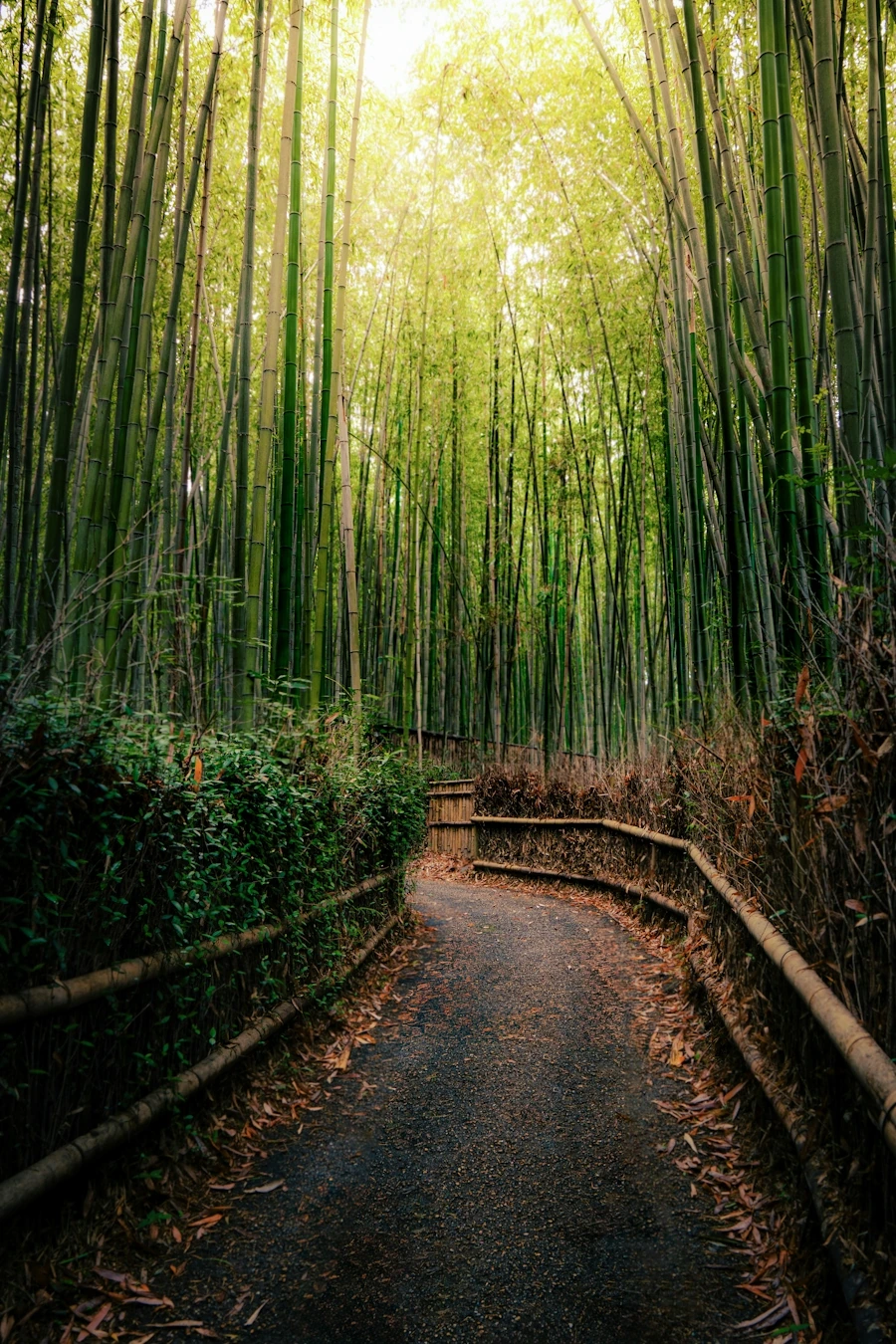
The bamboo grove is worth seeing, but expectations matter. It is a public walking route shared by many other visitors, not an isolated forest expedition. Follow the designated path, keep moving when the space narrows, and step aside only where there is room. The stalks are impressive even when people are present: look upward at their lines and the way the canopy changes the light rather than waiting endlessly for the foreground to clear.
Do not step into fenced areas or scratch a name into the bamboo. That should be obvious, yet a place can look like a photography set online while remaining a fragile, heavily used landscape in person. A smaller camera or phone is enough here. If the grove is crowded, walk through once, enjoy it, and let the river be the part of the day where you linger.
Follow the river toward a proper pause
Togetsukyo Bridge makes a useful change of scale after the garden and grove. The river opens the view, and the hills stop being a distant backdrop. Walk the accessible public riverside sections rather than immediately searching for another ticketed attraction. There is pleasure in watching the same scene change as boats pass and people cross the bridge. Keep away from slippery edges and use the signed paths; the photograph is not improved by balancing somewhere unsuitable.
For a relaxed lunch, choose a restaurant before you become determined to eat at the first place with an available chair. Arashiyama has substantial visitor demand, so treat a comfortable meal as part of the visit rather than an inconvenience. Noodles, tofu dishes, and simple rice meals can all suit this kind of day. Check what is actually in the broth if you have dietary restrictions, and do not assume that a vegetable-looking dish is vegetarian.
Choose one extension, then stop
If you still have energy, the lanes farther into Saga offer a different texture from the bridge approach. This is where I would look for a longer walk rather than adding a distant Kyoto sight. Pick one destination, check its current visiting arrangements, and work backward from the route home. Several temples and gardens in the wider district have steps or separate admission areas, so there is no reason to promise yourself every option.
Travelers who prefer a gentler day can skip the extension entirely. Return toward your chosen railway station, have tea, and enjoy leaving with enough energy to notice the neighborhood around your accommodation later. That is not an incomplete version of Arashiyama. It is a day organized around the landscape instead of around the number of gates crossed.
A western Kyoto route that stays in the west
There are three useful railway names to distinguish before setting out: Saga-Arashiyama on JR, Arashiyama on the Hankyu line, and Arashiyama on the Randen tram route. They bring you to different parts of the district. Choose the one that fits your first stop rather than selecting whichever result has the shortest advertised journey. If you arrive on JR, a walk toward Tenryu-ji can form the opening of the day. A Hankyu arrival instead introduces the river before the temple. Neither order is more authentic; it is simply a different beginning.
At Tenryu-ji, read the admission choices rather than treating the first ticket as access to everything. Garden, buildings, and special viewings can have separate arrangements. The temple publishes ceremonial closures, so check its own page if an interior matters to you. For a garden-led visit, leave enough attention to compare an enclosed composition with the larger hills behind it. Photographing the pond is easy; understanding why the background feels integrated takes a little longer. Sit or stand only in permitted areas, and do not occupy a viewing point indefinitely while waiting for perfect light.
The route between the temple, bamboo grove, and river has busy commercial stretches. It is convenient to choose lunch near the part of the district where you will actually finish. A tofu-focused meal can be a thoughtful choice, but ask whether stocks or accompaniments contain fish if you avoid it. For noodles, check the portion before adding several side dishes. This is a day when a single comfortable meal is more useful than a trail of sweets consumed while walking. Kyoto’s market-style snacks still come with expectations about where customers may eat and leave packaging.
If you are considering a farther Saga temple, measure the addition from the point where your first loop ends. A temple name that appears beside Arashiyama on a tourism page may require another substantial walk. Decide whether the appeal is its garden, sculpture, or route through the district, then confirm the entrance and return connection. Do not combine a hillside extension and an animal attraction solely because both appear in the same search. They ask for different effort, and a crowded afternoon is not the moment to discover that your group wanted only the riverside.
For the return, use the river as your final orientation. Note the side of the bridge you are on and the station you intend to reach before you start browsing the last shops. On a wet day, shorten the outing to Tenryu-ji, one pass through the grove, and lunch; the river can still provide a brief view without becoming a long exposed section. On a clear day, a longer seated pause beside the public river route may be the part you remember most. Arashiyama makes a stronger day when you leave its distant possibilities for another visit rather than forcing them all into this one.
Sources & further reading
First published 18 October 2026. Page updated 19 October 2026. Planning references checked on 18 October 2026. The edition date above follows your device’s time zone; it does not indicate a new research check. Confirm current opening details and booking arrangements with the places you plan to visit.