
Make this your Kyoto itinerary
THE SHORT VERSION
- Keep Higashiyama separate from distant Kyoto districts.
- Check the temple’s own map, access guidance, and current schedule.
- Follow local signs and respect residents and working geiko and maiko.
Choose one side of Kyoto
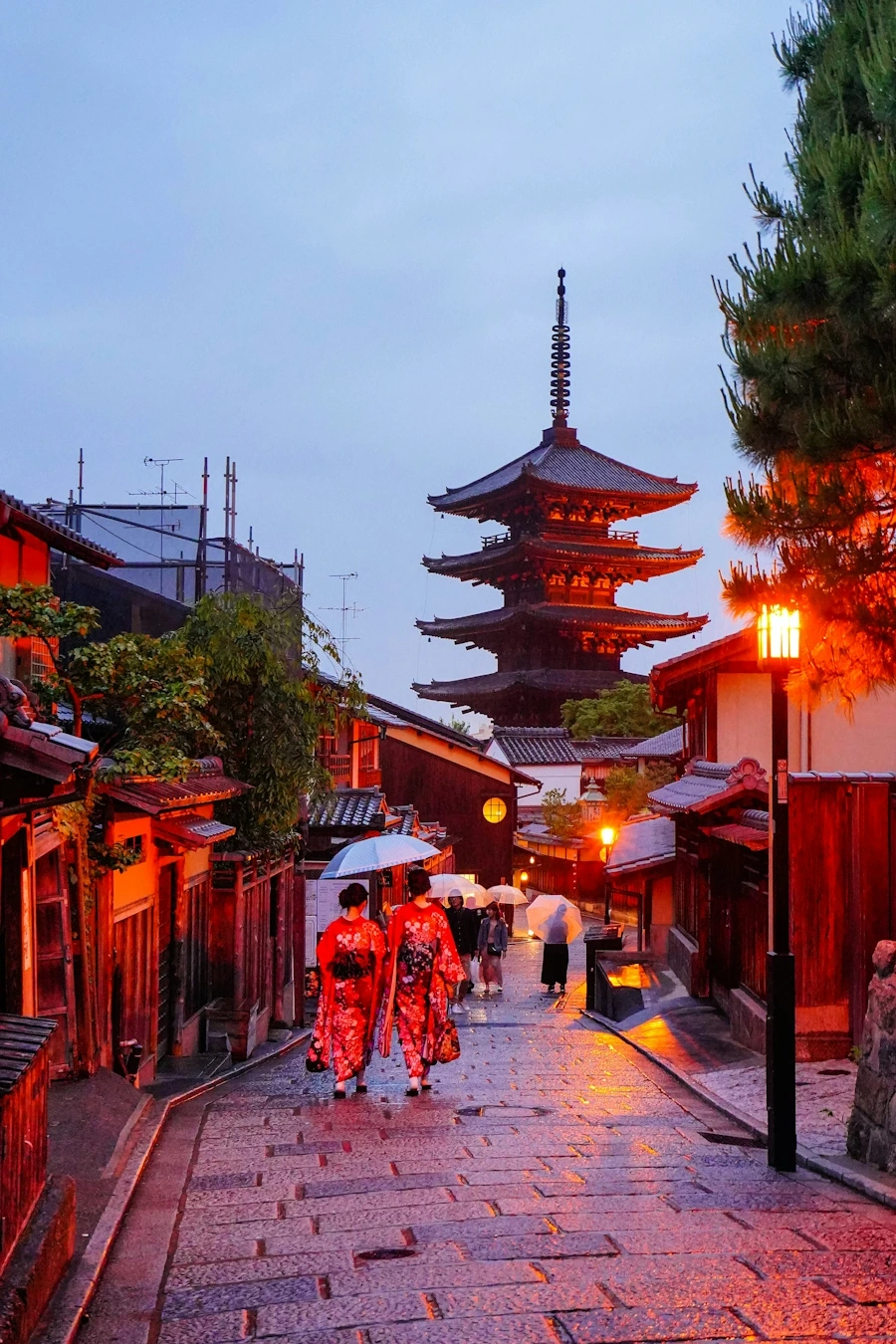
Higashiyama deserves more than a dash between famous photographs. Build the day around Kiyomizu-dera, then let the streets below it slow you down. Rooflines, shopfronts, a cup of tea, and the wooded edge of the temple grounds make a satisfying sequence without a second cross-city excursion. I would save Arashiyama and Fushimi Inari for separate days; the extra time here is better spent looking properly at what is already in front of you.
Kiyomizu-dera’s official introduction places the temple on Mount Otowa in the Higashiyama range and explains its continuing religious significance. That is useful context before arriving: you are visiting a place of worship, with a tourist experience around it. Let that distinction influence your pace, clothing choices, voice, and use of a camera.
Make the temple the anchor
Consult Kiyomizu-dera’s own grounds map before choosing what to see. Its visitor page identifies the entrance gate, main hall, and other features, allowing you to orient yourself rather than follow the densest group. Select a few things you want to understand and give them attention. You do not need to turn every structure into a separate task.
Opening arrangements and special viewing events can vary, so use the temple’s current visitor information rather than an old screenshot of a schedule. If a special event is the reason for your trip, confirm its date directly. Keep the rest of the day flexible enough to accommodate the visit you have actually booked or planned.
Plan for the approach as well as the attraction
Allow time and energy for reaching the temple. The official accessibility FAQ and wheelchair map are better planning tools than assuming that every approach is suitable for every visitor. If you need a particular entrance, assisted access, or a drop-off arrangement, clarify it before setting out. A hill and a dense visitor area can complicate an otherwise simple journey.
Use Kyoto’s official transport guidance to choose the connection that fits your starting point. Its responsible-travel advice encourages public transport, especially trains and subways. You can then plan the last part of the journey separately. Avoid attaching another tight reservation immediately after the temple, when walking pace and waiting time may be difficult to predict.
Give the surrounding streets room to breathe
After the temple, choose a short walk on public streets rather than an ambitious circuit through every nearby lane. Make a deliberate pause for food or tea at a venue whose opening and access arrangements you have checked. Sitting down is a useful way to restore the balance between looking, moving, and actually enjoying the place.
Photogenic streets are also places where people live and work. Follow signs, keep entrances clear, and avoid stepping into private passages for a photograph. If a narrow section is busy, keep moving until you can stop without blocking the way. This small decision matters more than securing an empty background.
Understand the rules around photography
Kyoto’s official responsible-travel guidance explicitly asks visitors not to stop, touch, follow, or photograph geiko and maiko without permission. It also identifies photography restrictions in parts of Gion. Read the signs on the actual street, because a map label or an image shared online does not establish permission to enter or take pictures.
If you want a cultural performance, seek an advertised public opportunity through a reliable venue or licensed guide. That gives you a defined setting and an opportunity to learn, instead of treating people going to work as part of an attraction. Apply the same consideration to residents, worshippers, and children throughout the neighborhood.
Give the main hall more than a photograph
The wooden stage at Kiyomizu-dera is an obvious highlight, but a photograph of it is only a starting point. Notice how the building meets the hillside, how the roof draws your eye, and how the city appears beyond the trees. The temple's grounds map helps you see the relationship between the main hall and Okuno-in rather than wandering from one crowd to the next. Read a little of the interpretation before moving on. Knowing what a structure is used for makes its details more interesting than another caption that simply calls it beautiful.
Otowa Waterfall offers another focus within the grounds. Watch how visitors approach it and follow any current directions before joining a line. You are not obliged to take part in every practice to have a worthwhile visit. Observing quietly and making space for worshippers can be the better choice when you are unsure what to do. The temple is compelling because it is still a religious place. Treat the famous view as one part of that experience, rather than reducing the entire visit to a platform with a city behind it.
Take the streets in small portions
Below the temple, Sannenzaka and Ninenzaka are worth approaching as streets to enjoy rather than a pair of names to tick off. Their steps, turns, roofs, and shops create a sequence that rewards a patient walk. Choose one short section, put the phone away for a while, and look at how buildings meet the slope. If a shop appeals, enter because you are interested in what it sells. A small purchase you understand will usually mean more afterward than a bag of souvenirs chosen only because everyone else was buying them.
Tea makes a useful dividing line between the temple visit and the rest of the neighborhood. Look at the menu and seating arrangements before you commit, especially if you want a calm sit-down break rather than a takeaway drink. Matcha can be enjoyed without booking a formal ceremony, and a café visit should not be presented as the same experience as one. If a ceremony is important to you, choose a host who explains the format, language, and expectations. Leave enough time to arrive comfortably and stay for the full session.
Allow the season to change the route
The same plan will feel different in summer heat, winter chill, and the busiest blossom or foliage periods. Dress for time spent outside, not only the temperature at your hotel door. On a warm day, I would shorten the shopping stretch and protect a seated break; on a wet one, I would be especially cautious on sloping stone surfaces. Do not build the visit around an exact promise of blossom or autumn color. The temple itself notes that seasonal timing varies, which is a good reason to enjoy the buildings and grounds on their own terms.
For a gentler afternoon, finish after tea and arrange a straightforward return. With more energy, select one additional place nearby after checking its current public access. Resist the temptation to turn the entire eastern side of Kyoto into one continuous march. A useful memory of Higashiyama might be the relationship between timber, trees, and hillside, or the detail on a shop sign you stopped to read. That is plenty for one day. Save the places you missed as invitations to return, rather than treating them as mistakes in the itinerary.
Let the day end before it becomes a race
A useful half-day plan has one principal site, one meal or tea stop, and a flexible return. Save these anchors and leave room between them. If you have more time, add a nearby cultural visit after checking its own rules. If you have less, keep the temple and remove the extra stops instead of hurrying through everything.
Before leaving, look back at one detail you nearly missed: a roofline, the wooded slope, or the relationship between two temple buildings. Give that memory more weight than the places you did not reach. Higashiyama is worth returning to, and a good first visit can leave something for next time.
Sources & further reading
First published 18 October 2026. Page updated 19 October 2026. Planning references checked on 18 October 2026. The edition date above follows your device’s time zone; it does not indicate a new research check. Confirm current opening details and booking arrangements with the places you plan to visit.