
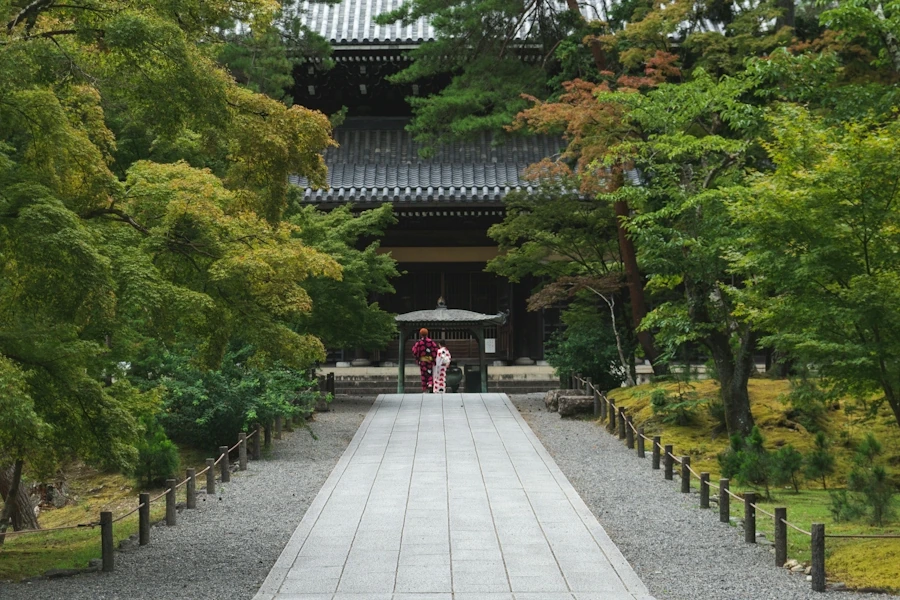
Make this your Kyoto itinerary
THE SHORT VERSION
- Choose a direction before setting off.
- Select one paid temple or garden visit as the main focus.
- Allow the canal walk to stand on its own outside blossom season.
Begin with a choice of direction
A walk between Nanzen-ji and the Philosopher’s Path is a good reminder that Kyoto is more than a sequence of famous gates. There are residential lanes between the landmarks, water moving through the city, and ordinary places to stop for something warm. I would begin at the Nanzen-ji end if you want the temple to set the tone, then let the canal lead the rest of the afternoon. Starting at the northern end works too; the important choice is to keep the day in one part of the city.
Do not confuse a walk past Nanzen-ji with seeing everything inside the complex. Temple grounds, individual gardens, and interior visits involve different decisions. Choose one feature that interests you and allow time for it. A traveler curious about architecture might focus on the gate and aqueduct; someone who loves gardens could give a quieter enclosure most of their attention. A fuller visit to one place often creates a stronger memory than a quick look at several.
Spend time beneath the aqueduct
The brick aqueduct is an unexpected interruption in the temple landscape. Its arches make a useful visual contrast with the surrounding timber and greenery, but the setting deserves more than a portrait beneath the most photographed opening. Walk slowly enough to see how the structure crosses the grounds and how its scale changes as you move away. It is an easy place to discuss what belongs in a historic landscape and how cities adapt over time.
Keep the shared passage clear. If other visitors are waiting for a photograph, take your turn and move on instead of arranging a long shoot. There is usually more interest in the angle you discover while walking than in reproducing an image you already saved. Use designated routes around the structure, and follow any restrictions in place on the day.
Find the canal without turning it into a race
The Philosopher’s Path is best understood as a walk with possibilities along it, not a moving pavement between two temple tickets. The canal gives you a simple line to follow, while side streets create opportunities for a short detour. Pick one such detour if something genuinely interests you. You do not need to stop at every sign to appreciate the district.
Seasonal photographs can distort expectations. Blossom and autumn color depend on weather and timing, and the same path has value outside their brief peaks. In quieter months, the water, branches, garden walls, and small bridges become easier to notice. If you are visiting during a busy period, make peace with company. This is still a neighborhood, and the best response to crowds is often a longer pause somewhere suitable rather than a search for supposedly secret residential shortcuts.
Give the northern end an honest amount of time
Ginkaku-ji can make a satisfying conclusion if you want another substantial temple visit. It is not an obligation. Before joining another entrance line, ask whether you still want to look closely at a garden or whether you are simply trying to finish a familiar route. If the answer is the latter, choose tea and a comfortable journey home. Kyoto is generous enough without requiring every afternoon to end at a headline sight.
For food, avoid depending on a tiny establishment staying open late just because it appears beside your walking route. Choose lunch before or during the central part of the outing, then treat a final drink or sweet as a bonus. Carry away any rubbish when a shop has no public bin. Those simple choices make it easier to walk lightly through a district where public sightseeing and everyday residential life sit close together.
From temple grounds to a canal-side finish
Nanzen-ji and Ginkaku-ji are not consecutive doors on one continuous attraction. The connection includes temple grounds, neighborhood streets, and the canal-side path, so an afternoon needs room for transitions. If Nanzen-ji is the focus, arrive from a suitable subway approach and begin there. If your heart is set on Ginkaku-ji’s garden, put that visit first and walk south afterward. This is particularly useful when a closing time would otherwise sit over the entire walk. Your route should protect the visit you care about most, with the canal providing flexibility around it.
Keep a small distinction in mind at Nanzen-ji: passing through the wider grounds is different from entering a specific paid garden or building. Check which part you are about to buy and whether it is open. Some enclosures are more intimate than the public approach, so behave as though everyone has come to look quietly, not to hear a running commentary from across the room. If shoes must come off, follow the storage instructions and keep your bag compact. These small arrangements matter more here than achieving a precise walking speed.
The canal connection is not all equally photogenic at every moment, and that is healthy for a neighborhood walk. Let ordinary walls and small bridges remain part of the experience. A quieter side lane can be attractive, but follow public access and avoid treating residential doorways as waiting areas. If you want a detour to a shrine or garden, choose it from current official information before turning off. That prevents an intriguing entrance from becoming an unintended walk into private grounds. One researched deviation is enough to make the route your own.
Around the middle of the outing, assess whether you want to sit down before the next temple. Shops and cafes have individual hours, and a name on a map does not guarantee an empty table when you pass. If you see a suitable place and are ready for a break, take it rather than saving your appetite for an unverified recommendation farther along. Tea and something simple can be enough when lunch happened earlier. If you still need a meal, choose it explicitly so that a string of drinks and sweets does not become an unsatisfying substitute.
At the finish, check your departure from the actual end of the walk. The best route back from the Ginkaku-ji area may differ from the route that brought you to Nanzen-ji. Save it while you have a comfortable place to stand, then put the phone away for the last street. In blossom season, expect the canal to be busy and keep bridges passable. Outside that season, let the quieter branches, water, and garden boundaries become the subject. The afternoon is not waiting for flowers to be worthwhile; it already has a recognizable shape, from large temple grounds to a smaller line of moving water.
Sources & further reading
First published 18 October 2026. Page updated 19 October 2026. Planning references checked on 18 October 2026. The edition date above follows your device’s time zone; it does not indicate a new research check. Confirm current opening details and booking arrangements with the places you plan to visit.