
Make this your Kyoto itinerary
THE SHORT VERSION
- Survey a stretch of Nishiki before choosing food.
- Use each vendor’s designated eating area.
- Pair the market with covered streets or the river, not another distant district.
Arrive curious, not committed to a tasting list
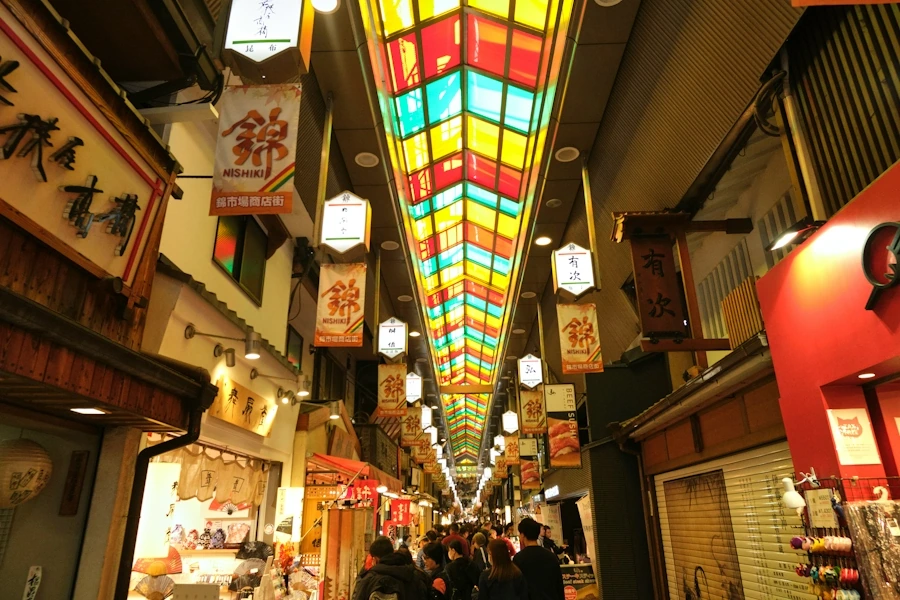
Nishiki Market is a rewarding place to look at Kyoto’s food culture if you resist treating it as an eating competition. A saved list of ten snacks can become a series of queues with very little attention paid to the shops between them. I would arrive with an appetite, a short list of dietary questions, and permission to try fewer things. The market is as much about ingredients and everyday cooking as it is about ready-to-eat food.
Walk one stretch before buying. Notice the difference between a shop built around pickles, one selling seafood, and another displaying kitchen goods or sweets. Read the signs you can, ask brief questions when a vendor is free, and keep away from the middle of the aisle when deciding. That first slow survey helps you spend on something that interests you instead of whatever catches your eye in the doorway.
Eat where the shop tells you to eat
Kyoto’s tourism guidance is explicit about Nishiki: do not walk through the market while eating or drinking purchases. Use the shop’s designated eating space or follow the vendor’s directions. It keeps a narrow, busy environment easier for everyone and prevents a food walk from becoming an obstacle course for people doing their shopping. Return packaging where the shop asks you to, rather than leaving it beside an unrelated stall.
A small portion can be a good introduction to an unfamiliar ingredient, but do not confuse a tasting with a full meal. If you find something you especially enjoy, there is no need to keep chasing novelty. Repeat a flavor, ask what it is called, and make a note for later. Remembering one preparation well is more useful than photographing a dozen foods whose names you never learned.
Look beyond the obvious takeaway
Pickles, tofu-related foods, tea, and sweets can prompt useful questions about how a meal is assembled. Ask whether a product is ready to eat, needs refrigeration, or is intended to be cooked. If you want to buy something for the journey home, check the storage instructions and your destination’s import rules before paying. The attractive jar that seems like an easy souvenir may be awkward in a suitcase or unsuitable to carry across a border.
Dietary requirements deserve the same care. Seafood stock, egg, soy, wheat, sesame, and other ingredients can appear where a visitor does not expect them. Use a clear translated explanation if necessary, and accept that a busy stall may be unable to guarantee separation. Choosing a sit-down restaurant with time to discuss your needs can be a better option than trying to improvise at every counter.
Give the rest of central Kyoto a role
After Nishiki, Teramachi and Shinkyogoku provide covered stretches for a change of scene. This is a good place to browse something other than food, whether that means stationery, books, or simply shopfronts. Resist turning every interesting doorway into another purchase. The change of pace helps the market remain a distinct experience rather than the first stop in an exhausting shopping marathon.
Later, if the weather is pleasant and your feet are willing, continue toward the Kamo River for open space. Do not eat in a way that leaves scraps for birds or rubbish for someone else. A seated meal before the river is simpler. Central Kyoto works well as a flexible day because there are several ways to shorten it: market and lunch, market and covered streets, or a longer loop ending beside the water. Pick the version that suits your appetite and attention.
Build a meal rather than a tally
A useful Nishiki plan begins with the difference between ingredients, snacks, and lunch. Not everything displayed is meant to be eaten immediately, and not every ready-to-eat purchase adds up to a comfortable meal. I would choose one unfamiliar thing to try, one shop to browse carefully, and a proper lunch either inside an appropriate establishment or nearby. That is enough structure to keep curiosity focused. It also leaves money and appetite for an unexpected discovery instead of committing everything to a list assembled before you have seen the market.
If a pickle or seasoning interests you, ask how it is used. Does it accompany rice, season a dish, or need another preparation? A vendor may be able to show packaging or a simple serving suggestion even when a long conversation is impractical. Tea deserves the same thought: the brewing method and storage can matter as much as the name on the tin. Buy an amount you can use while it is at its best. The souvenir with the prettiest wrapper is not automatically the one that will make sense in your kitchen.
For purchases you plan to carry overseas, read the ingredients and storage guidance before paying. Fresh products, animal ingredients, and liquids can create practical problems during travel or at the destination border. Do the relevant import check yourself rather than expecting a market vendor to know every country’s rules. If you are staying nearby, something perishable may instead become part of that evening’s meal. Be realistic about refrigeration and how long it will be in your bag. Food is most enjoyable when the logistics are settled before the first purchase warms up.
Nishiki’s eating rules make the visit easier to organize. Choose a purchase, use the location the shop provides, and finish before rejoining the passage. This keeps a snack from becoming a balancing exercise among other customers. When traveling with companions, one person can wait in a suitable place while another orders, but avoid creating a group around the counter after the transaction is complete. Return rubbish as directed by the seller. A neighboring shop’s doorway is not a convenient disposal area or an overflow dining table.
Teramachi and Shinkyogoku let you change subject after the food section. A stationery shop or bookshop is a pleasant contrast to another plate, while the covered passages offer a practical rain option. If the weather is bright, walk toward the Kamo River only after you have eaten enough to enjoy the open space. The river is a place to stop looking at merchandise and begin looking at the city around you. Finish from a station that suits that end of the route. There is little benefit in retracing every shopping street simply to depart from the point where lunch began.
For the curious cook
One enjoyable way to browse Nishiki is to choose an ingredient you recognize and look at the forms in which it appears. A familiar vegetable may be pickled or preserved differently from the version you use at home. Ask about a serving suggestion and compare the answer with the foods nearby. This creates a small thread through a busy market without requiring another purchase at every counter. If cooking is not your interest, apply the same idea to packaging or shop displays: notice how one product is explained to customers and how the presentation changes between businesses. The market becomes more legible when you follow a question of your own.
Sources & further reading
First published 18 October 2026. Page updated 19 October 2026. Planning references checked on 18 October 2026. The edition date above follows your device’s time zone; it does not indicate a new research check. Confirm current opening details and booking arrangements with the places you plan to visit.