
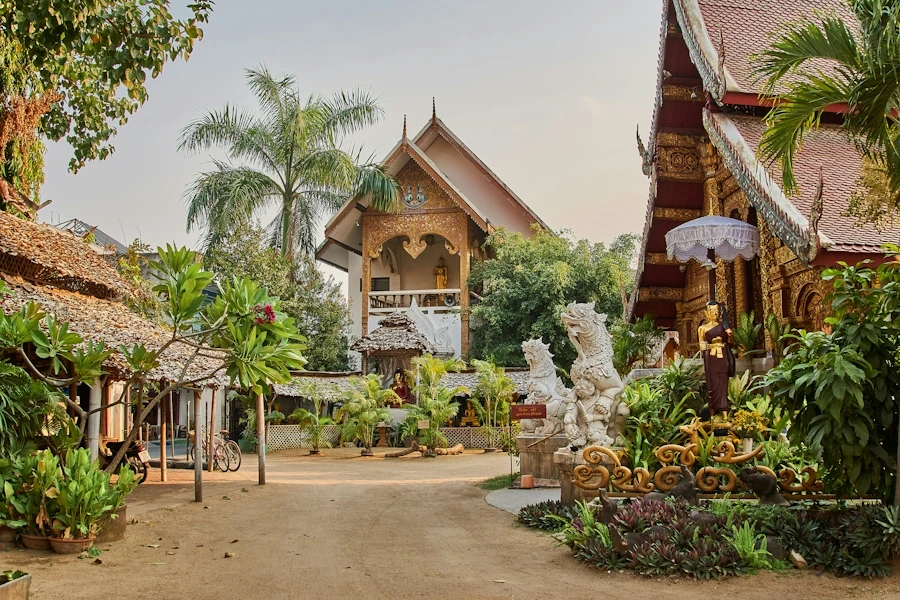
Make this your Chiang Mai itinerary
THE SHORT VERSION
- Choose two main temple visits instead of a long circuit.
- Ask a different observation question at each site.
- Leave space for lunch and a short public-street ending.
Let two temples be enough
Chiang Mai’s old city is full of religious sites, and that abundance can make a short visit oddly frantic. A list of ten temples begins to blur roofs, courtyards, and Buddha images into the same memory. I would choose two substantial visits and connect them with an ordinary street walk. Wat Phra Singh and Wat Chedi Luang offer a useful starting pair, provided their current access and your interests suit the day.
Begin with the temple you most want to understand and arrive with appropriate clothing. The old city is a living neighborhood rather than a separate historic park. Roads, schools, restaurants, shops, and religious communities share the same space. Notice those connections on the way instead of treating everything between temple entrances as a distance to complete.
At Wat Phra Singh, look closely before moving on
Wat Phra Singh is associated with Lanna architectural and artistic traditions, and official tourism information points to several important structures and artworks within the complex. Choose one aspect to look at carefully, whether that is the arrangement of buildings, a decorative detail, or the relationship between an interior and its approach. Interpretation can help turn an attractive visit into something more specific.
Follow instructions about footwear, clothing, and photography, and do not enter an area simply because another visitor has done so. Religious practice takes priority over your route. If a ceremony changes access, use it as a reason to slow down elsewhere rather than a frustration to overcome. Quiet observation from a suitable place can still make the visit meaningful.
Give the second temple a different question
At Wat Chedi Luang, resist repeating the exact viewing pattern you used at the first stop. Ask how the scale feels different, what the surrounding space encourages you to notice, and how visitors move around the main structure. You do not need an elaborate historical comparison to make this useful. A change in one question can prevent another visit from becoming simply another photograph.
Do not assume that any advertised conversation or cultural program will be running when you arrive. Check current arrangements and respect the participants’ purpose and time. A brief encounter is not an opportunity to ask someone to represent an entire religion. Specific, thoughtful questions are better than demanding a complete explanation of beliefs between two sightseeing appointments.
Use lunch to return to the present
After the temple visits, sit down for a meal in the old city. Choose something you want to eat and ask about ingredients if needed. Northern Thai dishes can differ from the generic menu a visitor expects, so read the actual description rather than ordering solely by familiarity. A meal also provides a useful pause before deciding whether you want any more walking.
For the last stretch, choose a public-street loop toward a gate or moat section that fits your departure. Use crossings carefully and keep out of traffic while looking at the water or walls. If you are tired, leave the loop for another day. A good old-city visit gives you enough attention to distinguish the places you entered and enough energy to enjoy the neighborhood that remains around them.
Two visits, two different questions
For the first temple, choose the feature you most want to understand and give it the strongest part of your attention. At Wat Phra Singh, official tourism material points toward the value of Lanna architecture and art, so look at a specific building or decorative element rather than simply proceeding through every available room. Use interpretation where it exists and ask a concise question if someone is available to explain. You do not need a complete historical lecture to appreciate one particular choice in scale, surface, or arrangement.
Check visiting conditions before leaving your accommodation and read the entrance notices when you arrive. Appropriate clothing, footwear removal, restricted areas, and photography can each affect the route. A light covering is useful only if it satisfies the actual requirement; do not assume any improvised solution will do. Carry shoes and belongings as directed rather than leaving them where they obstruct someone else. When people are praying, give them priority and avoid framing their private attention as the atmosphere of your photograph. A working temple has a purpose beyond the visitor circuit.
For Wat Chedi Luang, use a different observation question from the first visit. You might compare the way the larger structure occupies space with the more intimate detail you studied earlier. Walk the permitted route at a pace that lets you understand the proportions. If you want to participate in a published conversation or learning program, check that it is actually available and follow its format. Do not expect a monk or other participant to provide a spontaneous personal interview simply because you arrived with questions. Respect their time and ask about the subject being offered.
Between the two sites, let an ordinary street be part of Chiang Mai rather than a gap in the sightseeing. Small shops, school activity, traffic, and neighborhood signs provide the present-day context in which religious places continue to operate. Cross roads carefully and avoid navigating while standing in a vehicle’s path. If the walk feels too hot or air conditions are poor, reduce the distance or use suitable transport instead of maintaining the original plan at all costs. The value of the day comes from the attention you bring inside each place, not from proving that you walked the connection.
Lunch should restore that attention. Choose a northern Thai dish because its ingredients and preparation interest you, and ask what is included when the menu is unclear. Dietary needs deserve an explicit conversation, particularly around broths, sauces, and shared preparation. After eating, decide whether a short gate or moat-side walk still appeals. If it does, choose a clear public route with a convenient departure. If it does not, leave the old city with the two temple visits still distinct in your mind. You can return for another site later without turning today’s experience into an incomplete list.
A second visit needs a different pace
If you return to the old city later in the trip, choose another temple or cultural institution and give it the same attention rather than repeating a large circuit. You will have a better basis for comparison after a day when Wat Phra Singh and Wat Chedi Luang remained distinct. Notice what you now recognize in an entrance or courtyard, then look for something that does not fit your first impression. This keeps the city from becoming a fixed image of Lanna culture. The purpose of returning is to deepen the picture, with room for present-day streets and ordinary meals alongside the historic structures.
Sources & further reading
First published 18 October 2026. Page updated 19 October 2026. Planning references checked on 18 October 2026. The edition date above follows your device’s time zone; it does not indicate a new research check. Confirm current opening details and booking arrangements with the places you plan to visit.