
Make this your Seoul itinerary
THE SHORT VERSION
- Select one palace as the primary visit.
- Check current Bukchon visitor hours and restricted areas.
- Finish around Anguk with a meal or a single craft-focused stop.
Choose the palace before drawing the route
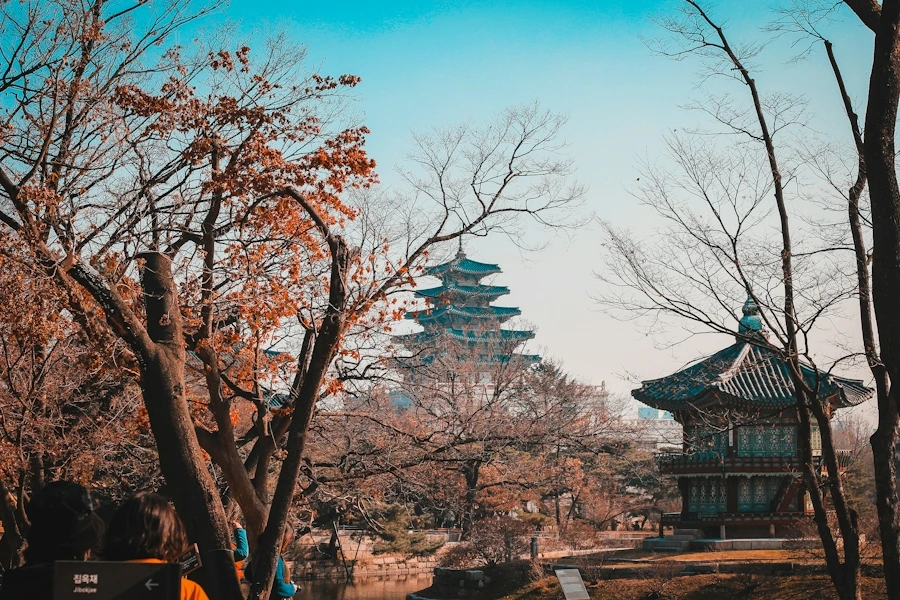
Seoul’s palace district can look deceptively compact on a visitor map. Gyeongbokgung, Changdeokgung, Bukchon, museums, and cafe streets all appear close enough to fit into a single flowing day. In practice, each asks for attention and the walking between them has its own demands. I would choose one palace as the principal visit and allow the rest of the day to grow around it.
Gyeongbokgung suits an interest in a large royal complex and its relationship with the city. Changdeokgung offers a different arrangement and has visitor options that may need separate planning. Read the current official information for the palace you choose, including closures and any tour or reservation rules. Do not assume a palace admission automatically includes every garden or guided area mentioned in an older itinerary.
Look at the spaces between buildings
A palace visit becomes more memorable when you notice how the spaces are arranged. Look at the sequence of gates, the relationship between open courts and enclosed rooms, and the way a roofline changes as you approach. Official interpretation can help connect those observations with history. You do not need to memorize a dynasty timeline to appreciate why a particular building occupies a particular position.
Give yourself a pause before entering another section. Large complexes encourage a kind of forward momentum that can leave you moving without really looking. If you are taking photographs, step out of circulation routes and avoid obstructing people wearing traditional dress who are also trying to enjoy their visit. Their clothes do not make them available as subjects without permission.
Treat Bukchon as a residential district
Bukchon’s hanok lanes are attractive, but this is a neighborhood where people live. Visit only during the currently permitted hours and observe local restricted zones and notices. Rules can change, so check Seoul’s current guidance before you arrive. Quiet voices, no peering into homes, and no blocking residential entrances are basic conditions for making tourism compatible with everyday life.
Do not arrive expecting to wander every lane freely at dawn or after dinner simply because an old photograph looks peaceful. A quieter image is not more important than residents’ boundaries. Choose a short public route, use designated visitor facilities, and accept that some parts should be left alone. Looking thoughtfully at a few buildings is better than turning the district into a hunt for an empty frame.
Let Anguk provide the soft landing
After the palace and any appropriate Bukchon walk, choose a meal or tea around Anguk and the surrounding public commercial streets. This gives the day an ordinary conclusion rather than another ceremonial one. A small craft or design institution can also be a good addition if it matches your interest and current opening arrangements. Pick one, not all of them.
The contrast between royal spaces, residential architecture, and contemporary businesses is what makes this part of Seoul rewarding. You do not need to blur them together into a single image of tradition. Let each setting ask for a different kind of attention. By the time you sit down, you should have enough energy left to talk about what you noticed rather than simply count the places you entered.
Let residential boundaries shape the afternoon
Start with the official visitor page for the palace you prefer. Gyeongbokgung and Changdeokgung involve different layouts and options, and particular gardens or guided areas may have separate arrangements. Check the current closing day and any booking requirement before deciding on the rest of the route. If a reservation is central to your plans, give it space rather than squeezing it between shopping stops. A palace visit can easily become the major event of the day. It does not need another royal complex immediately afterward to prove that you have used the area well.
Inside, look at the sequence of spaces before concentrating on individual decorative features. A gate may prepare you for a court, a building may dominate one view while receding in another, and a distant roofline can organize movement through a much larger complex. Those relationships are accessible even without specialist historical knowledge. Read selected interpretation and let it guide a second look. If you wear rented traditional clothing, make time for returning it and observe the same rules about restricted areas and circulation as every other visitor. Clothing does not create additional access rights.
Bukchon requires a current residential-access check, not just a map search. Seoul has visitor restrictions in sensitive residential areas, and you should follow the hours and zones communicated on official local guidance and on-site signs. Do not follow an old recommendation to arrive very early for an empty lane without checking whether visitors are permitted then. Quiet is not simply a photographic advantage; it is something residents are entitled to. If a lane is unavailable, leave it out of the route rather than finding another entrance or describing the restriction as an obstacle to discovery.
In the areas open to visitors, choose a short public route and keep moving past private entrances. Do not peer into windows, lift a camera over a wall, or gather a group outside a home for a prolonged portrait session. Look instead at street proportions, rooflines, and public interpretation. A cultural center or museum intended for visitors can provide more context than a long unsupervised circuit through residential lanes. Check its current availability and use it as an alternative when the neighborhood itself is busy. This makes the outing more considerate and often more informative.
Anguk offers a practical place to return to an ordinary commercial setting. Choose lunch or tea, then decide whether a craft-focused institution or shop still interests you. The meal can be the conclusion rather than a pause before another mandatory stop. Save the departure route from the street where you actually finish. By separating palace, residential area, and public visitor spaces in your behavior, you will have seen more accurately how the district works. The memory is richer when Seoul’s heritage is allowed to coexist with the needs of people who live there now.
A public cultural alternative
When residential access makes a Bukchon walk unsuitable, investigate a visitor-oriented craft or cultural institution around Anguk instead. Confirm its current opening and exhibition before setting off. A place designed to explain objects or architecture may answer your questions more directly than another quiet lane. Let this be an alternative with its own value rather than a consolation prize. You can still compare a palace’s formal spaces with the scale of contemporary streets and interiors. The afternoon then respects the neighborhood’s boundaries while giving you another substantial way to engage with Seoul’s material culture and the choices visible in its buildings.
Sources & further reading
First published 18 October 2026. Page updated 19 October 2026. Planning references checked on 18 October 2026. The edition date above follows your device’s time zone; it does not indicate a new research check. Confirm current opening details and booking arrangements with the places you plan to visit.