
Make this your Lisbon itinerary
THE SHORT VERSION
- Build around one substantial lunch rather than a chain of compulsory snacks.
- Distinguish a market visit from a food-hall meal before ordering.
- Save the Belém bakery for a geographically sensible outing.
Stop trying to taste the whole city
The easiest way to make Lisbon food disappointing is to turn it into a race between famous snacks. A pastry here, another queue there, an oversized late lunch, and suddenly you have spent the day eating without really enjoying a meal. I would build a food day around three anchors instead: a market visit, a seated lunch, and one bakery pause. Everything else can be a pleasant discovery rather than a task that must be completed.
That approach also gives different appetites room to coexist. One person can care about coffee, another about seafood, and another about browsing ingredients. Agree on the substantial meal first and let the smaller stops stay flexible. This is a day for paying attention to what is on the plate, how it is served, and where you are eating. You do not need a verdict on the best version of everything to leave with useful preferences.
Understand what kind of market you are entering
Mercado da Ribeira is a helpful starting point because the broader market setting and food-hall experience prompt different kinds of looking. Before buying, make a circuit and identify what is operating when you visit. A traditional produce stall and a prepared-food counter solve different needs. If you want lunch, look for a meal you would actually enjoy; if you want to understand ingredients, give your attention to what is for sale rather than immediately searching for a seat.
Tourism information also describes craft and antique activity associated with the market, but programs and trading days need checking for your date. I would treat any additional browsing as a bonus. The important choice is whether a lively shared setting suits you. Food halls can be excellent for groups with different preferences, while anyone wanting a long conversation may be happier using the market as a short visit before eating elsewhere.
The Ribeira area's transport connections make this a practical food outing even on a short visit. Keep your central market day around Cais do Sodré, and treat Belém as a separate food-and-architecture journey. That division avoids spending the middle of lunch navigating between two neighborhoods simply because both contain famous pastries.
Choose lunch before hunger chooses for you
A proper lunch is the center of this plan. Look for a menu you understand well enough to order confidently and ask which dishes are being served that day. A modest dish that fits your appetite is a better purchase than an elaborate recommendation you are eating out of obligation. Soup, grilled fish, a meat dish, or a vegetarian option can each be the right answer; the setting and cooking matter more than completing a national checklist.
Read the menu's units and ask about items brought to the table if you are unsure whether they are charged. This is ordinary good ordering, not a reason to approach every meal suspiciously. If sharing, agree what you want and how much before the order goes in. A calm conversation about appetite and budget at the start is much easier than trying to negotiate around several unexpected plates while everyone is already tired.
Give salt cod a little context
Bacalhau appears in many Portuguese dishes, but the word identifies an ingredient rather than one fixed recipe. Ask how a particular dish is prepared and choose according to texture, portion size, and what accompanies it. Someone who likes a crisp snack may want a different introduction from someone hoping for a substantial lunch. Instead of ordering several cod dishes simply because they sound essential, make one considered choice and pay attention to its place in the meal.
The same principle works for unfamiliar seafood. Ask what you are getting and how it will be cooked; avoid making assumptions from an attractive photograph alone. If you have dietary restrictions, discuss the specific dish with staff and choose a place that can provide a clear answer. A travel guide cannot establish the ingredients or handling practices of an individual kitchen. There are plenty of other enjoyable food experiences if one dish does not suit you.
A pastry is better with a pause
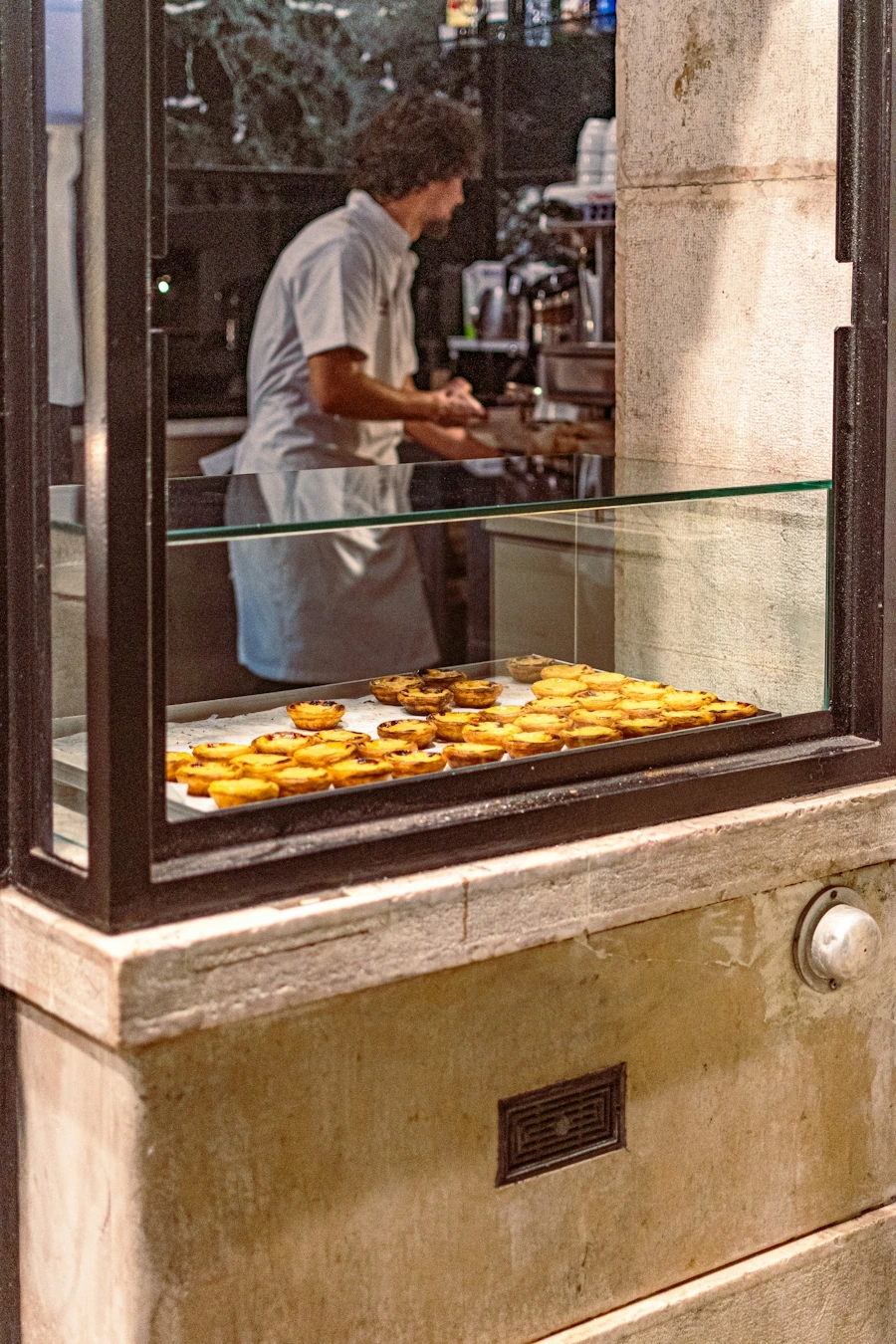
For a dedicated Belém outing, Pastéis de Belém supplies a concrete connection between place and food. The bakery explains its production history dating to 1837 and its monastery-linked recipe. Order the house pastry because you want to taste it, not because a city break would supposedly be incomplete without it. Sit if the arrangement suits you, or find an appropriate place to stop afterward. A pastry eaten with attention is more satisfying than one balanced over a navigation screen.
Central Lisbon also offers many opportunities for a bakery break, so Belém need not be forced into this day's geography. My choice would depend on the rest of the trip: if you are visiting the monuments later, save the famous bakery for that outing. Today, choose a nearby pastry shop whose display and seating appeal to you. Comparing two versions on separate days can be fun; crossing the city merely to collect another one often is not.
Walk between meals, not toward endless orders
After lunch, take an uncomplicated walk where food is no longer the only subject. The central riverfront is an obvious option if you are near Cais do Sodré. It gives the afternoon breathing room and helps separate a substantial meal from the next snack. Browse shops or look at architecture without assuming every attractive café requires a purchase. A food day becomes more pleasurable when appetite, rather than the map, determines when you eat again.
Keep dinner provisional. If lunch was long and generous, a lighter evening meal may be all you want. If you chose a small lunch, research one restaurant properly rather than wandering until the group loses patience. I would rather have two good decisions with a walk between them than six stops whose flavors run together. That leaves room for an unplanned discovery too, which is often the most enjoyable reason to change course.
Bring something home thoughtfully
If shopping for edible souvenirs, buy what you can transport and use. Check packaging, storage needs, and your destination's import rules before committing to foods that may be restricted. A small quantity you will actually enjoy is more useful than a large selection bought because the display looks persuasive. For gifts, clear labeling and a story you can explain accurately matter more than claims that a product represents the single true taste of Lisbon.
The finished day might include the Ribeira area, lunch nearby, a river walk, and a bakery stop elsewhere in the center. Or it might be an entirely separate Belém food-and-monuments afternoon. Keep those versions distinct unless you have a reason to combine them. Lisbon gives you enough options to make a personal food map over several visits. Start with a few meals you can remember clearly and let your own taste guide the next ones.
Sources & further reading
First published 18 October 2026. Page updated 19 October 2026. Planning references checked on 18 October 2026. The edition date above follows your device’s time zone; it does not indicate a new research check. Confirm current opening details and booking arrangements with the places you plan to visit.