
Make this your Lisbon itinerary
THE SHORT VERSION
- Choose Estrela for a neighborhood pause and the Gulbenkian for landscape with art.
- Treat Eduardo VII and Estufa Fria as a contrast in garden design.
- Check the particular museum or greenhouse you want before combining it with a park.
Give a garden its own appointment
A Lisbon park should not have to earn its place by sitting between two monuments. Make it a destination in its own right and the city opens up differently. Instead of another steep lane or rooftop view, you get paths, shade where available, room to sit, and details that reward a slower eye. My three picks serve different moods: Estrela for a neighborhood afternoon, the Gulbenkian for landscape and culture, and Eduardo VII for a broad urban view.
I would choose one rather than march through all three in a day. Their value comes from having enough time to settle, not from comparing them in a hurry. Decide whether you want a picnic, a book, art, or a long look across the city. That answer will make the choice clearer than a ranking of which garden is supposedly best. A good green afternoon is usually built around your energy as much as the destination.
Estrela for the pleasure of staying put
Jardim da Estrela has the ingredients of a park you can enjoy without a special project. Lisbon's tourism office highlights its nineteenth-century origins, bandstand, ponds, and varied trees. Those features give the visit a loose structure: make a circuit, find a detail that interests you, then stop. The bandstand is a useful visual anchor; the rest of the pleasure lies in moving between open and enclosed spaces at your own pace.
If I were choosing a place for an unambitious afternoon with a friend, Estrela would be the first option. Bring something to read or buy a modest snack nearby, then allow conversation to replace sightseeing. Families may appreciate the garden's play spaces, but check the facilities you need before promising a particular activity. Keep children's routes and games in mind when settling down; a bench with the best photograph is not necessarily the one with the most relaxing surroundings.
At the Gulbenkian, the garden's interpretative resources offer another way into the designers' ideas. Look for current information on the foundation's website if landscape history is your main reason for coming.
Build a neighborhood outing around it
The basilica across from the garden gives Estrela an architectural companion without forcing an all-day itinerary. Look at the relationship between the substantial church and the softer garden space, then decide whether an interior visit interests you. The neighborhood outing could be as simple as the park, one cultural stop, and lunch. That is enough shape for a day that deliberately refuses to compete with Lisbon's headline attractions.
I would avoid making an iconic tram ride the condition of enjoying this plan. Use current transport information and choose the practical arrival for your starting point. A crowded journey can dominate a short outing if the vehicle becomes the attraction. You are coming to spend time in a place, so arrive in the way that gives you the most energy to enjoy it. Walking part of the approach is optional, especially when hills make distances misleading.
The Gulbenkian is a designed landscape
The Gulbenkian garden rewards a different kind of attention. Its own interpretation explains the work of landscape architects António Viana Barreto and Gonçalo Ribeiro Telles and the garden's relationship with Portuguese landscape traditions. Look at how paths reveal and conceal buildings, how planting changes the scale of a space, and where water draws your attention. You do not need specialist vocabulary to notice that the garden has been composed rather than simply planted around a museum.
For an easy way into that composition, choose a short loop and walk it twice. On the first pass, follow whatever catches your eye. On the second, notice what made you change speed or direction. Did a narrower path encourage you onward? Did a view across water invite you to stop? This small exercise can make landscape architecture feel tangible. It also saves you from needing to identify every plant to have an engaging visit.
The Gulbenkian is especially appealing if you like the idea of a cultural campus without wanting to remain indoors. Its garden, museum buildings, and modern-art setting belong to the same outing, so you can follow the paths as a connector rather than repeatedly return to busy streets between separate destinations.
Add art only if it improves the day
The foundation brings art, architecture, and gardens together, but the balance is yours to choose. Consult the current official museum and exhibition information rather than assuming every collection or building is open in the same way. You might spend most of your time in the landscape and choose one exhibition, or use the garden as a long break between gallery rooms. Either approach can make more sense than buying access simply because you are nearby.
My preference would be one focused indoor visit followed by an outdoor pause, with no second timed commitment immediately afterward. Give yourself a chance to think about what you saw. A garden can be unusually good for that because looking remains enjoyable without demanding more labels. If the galleries are the main reason for coming, check the specific collection you want before traveling; if the landscape is the priority, let the art remain an attractive possibility.
Eduardo VII offers a longer view
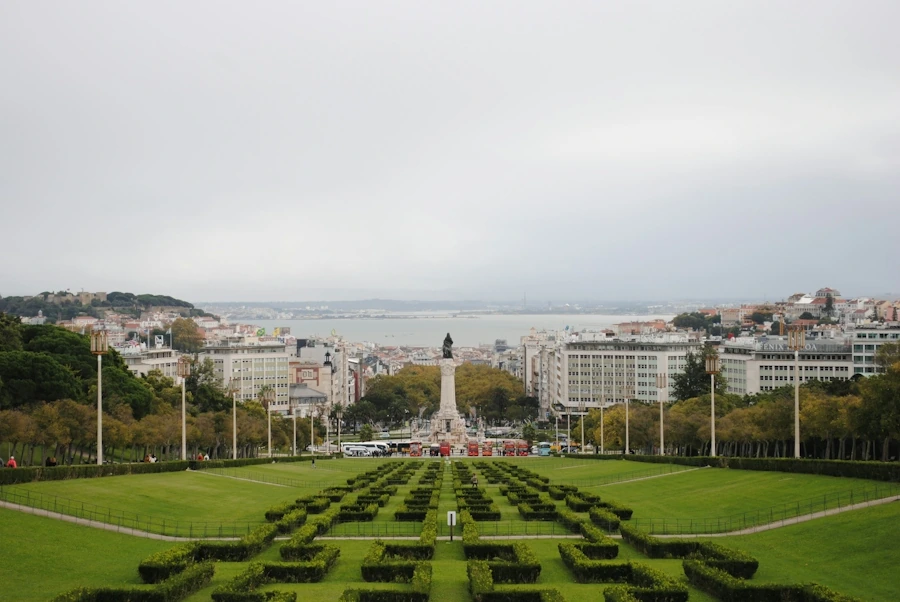
Parque Eduardo VII is the choice when you want a more formal, outward-looking setting. The official Lisbon guide draws attention to the geometric layout and the contrast with the vegetation of Estufa Fria. That contrast suggests a useful visit: appreciate the ordered park first, then choose the greenhouse if its current opening and access arrangements fit your day. Looking at two very different approaches to planting gives the outing a theme without requiring elaborate planning.
The park's slope is part of the experience, so choose your starting point with that in mind. A viewpoint can be rewarding without turning the route into a fitness challenge. If you have limited time, select either a park walk or a more concentrated greenhouse visit and enjoy it properly. The city view is an invitation to understand Lisbon's shape, not a requirement to retrace every visible street before returning to your accommodation.
Pack for the afternoon you want
A light bag, water, a layer, and a realistic way back are usually more useful than a long checklist. Check park rules before planning a picnic or special activity, and keep paths and planted areas available for other users. Outdoor time still deserves a weather plan: if conditions are poor, choose an appropriate museum or café rather than forcing a pleasant-sounding garden itinerary into an unpleasant day. Flexibility is what makes this style of exploring work.
The simplest versions are also the strongest: Estrela and a neighborhood lunch; the Gulbenkian garden and one exhibition; Eduardo VII and a visit to Estufa Fria. Save the others for another day. You will leave with three distinct reasons to return rather than a blurred memory of green spaces crossed at speed. A city break needs places where nothing is being demanded of you, and Lisbon has more than one excellent candidate.
Sources & further reading
First published 18 October 2026. Page updated 19 October 2026. Planning references checked on 18 October 2026. The edition date above follows your device’s time zone; it does not indicate a new research check. Confirm current opening details and booking arrangements with the places you plan to visit.