
Make this your Paris itinerary
THE SHORT VERSION
- Choose Carnavalet for city history or Picasso for a focused art visit.
- Look above the shops and distinguish public courtyards from private entrances.
- Use Place des Vosges as a real pause, not only a photo stop.
Choose curiosity over collecting addresses
The Marais is easy to reduce to a list of shops and lunch recommendations. I would arrive with a different plan: one museum, one square, and enough walking time for the spaces in between. The neighborhood's appeal is the way substantial old residences sit beside smaller streets and everyday commerce. Looking only at window displays misses that larger arrangement. A good afternoon here moves between the public street and the more inward world of courtyards, collections, and gardens.
There is no need to discover a secret Marais before enjoying the familiar one. Choose a compact area and resist adding distant museums because they appear nearby on a schematic map. This is a part of Paris where turning a corner can be more rewarding than covering another kilometer. My preferred starting question is simple: do you want the story of the city or the work of a particular artist? The answer chooses your main museum.
Carnavalet gives the streets a backstory
Musée Carnavalet is the natural choice if you want to understand Paris while exploring it. Its subject is the city's history, so objects and rooms can add meaning to the streets outside instead of sending you into an unrelated cultural detour. Rather than attempt every gallery with equal intensity, choose a period or a handful of objects that catch your interest. Give yourself permission to follow curiosity and leave with questions rather than a complete chronology.
The museum's own visitor information should guide booking and access decisions. I would make the collection visit the first substantial activity, while attention is fresh, then return to the street with less pressure to learn everything. Look at how domestic spaces become a museum and how a historic building influences the way you move through a display. Architecture is part of the experience here, not simply a container for the objects you came to see.
Or choose an artist, but choose properly
The Musée national Picasso-Paris offers a more concentrated alternative. Check its current exhibitions and collection presentation before choosing it, because an artist's name does not tell you what is on view during your visit. If you enjoy following changes in an artist's approach, this can be a satisfying anchor for the afternoon. If the broader story of Paris interests you more, Carnavalet may fit better. Neither decision needs to be justified by what other travelers consider essential.
I would avoid planning both museums unless art is the entire purpose of the day. Two appealing institutions can still compete for the same limited attention. Pick one, look carefully, and leave enough mental space for the neighborhood. You can compare the buildings from the street without buying every available interior experience. The freedom to decline a good museum is useful in Paris; there will always be another collection capable of making a persuasive case.
The Picasso museum's Hôtel Salé setting is part of its attraction, while Carnavalet keeps the city's own history at the center. That is the choice I would make before leaving: paintings within a substantial historic residence, or objects and rooms that help explain Paris itself. Either gives the later street walk a useful theme.
Walk with the buildings in view
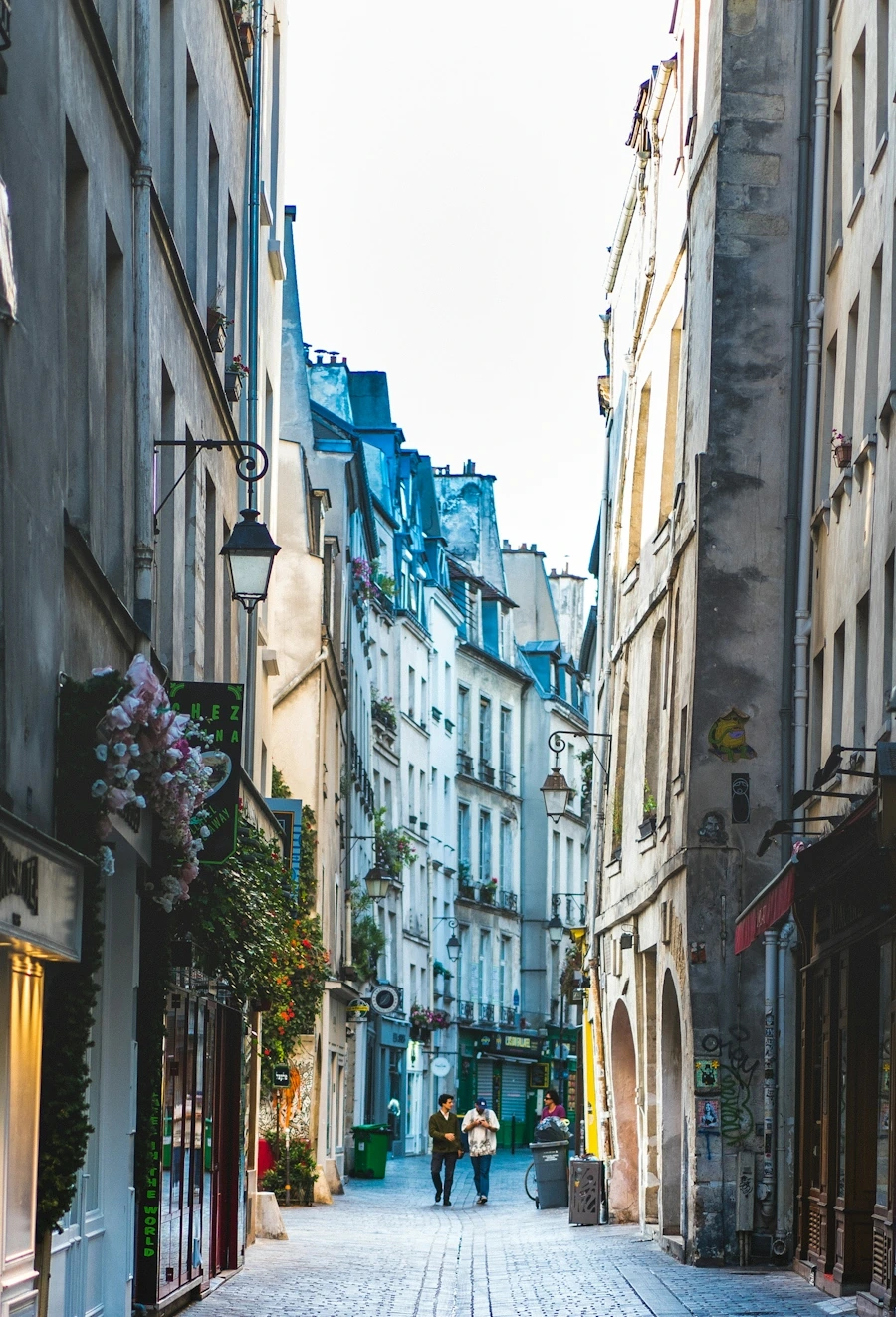
Between your museum and Place des Vosges, use a current map to choose a manageable walking connection. Let it orient you without dictating every glance. Notice gates, rooflines, the scale of façades, and the contrast between a broad building front and a narrow passage. The pleasure is not in assigning an architectural label to everything. It is in realizing that streets which initially seemed similar have quite different rhythms once you start looking above the shops.
When a courtyard is clearly public and open, step in appropriately; when it is private, enjoy the doorway from outside. Residential entrances are not attractions merely because they are photogenic. That distinction makes exploration more relaxed because you stop trying to turn every threshold into a discovery. One open museum courtyard can provide more satisfying detail than a succession of uncertain entrances approached for the sake of a photograph and abandoned a moment later.
Give Place des Vosges a complete circuit
Place des Vosges is a good place to let the afternoon widen. Walk enough of the square to understand its ordered façades and arcade rhythm before deciding where to pause. A symmetrical place can produce an instant photograph but deserves a little more attention. Compare the view across the center with the closer experience beneath the arcades. Moving between those perspectives makes the square feel less like a backdrop and more like an arrangement you can inhabit.
Find an available seat or another appropriate resting point and stay longer than the time required for a picture. If traveling with someone, this is a good place to compare what each of you noticed in the museum. If alone, write a few lines while the impressions remain specific. The square works as a pause precisely because it does not require another purchase. A city afternoon can include a generous interval where the only activity is being there.
Eat according to the afternoon's mood
The Marais provides plenty of food choices, but a queue should not make the decision for you. Think about whether you want a quick bite, a substantial seated meal, or a café where you can read. Look at the menu, the seating, and the order process before committing. A place that is excellent for takeaway may be a poor match for a group needing a long rest. The right lunch is partly about how it fits the day.
The neighborhood also carries Jewish histories and a continuing cultural life that deserves more attention than one food recommendation. If that is your particular interest, choose a relevant institution or properly researched walk and give it time. Avoid treating a single street as a summary of an entire community. Travel becomes more interesting when food starts a conversation about place rather than standing in for every other aspect of the people who live there.
End with one small discovery
Before leaving, allow yourself a final optional stop: a bookshop, a small gallery with a show that interests you, or a shop selling something you might actually use. This is different from an open-ended shopping circuit because the afternoon already has a shape. You can make a choice without feeling that the next street must contain a better one. If nothing catches your interest, leave the interval empty and enjoy the walk to your transport.
For a short version, choose Carnavalet or Picasso, then Place des Vosges. For a longer one, add a meal and slow street exploration between them. Check current access at the museum, keep the return route uncomplicated, and let weather determine how much outdoor time feels pleasant. The Marais does not need to reveal all its layers in one visit. An afternoon that makes you notice Paris more clearly is already doing a great deal.
Sources & further reading
First published 18 October 2026. Page updated 19 October 2026. Planning references checked on 18 October 2026. The edition date above follows your device’s time zone; it does not indicate a new research check. Confirm current opening details and booking arrangements with the places you plan to visit.