
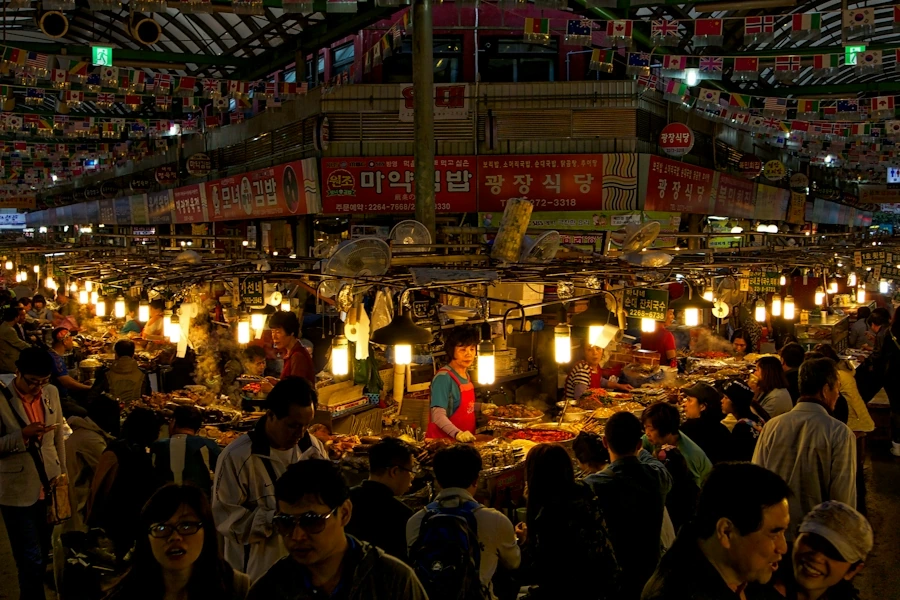
Make this your Seoul itinerary
THE SHORT VERSION
- Choose Gwangjang or Mangwon according to the wider route.
- Confirm portion and price before ordering.
- Respect each vendor’s seating, photography, and takeaway arrangements.
Choose the market that fits the day
Seoul’s markets are often presented as one long tasting list, but Gwangjang and Mangwon offer different practical days. Gwangjang fits a central itinerary and a focused food visit. Mangwon pairs well with a neighborhood walk and, if conditions suit, a later riverside outing. I would choose one rather than crossing the city to repeat the same pattern of ordering, photographing, and becoming increasingly full.
Start by looking at the location of your next and previous stop. A market is more enjoyable when you arrive with time and appetite, not as a compulsory detour between two bookings. Check current visiting information, then treat individual vendors as flexible possibilities. A particular counter may be closed or busy, and the visit should still work if you eat somewhere other than the stall you saved.
At Gwangjang, make a clear food choice
A first circuit helps you understand where seating, menus, and the busiest passages are. Choose a dish because you want to eat it and can understand what is being offered. Bindaetteok, noodles, rice-based snacks, and other preparations may all appear in a visitor’s plan, but you do not need to try every category. Ask the price and portion before ordering, particularly when a menu combines individual items and shared plates.
Sit where directed and keep the counter space practical for other customers. If a vendor is cooking close to you, ask before making a close video. A market meal is a transaction and a public encounter, not a private cooking demonstration. Thank the person serving you, clear what you are asked to clear, and leave room for the next customer when you have finished.
At Mangwon, give the neighborhood a role
Mangwon works particularly well when the market is one chapter in a larger neighborhood visit. Walk a small public-street loop first, then enter with a sense of where you are. Look at produce and everyday shopping as well as ready-to-eat food. The market’s ordinary function is worth noticing; a local grocery purchase can explain the place as clearly as the snack with the longest queue.
If you buy food to eat elsewhere, ask about suitable packaging and how soon it should be eaten. Do not assume every nearby cafe permits outside food. A park meal also requires checking the route, weather, and current rules. Sometimes the simplest choice is to eat at a vendor’s designated space, then take a drink on a separate walk afterward.
Use taste as a way to pay attention
Rather than rating every mouthful immediately, notice what distinguishes the preparation you chose. Is the texture crisp or soft? What provides acidity or heat? Is a sauce part of the dish or an optional addition? These small observations can help you understand the next menu without pretending to be an expert. Write down the name of something you enjoyed so you can recognize it again.
End the visit when the meal is satisfying. If you are no longer hungry, browse another kind of stall or leave for a walk rather than ordering from obligation. Food memories are usually clearer when you have given a few dishes proper attention. A market day should leave you curious about what you might try next time, with enough energy to appreciate the streets beyond the entrance.
Order a meal, then make a neighborhood choice
Gwangjang and Mangwon should lead to different surrounding plans. If you choose Gwangjang, use it as a central food chapter with a nearby cultural or public-street walk. If you choose Mangwon, give the neighborhood around it enough time and make any river connection a separate decision based on current conditions. Do not travel between both simply to compare a dish while becoming progressively less hungry. One market understood a little better can teach you more than two markets experienced as a series of competing queues.
The first practical question is portion size. A menu photograph may not make clear whether something is one person’s meal or a dish intended for sharing. Ask before ordering, and confirm the price of the option you selected. If a price depends on quantity or weight, understand that before preparation begins. Keep the exchange clear and unhurried where possible. Once you have chosen, let the food arrive without immediately filling every remaining space at the counter with another order. A manageable meal makes conversation and attention easier than a crowded collection of cooling plates.
If bindaetteok interests you, notice the texture and accompaniments rather than treating the name as a box checked. With noodles or rice-based preparations, ask what is in the broth or sauce when that affects your diet. A translated card can make an ingredient question clearer, but it cannot guarantee a vendor’s ability to prevent cross-contact. Accept an uncertain answer as a reason to choose another setting. Nobody benefits from forcing a hurried stall into a promise it cannot safely make. A restaurant with a slower pace may be the better place for that meal.
At Mangwon, leave time to look at ordinary groceries and household shopping alongside ready-to-eat foods. A market is not less interesting when it serves needs other than yours. If you buy takeaway, ask how soon it should be eaten and where customers may sit. Do not take outside food into a cafe unless the business clearly allows it. A later park picnic also depends on weather and the route there; it is not automatically the most convenient outcome of a market purchase. Eating where the vendor intends may keep the rest of the afternoon much simpler.
After the meal, choose an activity that does not require more appetite. Browse another type of stall, walk a public neighborhood loop, or leave for the next stop. If you want a final sweet, select it because you want the flavor rather than because the guide says a market visit needs one. Write down a dish name you enjoyed and enough detail to recognize it again. That modest record is useful. It turns the day from a one-time tasting exercise into a beginning: on your next visit, you can approach the menu with a preference of your own.
Remember the preparation, not only the name
After a market meal, note one preparation detail that helped you understand the dish. Perhaps a pancake’s texture mattered more to you than its sauce, or a broth changed your expectation of a familiar noodle. Write the dish name beside that observation while you still remember it. This gives you a useful basis for ordering another version later without pretending that one meal represents every example. A vendor’s preparation is particular, and your preference is particular too. The market becomes more interesting when you allow those distinctions instead of reducing each stop to a photograph and a yes-or-no recommendation.
Sources & further reading
First published 18 October 2026. Page updated 19 October 2026. Planning references checked on 18 October 2026. The edition date above follows your device’s time zone; it does not indicate a new research check. Confirm current opening details and booking arrangements with the places you plan to visit.